Three-Month Comparison: Stand-Alone GPS vs. Waze
A three-month comparison between a stand-alone GPS and Waze reveals the strengths and weaknesses of each navigation tool, highlighting user experiences in various driving conditions.
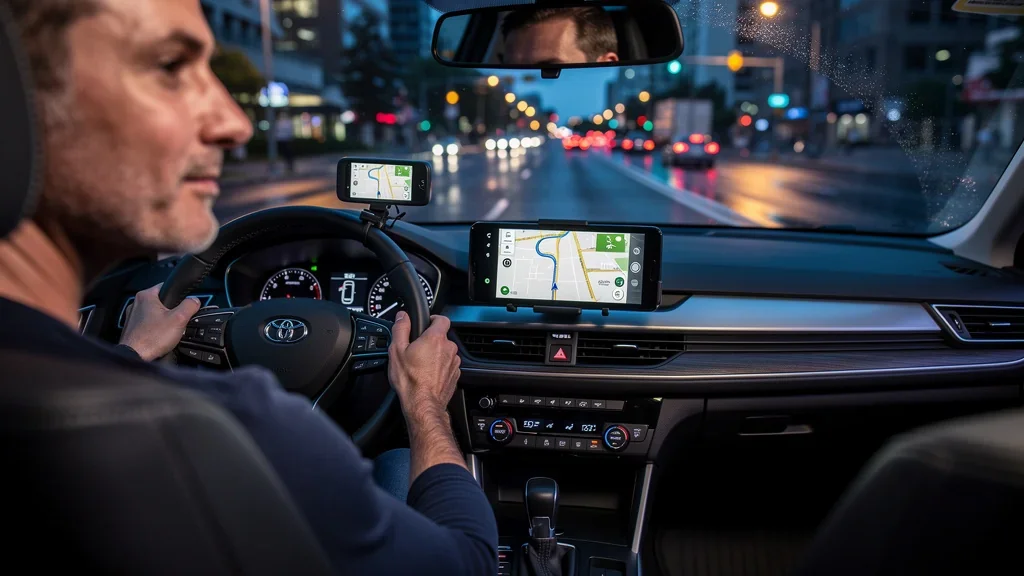
In a recent three-month evaluation, the performance of a stand-alone GPS unit was juxtaposed against the popular navigation app Waze, revealing distinct advantages and drawbacks of each system. The stand-alone GPS unit was mounted on the windshield of a Clio while Waze provided audio prompts through a smartphone, creating a unique driving experience amidst the traffic of Bordeaux.
Initial Setup and Testing Conditions
The testing period involved maintaining two distinct departure times, 7:10 AM and 8:05 AM, across a total of 38 trips. Notably, 11 of these journeys had passengers in the back seat. During these tests, it became evident that the auditory prompts from Waze were sometimes disruptive, particularly during rainy mornings when the clarity of instructions was critical.
The Garmin DriveSmart 76 was affixed to a suction mount, while the smartphone was positioned on a magnetic holder to the left of the steering wheel. The 4G connection was kept active, ensuring real-time updates, and the screen brightness was set at a comfortable level. Each route was traversed three times—covering urban streets, ring roads, and highways—with the radio turned off to focus exclusively on the navigation prompts.
Observations on Navigation Performance
The primary focus was not on timing but rather on the clarity and timing of navigation commands. Over the course of the evaluation, 19 alerts were issued less than 60 seconds before critical turns. The challenge lay in managing the mental load of these micro-decisions while driving.
Two distinct recalculation strategies emerged during the tests. The Garmin was more conservative in suggesting detours, providing clear voice instructions. In contrast, Waze reacted more swiftly to changing traffic conditions, often presenting multiple route alternatives when congestion was detected. For instance, the Garmin would announce lane changes well in advance, while Waze sometimes prompted actions just as the driver was approaching critical signage.
The Overload of Information with Waze
While Waze proved to be quick in alerting users to traffic conditions, the frequency of notifications became overwhelming at times. For example, alerts about a stopped vehicle, a slowdown, and an exit came within an 18-second span, which proved distracting when combined with other in-car conversations. As a result, the alert settings were adjusted to minimize interruptions, focusing solely on crucial traffic updates.
A particularly memorable incident occurred at the Bordeaux-Lac interchange, where an overload of information led to a missed exit. The need for clearer, more concise instructions became apparent, as navigating multiple alerts simultaneously created confusion.
The Stand-Alone GPS Experience
In contrast, the Garmin offered a more tranquil driving experience, especially after servicing a hybrid Corolla. The fewer visual distractions and consistent voice prompts allowed for greater focus on the road. When intentionally missing an exit, the recalculation took 23 seconds, providing clear guidance without overwhelming the driver with options.
However, the Garmin's limitations became evident in densely populated areas where traffic updates were less timely compared to Waze. For example, a traffic jam near the Chaban-Delmas bridge was not reported for 41 seconds, while Waze had already alerted users to the situation.
Conclusion After Three Months
After completing the three-month evaluation, a clear preference emerged based on the context of each trip. Out of 38 journeys, the stand-alone GPS was favored 24 times when a less demanding driving experience was desired, while Waze was selected 14 times for its ability to provide timely traffic information. The Garmin prompted 18 trajectory corrections compared to 31 with Waze, underscoring the importance of situational context in navigation effectiveness.
Ultimately, the mental load associated with navigation was significantly lower with the stand-alone GPS, allowing for a more relaxed driving experience. Waze, while beneficial for real-time updates, often required more cognitive effort to filter relevant information, particularly in heavy traffic.
In summary, the stand-alone GPS is ideal for calm driving scenarios, especially in congested areas, whereas Waze excels in providing up-to-the-minute traffic alerts and last-minute detours. Choosing between the two depends largely on whether the priority is a stress-free journey or the most current traffic information available.