Ford Develops Patent for Remote Vehicle Control
Ford files a patent for a system enabling remote vehicle control to simplify slow maneuvers like parking.
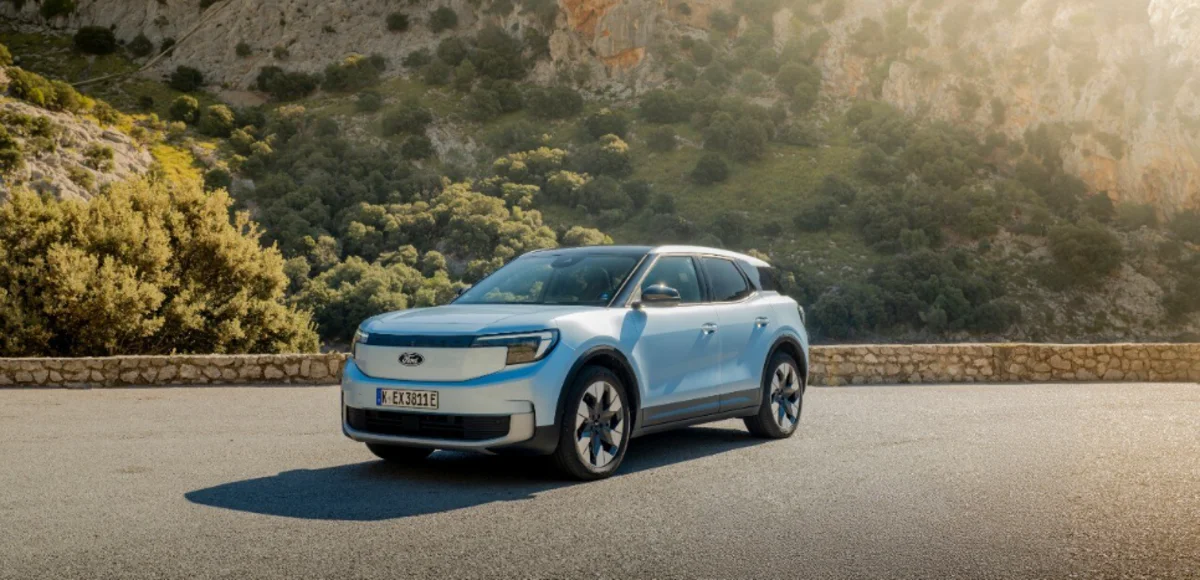
Ford is venturing into innovative technology aimed at easing everyday driving maneuvers. The American automaker has filed a patent for a system that allows a vehicle to be controlled from outside, utilizing an external controller. This application, submitted on November 1, 2023, and published on July 7, 2026, outlines a technology capable of moving a car over short distances without the driver needing to be inside the vehicle.
However, it is important to note that this feature is not currently available in Ford's existing vehicle lineup. The company emphasizes that a patent does not confirm production or indicate definitive future equipment offerings. Thus, this technology remains a legally protected concept without any announcement regarding its potential integration into a vehicle range.
The concept being explored by Ford primarily targets situations that require precise repositioning of a vehicle. It could be particularly useful in driveways, courtyards, or tight spaces where getting in and out of the car multiple times to adjust its position is impractical.
External Control for Precise Maneuvering
The patent describes a system that enables the owner to move their vehicle from outside. The goal is to simplify certain slow maneuvers, especially when the driver needs to position the car accurately.
In typical scenarios, a driver may need to make several adjustments to park correctly, align a trailer, or maneuver a vehicle in a confined space. Ford's proposed solution would eliminate the need for continuous trips between the vehicle's cabin and the outside.
One of the key features of this system is the ability to control multiple directions of movement. Unlike basic remote parking functions that are limited to specific motions, the envisioned external controller could facilitate more precise movements.
This capability could provide greater flexibility in environments where visibility from the driver’s seat is limited, or when the user wants to directly observe the vehicle's position from outside.
The patent aligns with a broader trend in the automotive industry focused on developing maneuver assistance technologies. Manufacturers are increasingly looking to enhance features related to parking, low-speed maneuvers, and operations requiring high precision.
Technology Similar to Parking and Towing Aids
Ford has previously worked on systems that allow for remote control in specific situations. For instance, the company filed another patent aimed at aiding trailer hitching.
In that case, the goal was to enable the driver to stand close to the vehicle to align the hitch ball with the trailer more easily. This approach addresses a common challenge for users of towing-equipped vehicles, where even a few centimeters can complicate the connection between the two components.
The new patent for the external controller follows a similar logic: providing the driver with better direct visibility during a delicate maneuver. However, the scope of this new application appears broader, as it pertains to the general movement of the vehicle over short distances.
Remote control technologies are becoming increasingly prominent in the development of modern vehicles. They complement existing assistance systems, such as automated parking aids or devices capable of monitoring the vehicle's surroundings.
For automotive manufacturers, these innovations respond to a growing demand for ease of use. Slow maneuvers, often perceived as simple but sometimes challenging in certain configurations, represent an area where new technologies can enhance comfort.
Patent Does Not Guarantee Future Ford Model
Despite the potential interest in this technology, Ford reminds that patent applications should not be interpreted as announcements of future products. Filing a patent primarily serves to protect a technical idea, without guaranteeing industrial development or commercialization.
The American automaker regularly explores various solutions in the automotive field, ranging from driving assistance systems to new interfaces between users and their vehicles. Some innovations may remain experimental, while others could eventually be integrated into future models.
The external controller envisioned by Ford nonetheless illustrates the current trends within the automotive industry. Manufacturers are striving to make vehicles easier to operate in diverse situations, particularly during parking, movement in private spaces, or operations involving a trailer.
This technology could meet specific needs for certain drivers, but there is currently no information to confirm that it will soon equip a Ford vehicle. Thus, the patent serves as an indication of the research conducted by the brand rather than a commercial announcement.
The evolution of modern vehicles increasingly relies on the integration of mechanics, onboard electronics, and software. External control systems are among the avenues being explored to enhance user experience and reduce the challenges associated with daily maneuvers.
Conclusion
Ford's patent reflects the company's interest in solutions aimed at simplifying low-speed maneuvers. The described technology could assist in parking or repositioning a vehicle, but it remains solely at the patent stage. Ford itself clarifies that a patent filing does not confirm production. Nevertheless, this initiative highlights the ongoing quest for innovations surrounding the everyday use of automobiles.