2026 Audi Q4 e-tron: A Leap in Digital Maturity and Enhanced Efficiency
The 2026 Audi Q4 e-tron showcases significant advancements in design, technology, and performance, solidifying its position as a leading electric SUV in the market.
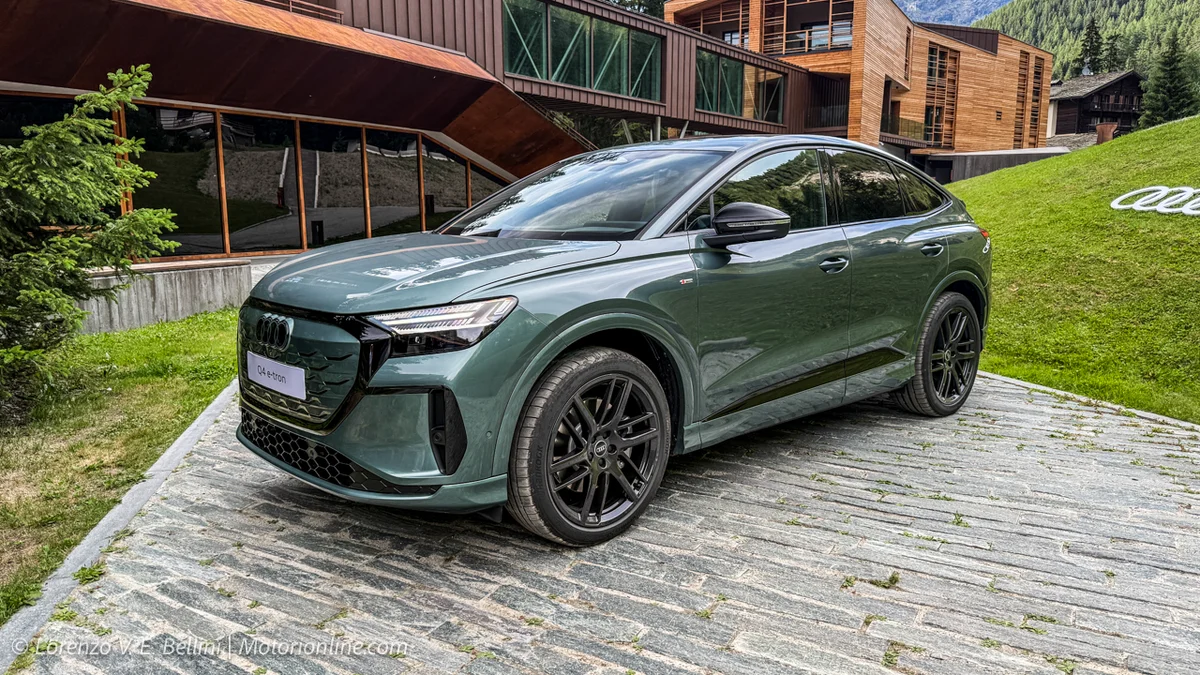
The Audi Q4 e-tron has established itself as the most popular electric vehicle from the German manufacturer, particularly in Europe where electric cars account for 20% of the market, contrasting sharply with Italy's 8%. This latest iteration of the C-segment SUV is more of a profound facelift than a complete generational shift, arriving five years after the original model, which has sold 350,000 units globally. The new Q4 e-tron aims to enhance its competitive edge against rivals like the BMW iX1 and Mercedes EQA. Recently, we had the opportunity to experience it firsthand on the winding roads of Valle d'Aosta, allowing us to assess the changes made to this model.
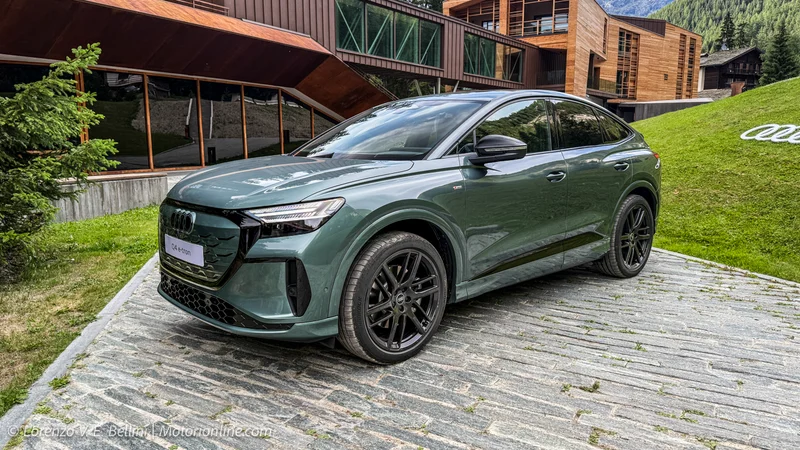
Compact Dimensions Remain Unchanged
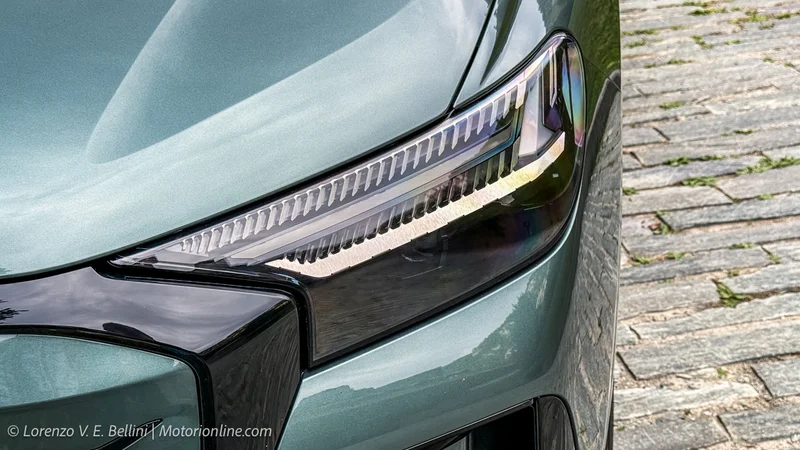
One of the standout features of the Audi Q4 e-tron has been its compact dimensions, measuring 4.6 meters in length. Built on the dedicated MEB platform, the vehicle minimizes overhangs, with the hood nearly entirely contained within its 2.76-meter wheelbase, making it notably compact. The width is 1.86 meters, and the height ranges from 1.61 to 1.63 meters, depending on whether you choose the pure SUV model or the Sportback variant. The design has become sharper and more dynamic, featuring an elevated beltline, a redesigned bumper, and new air intakes, alongside a sporty rear diffuser. The front grille is a solid single frame design, now matched to the body color, with new color options including an eye-catching Salvia green, Tambora grey, and Plasma blue. Additionally, the rear lights have evolved into active displays, enhancing the “Car-to-X” communication system, which can relay critical traffic information, such as alerts for nearby cyclists.
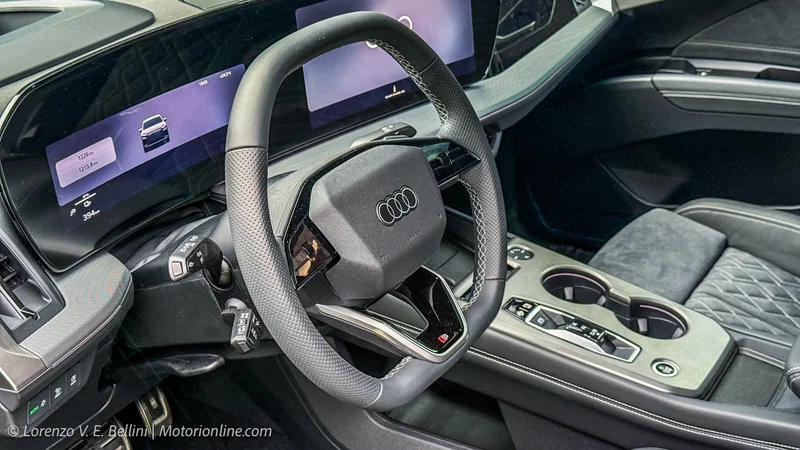
Promised Space Delivered
The interior of the Audi Q4 e-tron has seen the most significant transformation compared to its predecessor. The layout of the screens has been borrowed from the Q6, featuring an 11.9-inch driver's display and a 12.8-inch infotainment screen. An optional 12-inch passenger display is the largest ever used in an Audi model. The onboard operating system is powered by Android Automotive OS, which includes an app store managed by Audi, offering features like Apple Maps and a voice assistant powered by ChatGPT.
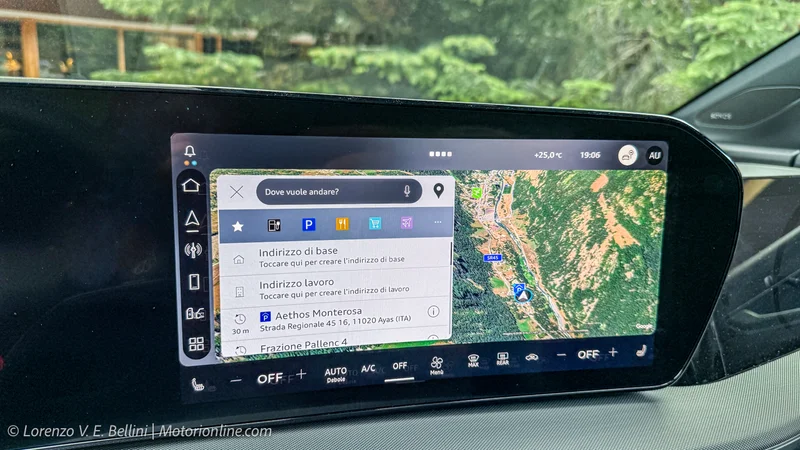
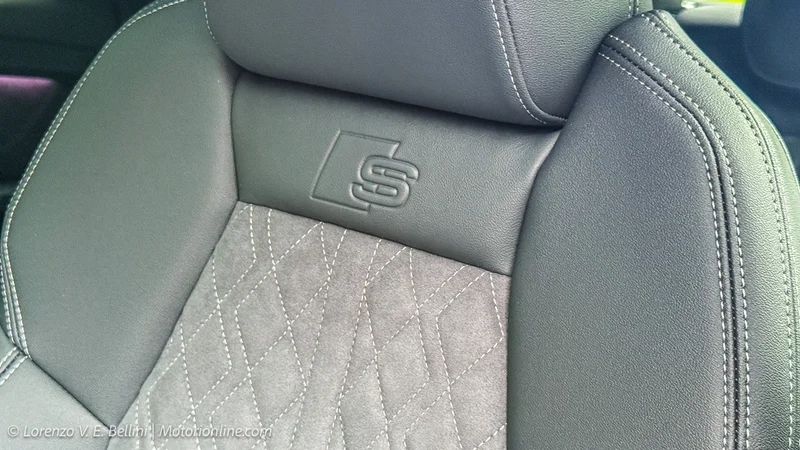
The entire cabin is highly digitalized, yet the physical controls on the steering wheel have been retained to prevent accidental presses and ensure readability. The storage compartments are impressive, including a wireless charging pad for two smartphones and a cooled side pocket, ideal for hot summer days. The sporty seats are standard from the entry-level trim, and the dashboard and door panels are covered in a soft-touch material for enhanced comfort. Interactive dynamic lighting below the windshield serves both as a design element and as a communication tool for the driver, indicating turn signals or obstacles on the road. Rear passengers, ideally seated in a group of four, benefit from dedicated USB-C ports, and space is generous even for taller individuals. The trunk offers a capacity starting at 515 liters, expandable to 1,487 liters in the SUV version, with the Sportback being only slightly smaller.
Three Variants and Enthusiast Features
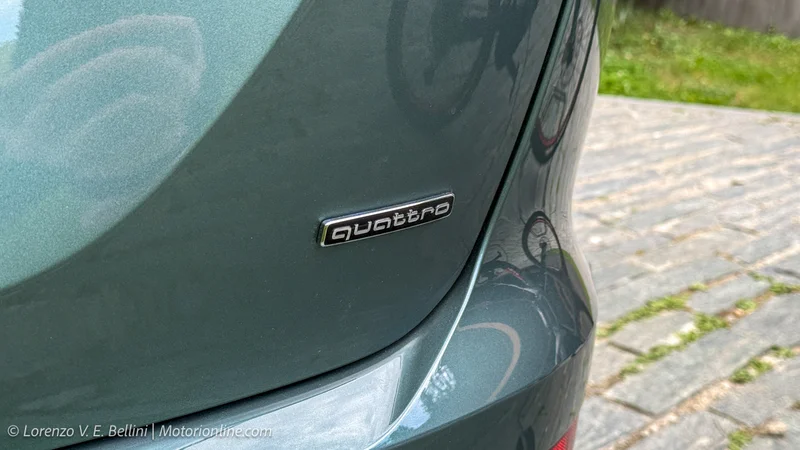
The 2026 Audi Q4 e-tron will be available in three versions, each with different motor and battery configurations. Notably, the new synchronous permanent magnet motor at the rear has been enhanced with silicon carbide semiconductors in the inverter and low-viscosity lubricants in the transmission, leading to an increase of 12 kilometers in maximum range according to the WLTP mixed cycle. The base model, simply named Audi Q4 e-tron, produces 204 horsepower and 350 Nm of torque, offering a respectable acceleration from 0 to 100 km/h in 8.1 seconds. Its 63 kWh battery promises a range of 450 kilometers, which is 29 kilometers more than the previous model, all with rear-wheel drive. The e-tron performance variant aims for maximum range with 286 horsepower and 545 Nm of torque, achieving 0-100 km/h in 6.6 seconds and a range of up to 592 kilometers thanks to its 82 kWh battery. The top-tier e-tron quattro performance features all-wheel drive, 340 horsepower, and a remarkable acceleration of 0 to 100 km/h in just 5.4 seconds, with a total range of 554 kilometers, about 16 kilometers more than its predecessor.
These advancements in range are attributed to several factors, including intelligent energy recovery management that allows for three levels of recovery strength, one-pedal driving mode, and daily braking handled primarily by the rear motor. Charging capabilities have improved as well, with DC charging now supporting up to 185 kW, while AC charging remains at 11 kW. The vehicle can charge from 10% to 80% in just 28 minutes, and in 10 minutes, it can recover up to 185 kilometers of range, especially when managed through the e-tron trip planner included in the infotainment system.
A notable feature increasingly common in the industry is the availability of V2L and V2H functions, which stand for Vehicle-to-Load and Vehicle-to-Home. These features will allow the car's battery to power external devices, such as electric bicycles or camping gear (V2L up to 3.6 kW), or to act as a home battery integrated with a solar panel system (V2H) in a later update.
Initial Driving Impressions
We had the chance to drive the new Audi Q4 e-tron in its quattro performance version for a few hours, so we reserve final judgment until we can spend more time with it. However, the driving feel remains impressively refined, which is a positive sign. The acceleration is immediate and robust, yet smooth and linear, avoiding any abrupt power surges. Despite the considerable weight typical of electric vehicles, the Q4 remains agile, and the steering offers excellent feedback. Maneuvering through narrow streets required retracting the side mirrors, yet we navigated through tight spaces without a scratch, with only millimeters to spare. Even at higher speeds, the steering provides great confidence in cornering and stability. The balanced suspension ensures minimal body roll, maintaining excellent stability on twisty mountain roads. The One-Pedal driving feature is particularly appreciated in urban traffic. Personally, I found the Sportback version aesthetically appealing, although its sloped rear window and pillars do compromise visibility somewhat (thankfully, a rearview camera is standard).
A Definitive Step Towards Maturity
In conclusion, the new Audi Q4 e-tron 2026 has truly matured the project, aligning it with the current state of automotive technology. While the previous model was far from a rough draft, this iteration stands out as Audi's best electric vehicle in many respects, successfully completing its technical profile without leaving anything out. In Italy, the entry-level model will be the intriguing Custom Edition, starting at €43,350 with a 204-horsepower engine and SUV body style. For the Sportback, the base Business trim begins at €52,900.
AUDI Q4 e-tron 2026: Technical Specifications
Dimensions: Length 460 cm; Width 186 cm; Height 161 cm (Sportback) or 163 cm (SUV); Wheelbase 276 cm Body Styles: SUV, Sportback Tested Motor: Electric with options of 204 CV, 286 CV, or 340 CV Drive Type: Rear-wheel drive, all-wheel drive Transmission: Single-speed Acceleration: 0 to 100 km/h in 8.1’’ (204 CV), 6.6’’ (286 CV), or 5.4’’ (340 CV) Trims: Custom Edition, Business, Business Advanced, S line Seating Capacity: 5