Toyota Corolla Hybrid: My Experience After 130,000 km
After 130,000 km, the Toyota Corolla Hybrid proves to be a reliable and economical choice for urban and mixed driving, but may not suit those needing high-speed performance or extensive electric driving.
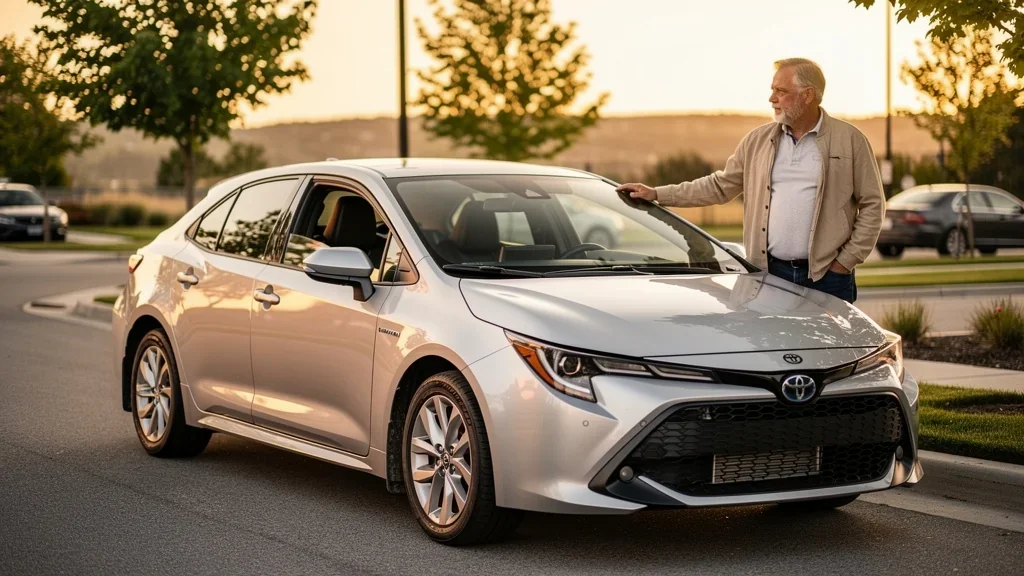
The Toyota Corolla Hybrid continues to run quietly in my garage. It has comfortably accommodated bags, a ball, and two suitcases when I switch off the engine. After 130,000 km, my perspective on it has evolved beyond mere specifications; it has become a part of my daily life on roads like the A6, N118, and the Aire de Limours-Janvry.
Insights from Usage
When I purchased the Corolla, I was averaging about 15,300 km annually before my quick technical inspection. I was in search of a compact car that was quiet, economical, and easy to handle. Initially, I thought the Corolla would be a standard compromise during the negotiation process for my trade-in. However, I may have misjudged the term. The compromise turned out to be quite coherent, embodying the same easy-to-live-with philosophy that I found in my review of a Clio V.
I compared diesel, plug-in hybrid, and electric vehicles. The diesel option made sense for long distances, but my weekly driving included a mix of city trips, short cold starts, and highway driving. The plug-in hybrid required a dedicated charging point, which I didn’t have, while the electric vehicle demanded too much calculation regarding quick charging stations and stops.
In urban environments, the smoothness of the Corolla Hybrid is particularly enjoyable. The e-CVT system allows the car to glide without jolts. In an underground parking lot, I mostly hear the gentle hum of the air conditioning and the thermal engine quickly coming to life. When I press the accelerator on a ramp, the 1.8-liter engine revs up, then calms down once the speed stabilizes. This behavior is something to consider when choosing between a new or used car. It may not be exhilarating, but it is reliable.
I remember a late-night return at 11:15 PM on the A6 after a 2-hour and 40-minute drive. The engine became more prominent during acceleration. I turned off the radio to reduce the cabin noise, and that’s when I felt the limits of the car—not after just 20 minutes, but during the repetition of long journeys.
I also have concrete details in mind. The trunk threshold still collects a fine layer of sand after certain trips. The plastic of the rear bin has a small mark near the right hook. Additionally, the EV mode is almost exclusively useful for gently exiting a parking lot or crossing a street at low speeds.
Assurances Backed by Numbers
Over the course of 130,000 km, the front brake pads were replaced at 91,000 km. The 120,000 km service cost me €287 at Toyota. The hybrid battery has never raised any alerts, and the starts remain smooth even after a cold night. My average fuel consumption is 4.8 l/100 km during urban weeks and 6.1 l/100 km when I return loaded via the A6.
The Corolla doesn’t promise exhilarating driving pleasure; instead, it offers something else: minimal maintenance concerns. The dashboard has repeatedly confirmed this with its stable figures and rare alerts. In real-world usage, that’s what truly matters.
Evaluating Diesel, Plug-in Hybrid, or Corolla Hybrid
The diesel option still seemed relevant for long trips of 620 km. However, my journeys are not that straightforward. The plug-in hybrid quickly loses its appeal without a consistent charging routine. Meanwhile, the electric vehicle can become cumbersome when I need to leave early, return late, and make unplanned charging stops.
The Corolla has spared me this hassle. It doesn’t require me to deliberate over every departure. It handles the week’s mixed driving and last-minute detours with ease. It isn’t a car designed for thrilling acceleration; it’s a vehicle meant for effortless driving.
My Verdict
I would recommend the Corolla to someone who drives about 15,000 km per year, primarily in urban areas, on the outskirts, and occasionally on the highway, and who desires a straightforward vehicle. Conversely, I would not recommend it to someone covering 35,000 km annually on highways, seeking silence at 130 km/h, or desiring more vigorous acceleration. It also isn’t suitable for someone looking for true electric driving on a daily basis. In these respects, the Corolla Hybrid falls short.
For me, the Toyota Corolla Hybrid remains an excellent mobility tool. It is economical, user-friendly, and reassuring. I would not hesitate to choose it again if my usage remains varied. However, if my driving shifts towards heavy highway use, I would explore other options.