Suzuki eVitara Review: Imperfect but Endearing
Suzuki enters the electric vehicle market with the eVitara, an urban electric SUV that offers all-wheel drive for the first time in its segment. Discover its unique design, features, and performance.
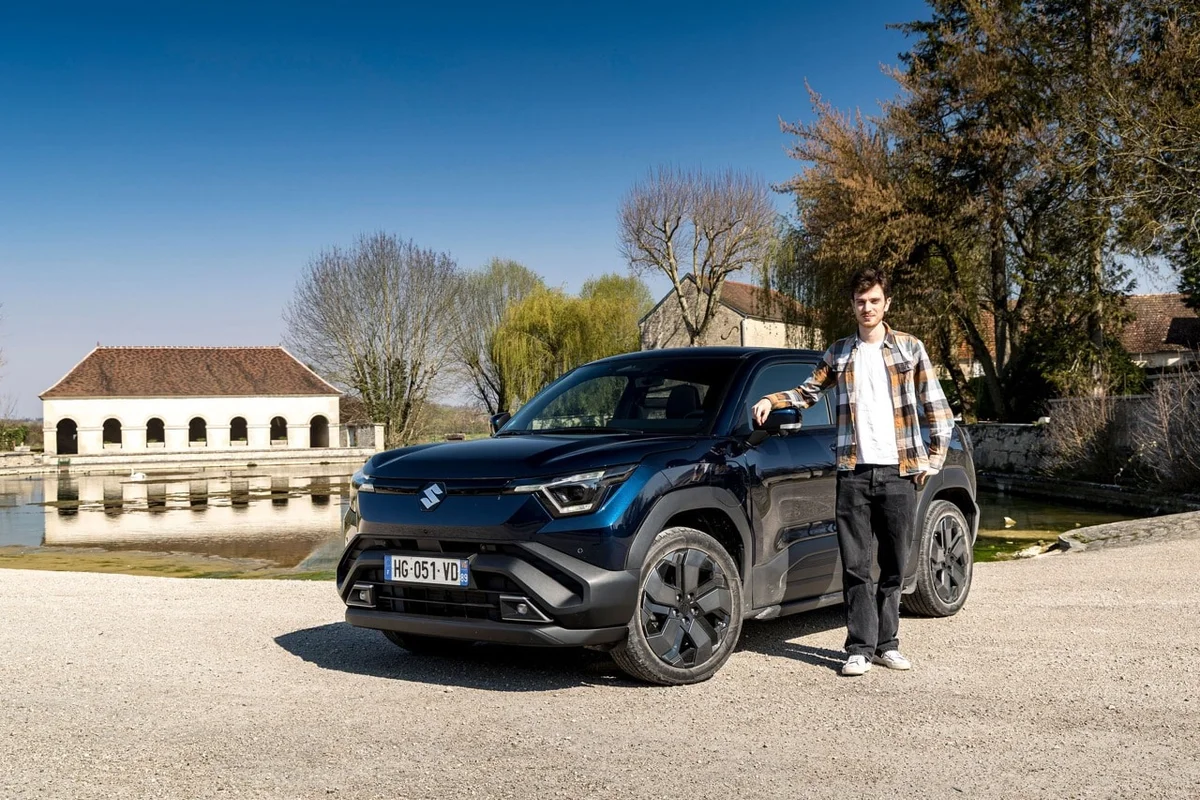
Suzuki enters the electric vehicle market. The Japanese brand, known for its simple and pragmatic solutions, whether with thermal, hybrid, or even off-road drivetrains, presents its vision of electric mobility. Here is the Suzuki eVitara, an urban electric SUV that brings all-wheel drive to the segment for the first time.
An Urban SUV with Bold Shapes
Suzuki must convince with the eVitara. The thermal version is a best-seller for the brand, particularly popular in the mountainous regions of France due to its all-wheel drive. However, Suzuki has chosen to significantly modernize the style of the Vitara with this electric model, retaining the name.
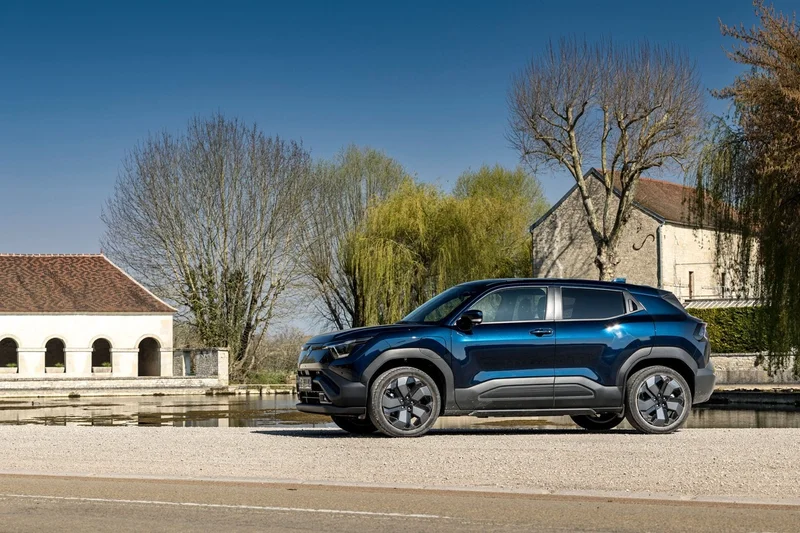
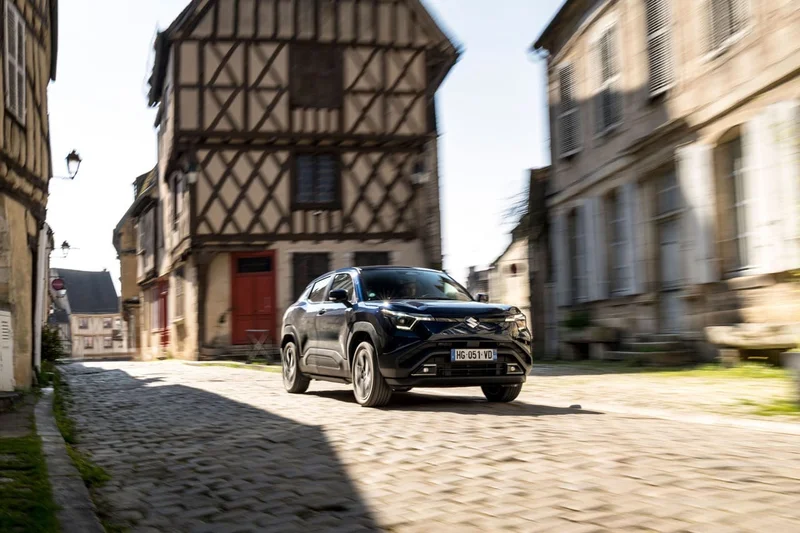
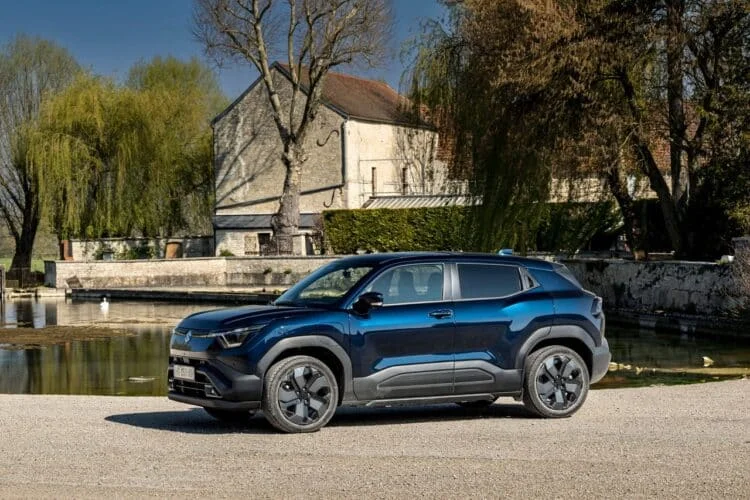
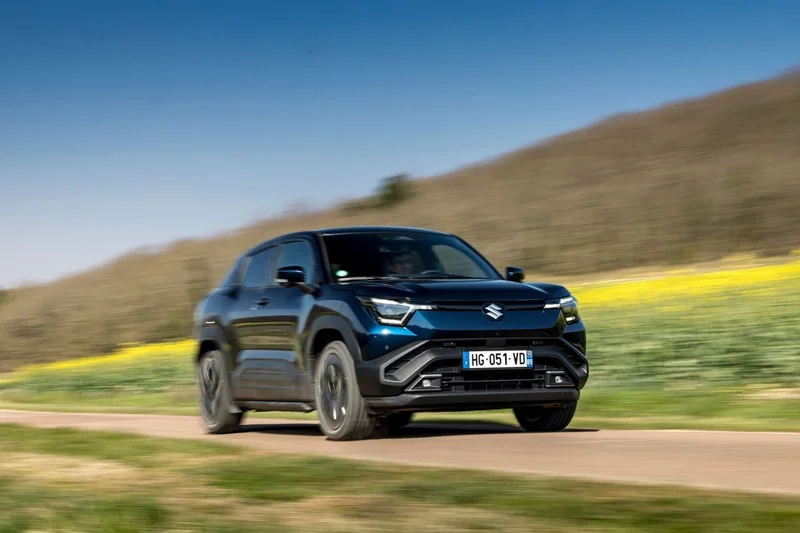
And it wasn’t really difficult; the thermal Vitara has been on sale since 2015 in its current generation, and while it has seen some updates, its style hasn’t changed much. So when the eVitara arrives 10 years later, the thermal version feels outdated. The eVitara is muscular with pronounced fenders, a straight and sculpted hood, LED lighting signatures, a black roof, and wheel arches topped with black elements, as well as a black lower body, giving the car a raised appearance. At both the front and rear, there are non-illuminated strips that are almost mandatory for a car to appear modern.
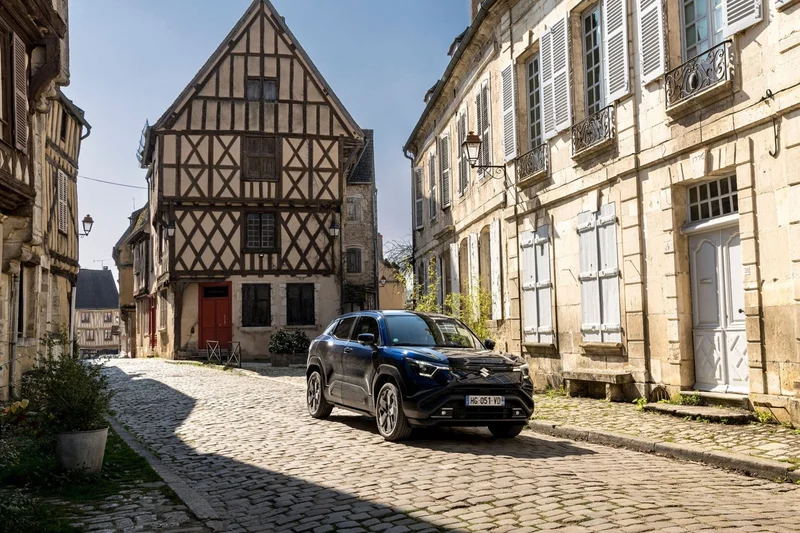
Despite these elements being quite common today, the Suzuki eVitara is unique. Its style does not resemble any other. This is good news; even as Suzuki enters the electric vehicle market, the brand does not lose its distinctiveness.
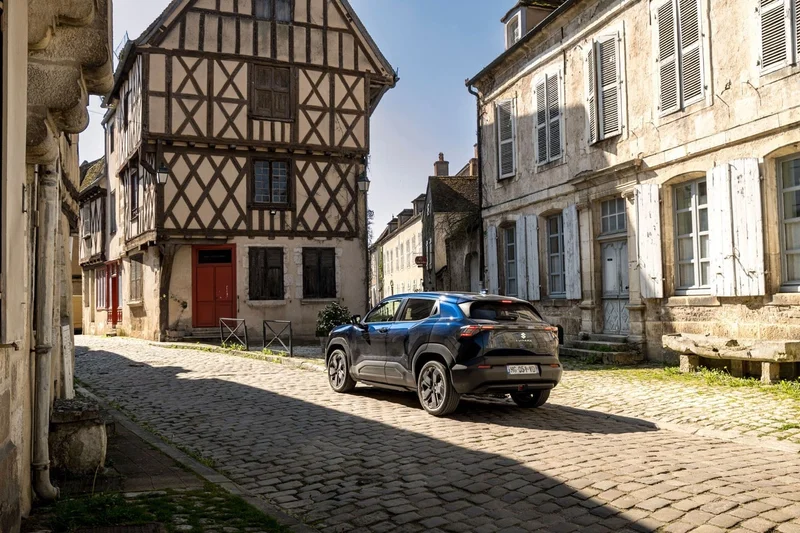
In terms of dimensions, the Suzuki eVitara measures 4.28 m long, 1.80 m wide, and 1.63 m high. These dimensions place it against the Kia EV3 or the Peugeot 2008, without being direct competitors to these urban-oriented SUVs.
Suzuki Enters the Modern Era
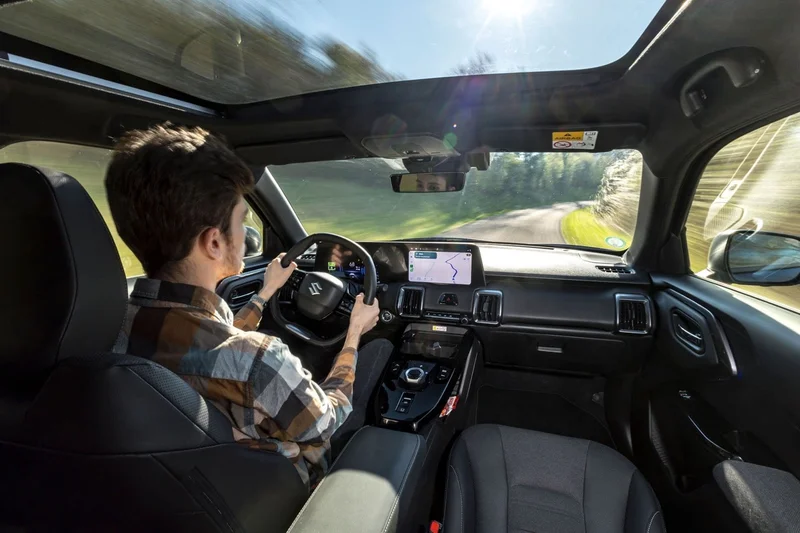
Inside, the break is as significant as in the exterior design. We finally find a 10.25-inch digital display that has become standard across the automotive production distributed in Europe. On the dashboard, there’s a 10.1-inch digital screen with the ability to modify some widgets, but most usage will go through Android Auto or Apple CarPlay. The infotainment system menus are not very user-friendly; we struggled to find how to reset the average consumption, and it is also necessary to go through the screen to adjust the regenerative braking power, and only when stopped... It’s a shame since this function is essential for an electric car.
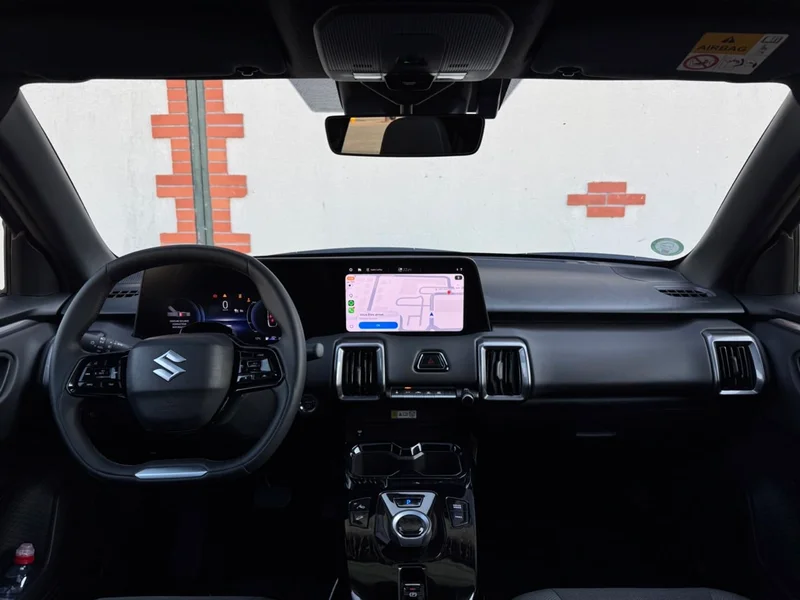
Fortunately, there are other positive points for the Suzuki eVitara, such as a steering wheel shortcut that allows direct access to the ADAS menu and physical climate control buttons. The high-end versions offer an Infinity audio system with a subwoofer in the trunk. Finally, the rear bench seat slides 16 cm, which can add 72 liters to the trunk. And that’s good because the trunk volume is only... 268 liters when it is pushed back.

A word about the finishes: I tried the high-end version of the Suzuki eVitara in its Style trim. The assembly quality is serious; it’s Japanese. Like a Toyota or a Honda, I have no doubt about the durability of the interior over time. The materials are not always the most flattering, but this is not a premium car. One cannot criticize the choice of materials in the Suzuki eVitara, which are solid and consistent with the vehicle's positioning. The eVitara is even much less rustic than the Vitara. My test version had an all-black dashboard, but there is an option for a caramel interior that adds a warmer feel to the cabin.
The Adventurer Spirit
Since the arrival of the first Jimny in the Suzuki lineup in the 1970s, the manufacturer has always had compact off-road vehicles with all-wheel drive, whether under the names Jimny, Samurai, or Vitara. Therefore, for its transition to electric, the eVitara could not skip an all-wheel-drive version.
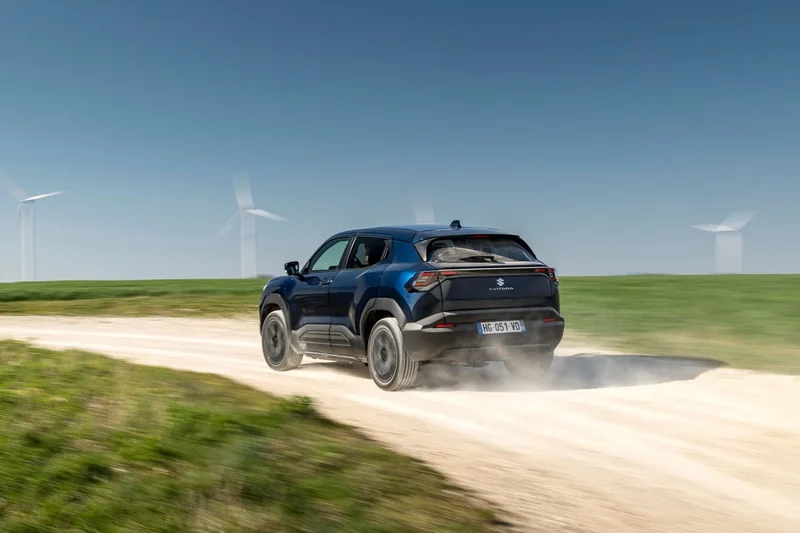
The ALLGRIP-e version develops 184 horsepower using two electric motors and a 61 kWh battery. The range reaches 395 km in the WLTP cycle. This 61 kWh battery is also used in a front-wheel-drive variant with 174 horsepower, providing 426 km of range, while the entry-level version has a 144-horsepower motor for a range of 344 km.
If Suzuki plans to sell 2,000 eVitaras per year, the entry-level version is unlikely to be the most popular. If price is a significant factor in the purchase, customers will likely turn to competitors benefiting from ecological bonuses. However, the eVitara will be more appealing with its large 61 kWh battery offering either a long range or the possibility of being equipped with all-wheel drive, making it the best compact SUV for mountainous terrain and snowy road conditions.
Regarding charging, it is not very fast, as charging from 10 to 80% takes 40 minutes. Suzuki does not provide the peak charging power. The peak charging power is estimated at 70 kW.
On the Road: Pleasant and Comfortable
On the road, I did not expect to discover a car with dynamic behavior, although our test version was the most powerful with its two motors for a combined power of 184 horsepower. The 0 to 100 km/h is achieved in 7.4 seconds.
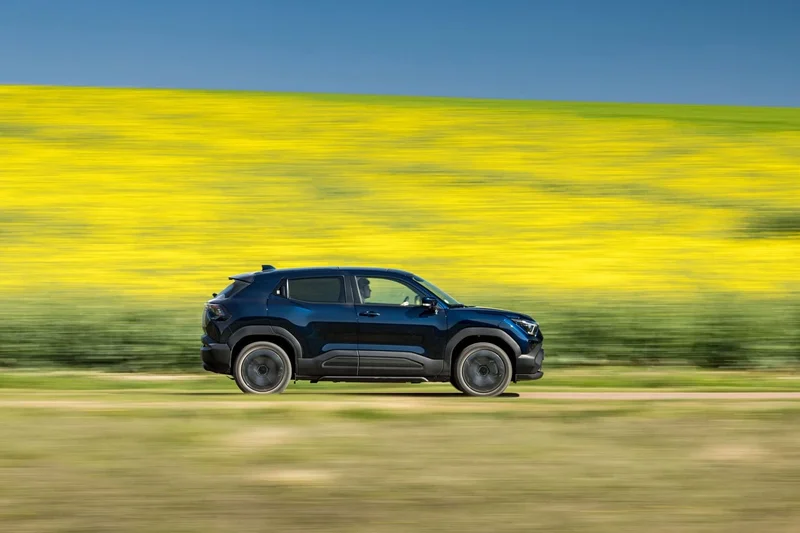
The acceleration is brisk, but the chassis is tuned for comfort. The car naturally leans in corners and does not handle bumps very well, which is understandable considering this small car weighs 1.9 tons. On the other hand, it does not jolt its passengers, and I prefer that to a car that pretends to be falsely sporty and overly dynamic. The Suzuki eVitara is designed as an urban SUV capable of handling difficult conditions like snow and mud; in this all-wheel-drive version, I do not expect it to have a very rigid chassis for fast driving on small roads.
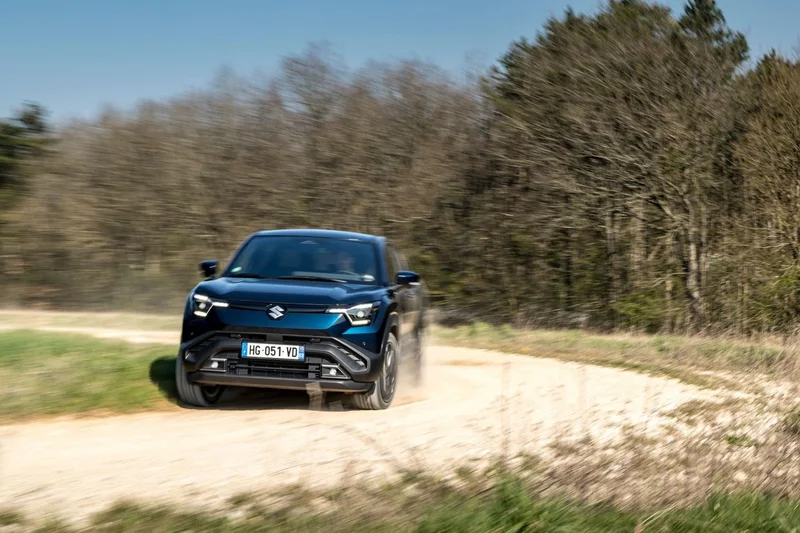
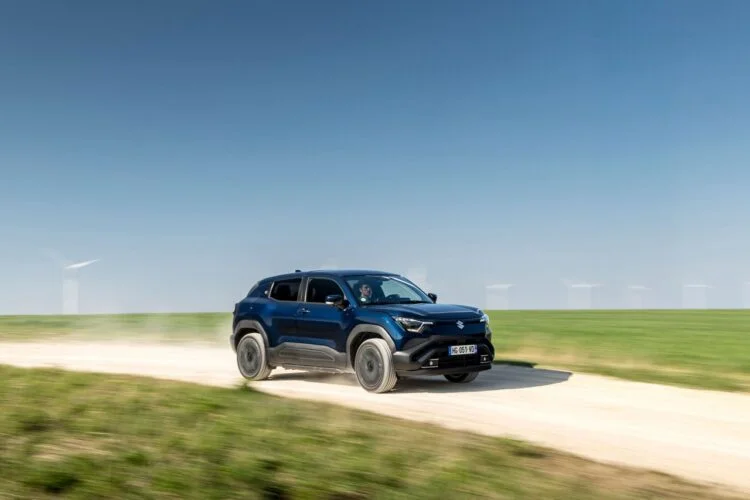
And this relative flexibility is appreciated on all terrains. The suspension does not jar your back over the first pothole encountered, and the speed bumps in the city are easily absorbed. I tested the Suzuki eVitara Allgrip-e on muddy paths in Burgundy. However, I cannot tell you if its ground clearance of 18 cm or its all-wheel drive makes miracles. My companion and I were gentle with the car, not finding any place that strictly required all-wheel drive to pass. Certainly, all-wheel drive provides extra confidence and grip on loose surfaces, but for most uses, the two-wheel-drive version will suffice, especially since it offers more range. Note that the four-wheel-drive version adds a Trail mode for loose terrains.
Inside, one can quickly find a correct driving position, but not perfect. Taller individuals may feel like their forehead is touching the roof, and the seat base is a bit short for proper support. Despite these two minor flaws, which depend heavily on the driver’s physique, the handling is straightforward. Suzuki designed this car like a thermal vehicle; there are no complications related to the electric drivetrain, just the button to activate or deactivate regenerative braking. Inside the cabin, we noticed some wind noise at highway speeds, but nothing really bothersome.
Conclusion
The Suzuki eVitara is the Japanese manufacturer’s first attempt in the electric vehicle segment. And as one might expect, the first time is not perfect. It is clear that the engineers have strived to create a coherent car, offering for the first time in this segment an all-wheel drive, but there are still some flaws. The trunk is small, the charging is too slow, the intensity of the regenerative braking cannot be adjusted while driving, and accessing certain functions in the menus is difficult.
Suzuki has relied on simple, pragmatic, economical, and reliable models for nearly a decade. The biggest novelty in the lineup has been the Swift, which has been renewed but without a complete overhaul. The Vitara has indeed remained stuck in the 2010s, which makes it appealing to a certain clientele looking for a simple car, but it allows a technological gap to develop as other manufacturers refresh their vehicles every 4 to 5 years.
And this technological gap tends to show on the eVitara; there is nothing prohibitive, and it is not a bad car in absolute terms; it is even a good effort for a first electric car, but compared to some competitors like the Kia EV3, which offers up to 605 km of range, the difference is noticeable. However, I have no doubt about Suzuki's ability to adapt; the Japanese market is not yet very fond of electric vehicles, but that will change. By developing its first electric car for Europe, Suzuki is preparing for this transition. The Suzuki team has told us that the European market is important to them because every regulation or expectation on the Old Continent eventually reflects globally. Electric cars will eventually become mainstream in Japan, and having been present in Europe first will allow Suzuki to evolve its products to reach maturity.
Now, regarding the prices of the Suzuki eVitara, the Advantage trim with a 49 kWh battery and 144 horsepower starts at €32,500, while our test version Allgrip-e with a 61 kWh battery in Style trim climbs to €40,800. A Peugeot e-2008 is in the same price range but can benefit from the ecological bonus, unlike the Suzuki eVitara, whose production location in Asia does not meet the eco-score requirements. To compensate, Suzuki offers a €4,000 discount across the range to help with the final decision for a car that is not perfect but is endearing, much like a Suzuki Jimny.