
Aqara's Smart Sensors: A Cost-Effective Solution for Home Monitoring
Exploring Aqara's smart sensors for home monitoring, focusing on water leak detectors and their integration with smart home systems. Discover their effectiveness and reliability.

The journey to enhance home safety began several months ago with the intention of installing water leak detectors. Water damage occurs far more frequently than fires, accounting for 60% of insurance claims, while fires represent only 10 to 15% of such cases.
Previously, we had been using various smart sensors from Eve Systems but found them lacking. The water detector from that brand costs around 100 euros, requires a dedicated outlet, and utilizes a two-meter sensor cable that needs to be laid out in the monitored area. Equipping every sink and the laundry room with this setup seemed both costly and cumbersome.
Conversely, our positive experiences with the Aqara G5 Pro surveillance camera led us to explore their affordable sensors, frequently advertised on AliExpress. We decided to purchase several water detectors at just a few euros each, along with door and window sensors, and a few temperature and humidity monitors. AliExpress not only shipped the products but also sent around 40 emails during the process, and within two weeks, our order was complete.
The Importance of Wireless Protocols
In Germany, we invested 120 euros in the Aqara Smart Home Hub M3, which connects all wireless protocols essential for a smart home, including Wi-Fi, Bluetooth, Zigbee, Thread, and Matter. This hub integrates seamlessly with smart home ecosystems from Apple, Amazon, Google, Samsung, and Home Assistant. It resembles a streaming box, like the Apple TV, requires a power outlet, and even features a built-in speaker for alerts.
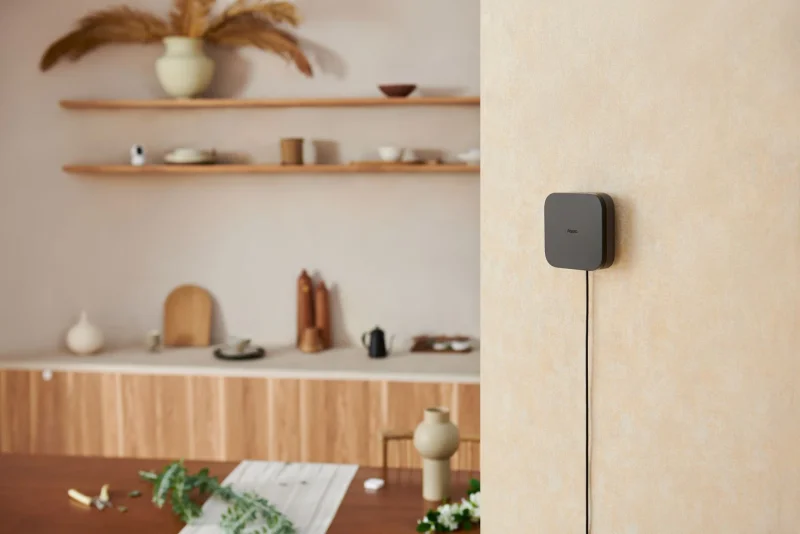
A few weeks later, we had installed one water sensor under each sink, as well as in the heating and laundry rooms. The sensors are slightly larger and thicker than a two-euro coin and detect water through two contacts on their underside. Then, the moment of truth arrived.
On a Sunday, the sensor triggered an alarm—not just through the smartphone app but also via the hub's speaker. After silencing the alarm, we discovered a small leak from a recently installed faucet in the guest bathroom. The sensor performed excellently, accurately detecting moisture around it. We also received a legitimate alarm from the kitchen. Throughout the weeks, we encountered no false alarms, and overall, we are quite satisfied. By combining the costs of the hub and sensors, we managed to protect every potentially vulnerable area in our home affordably and discreetly.
Positioned centrally in our home, the Hub M3 effortlessly manages not only the water detectors but also the temperature and humidity sensors. We installed about six of these sensors and can immediately see when humidity levels rise in the gym after intense workouts or in the bathroom post-shower. Unlike the previous Eve Energy sensors, all data from the Aqara sensors is readily accessible in the app without needing to connect via Bluetooth first.
Push Notifications and Automation
Another advantage of Aqara is its ability to send push notifications when a sensor detects certain thresholds being exceeded. For instance, if humidity in the bathroom rises above 70% due to forgotten ventilation, an immediate notification is sent to the user's mobile device. Setting up these automations is straightforward, and the app offers great flexibility, especially in distinguishing between push notifications and alerts that trigger the hub's speaker.
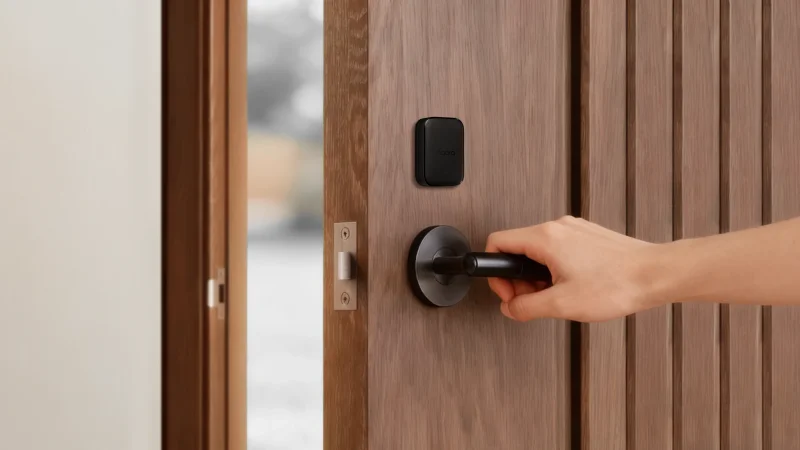
Our integration with Apple’s HomeKit has been smooth. For fun, we attached the T1 vibration sensor, slightly larger than a coin, beneath a step on the basement stairs. We programmed a rule in Apple HomeKit: if the T1 detects vibration at night, indicating someone is ascending the stairs, the bedroom light turns on. We later tried placing the sensor on our mailbox, but its wireless range proved insufficient.
A new addition to our setup is the P100 multisensor, which unlike standard door and window sensors, does not require a second component for detecting openings. This sensor is so sensitive that it can detect movement, falls, vibrations, and tilts. It can function as a window sensor or monitor a mailbox flap, the opening of a drawer, or even the movement of a pillbox. Priced at 30 euros, its sensitivity is adjustable. If not used with Zigbee on the Aqara hub, it can be switched to Thread mode, making it compatible with Google, Apple, Samsung, and Amazon smart home systems. However, we found that switching modes via the app took several attempts.
For completeness, it’s worth noting that Aqara also manufactures smart door locks and doorbells, as well as presence sensors, which are superior to standard motion detectors. These sensors can detect the slightest movements, reliably recognizing a person’s presence, as well as their spatial location, movement direction, and distance. Aqara's innovative products have been available for over a decade.
While concerns about data privacy and cloud connectivity may arise, the value for money and reliability of the devices we have tested thus far have been impressive.
You may also like