
Are Supermarket Fuel Injector Cleaners Worth It? A Candid Review
A firsthand account of the effectiveness of supermarket fuel injector cleaners versus professional cleaning, detailing personal experiences and insights.
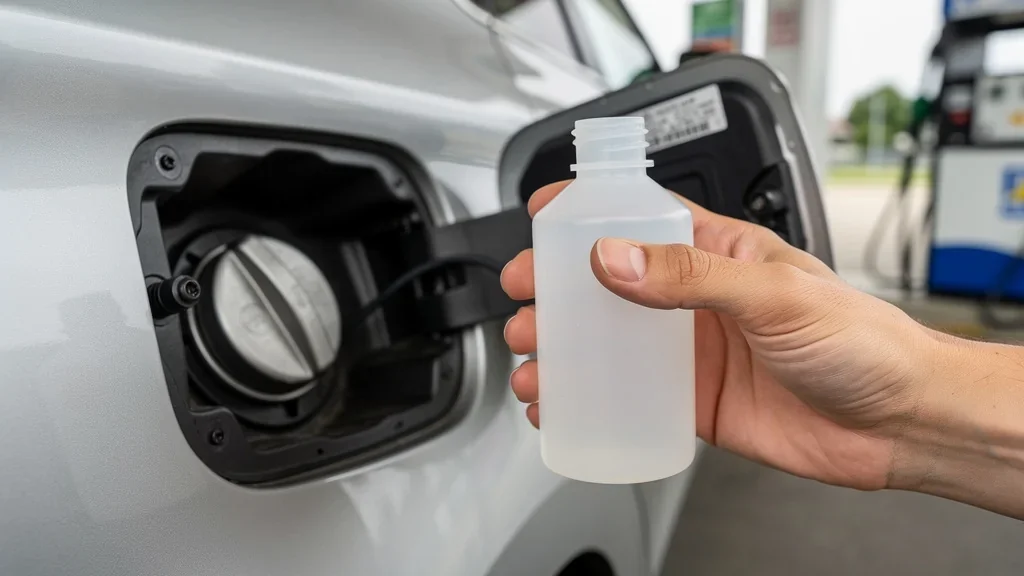
While shopping in the automotive aisle of a Leclerc in Chasseneuil, I found myself contemplating a 40-euro expense on fuel injector cleaners. Having previously tried one on my Corolla to address minor acceleration issues, I was left unimpressed. Living with my partner and managing our budget carefully, I decided it was time for a thorough workshop test rather than relying on a bottle. Here’s what I discovered about these products and whether they truly deliver.
The Moment I Realized They Didn’t Work as Expected
Initially, I was drawn in by simple promises: a 17-euro bottle, a full tank, and my car would regain its vigor without a garage visit. Friends claimed their idling improved after using these products, so I thought I’d give it a shot, eager to save time and avoid a hefty repair bill. Unfortunately, my confidence was misplaced.
For four months, I diligently added the recommended doses to my 43-liter tank. Most of my driving consisted of short trips—only about 6 kilometers each—so the engine rarely reached optimal temperature. I continued to experience the same uneven idling, hesitation when exiting roundabouts, and minor stutters when accelerating. There was no significant improvement; the bottle’s claims seemed more aesthetic than effective.
The turning point came after a full tank with no noticeable changes. The check engine light remained stubbornly illuminated, despite my repeated attempts with the additives. It was then I realized I had primarily wasted my money. A visit to the mechanic confirmed my suspicions; the injectors were still clogged despite my efforts. The diagnostic screen displayed the ongoing issue, and I felt a wave of disappointment.
What surprised me was the condition of the fuel filter. I hadn’t considered it before, but the mechanic pointed out how dirty it was, clarifying that while an additive might provide some cleaning, it couldn’t fix a blocked system. Many overlook this crucial aspect, mistakenly believing that adding a bottle will resolve deeper issues. Now, I prioritize checking the filter before anything else.
Transitioning to Professional Cleaning on a Rainy Saturday
On a rainy Saturday, I took my vehicle to the garage, still smelling of cold gasoline. The mechanic spoke plainly, explaining that while additives float in the tank, professional cleaning directly addresses the injectors. Having worked as an automotive writer for CarBling, I appreciated the importance of this distinction, but the mechanic illustrated it with his grease-stained hands rather than jargon. We compared supermarket products with professional services, and the difference was evident.
He removed the injectors and subjected them to ultrasonic cleaning. I watched as the tank vibrated, restoring a more even spray pattern. The objective was clear: a fine jet combusts more efficiently than a sputtering one. I understood that cleaning one component without considering the entire system was merely a temporary fix. After the process, the engine felt revitalized, almost as if it had taken a deep breath.
The next day, the idling was smoother at traffic lights, and the acceleration was noticeably improved, especially on inclines. During a 26-kilometer trip, the onboard computer displayed fuel consumption of 5.6 liters per 100 kilometers, down from 6.1. The stutter during acceleration had almost vanished, and I could feel the difference immediately.
The total cost for the service came to 126 euros. While this is significantly more than a 17-euro bottle, I found value in the tangible results rather than empty promises. Living with my partner and without children, I prefer to invest in a definitive solution rather than gamble on multiple ineffective products. The quality-to-price ratio felt fair because my car ran smoothly after the service, not just for a brief period.
When It’s Worth It and When It’s Not
For urban drivers who typically make short trips of around 5 kilometers, a fuel injector cleaner may provide a temporary improvement in engine smoothness, particularly if the vehicle has no serious issues. I noticed a slight calming of the idle and less sluggish acceleration on a motor that was merely underperforming. However, I view this as a short-term fix. If the engine is already exhibiting significant issues, the product only serves to delay addressing the underlying problem.
For a car with 180,000 kilometers showing signs of stuttering and OBD faults, I wouldn’t waste time in the supermarket aisle. The gap between expectation and reality hit hard. Professional cleaning, ranging from 80 to 150 euros, remains the most reliable option for those intending to keep their vehicle for the long haul while driving around 25,000 kilometers annually. If you want concrete results, that’s where your money should go, not on three similar-looking bottles.
For DIY enthusiasts, I recommend starting with three simple checks: the OBD scanner, the fuel filter, and the injectors. It may seem basic, but it can prevent purchasing a bottle to mask an existing problem. If the engine only shows minor hesitation, an additive might be worth trying. However, if starting becomes prolonged and idling unstable, I would dig deeper into the issue. For more complex problems, I defer to the mechanic and keep my hands clean.
At home, I also tried a gentler approach before abandoning the idea. I’m referring to a legitimate product, not a blind fix. But as soon as the warning light returned or the car remained sluggish after 200 kilometers, I headed straight to the garage. Here’s what I keep in mind:
- I reserve additives for engines that are already running well.
- I check the fuel filter first.
- I use the OBD scanner as soon as a warning light appears.
- I opt for ultrasonic cleaning when acceleration remains sluggish.
My Uncompromising Assessment After Multiple Tests
After several trials, I found that supermarket fuel injector cleaners only offer minimal benefits on an already clean engine. My Corolla showed no improvement when idling was unstable or during cold starts. The engine continued to stutter at the same points, and the warning light returned like an unwelcome reminder. It was clear that I had to let go of the idea of a miracle cure. I now view it as a preventive measure rather than a solution.
What truly makes a difference is a straightforward diagnosis before tampering with the system. A worn filter, removed injectors, and ultrasonic cleaning reveal exactly where your money is going. Basic chemical treatments may smooth out a compliant engine, while professional cleaning addresses visible issues. I came to understand this through the mechanic’s soiled hands, not through promotional claims. This realization is crucial as it cuts through false hopes.
In my daily life, with my partner and a maintenance budget that leaves no room for waste, I prefer clear invoices over dubious bottles. I’ve become more discerning with my supplementary purchases. If I notice a slight hesitation, I wait until the tank is empty and monitor the situation. If the car exhibits serious stuttering, I act promptly. For more complex issues, I leave diagnostics and repairs to the mechanic. I want a vehicle that runs smoothly, not one that offers empty promises in plastic packaging.
When It’s Appropriate
I consider fuel injector cleaners suitable for city drivers making short trips, around 7 kilometers each way, with a vehicle that is only slightly sluggish. In this scenario, a bottle might help restore a smoother idle after a couple of tanks and alleviate minor hesitations when accelerating. I also think of those who occasionally drive 200 kilometers straight, allowing the engine to warm up adequately. In such cases, a 17-euro additive can still be justified.
I also see it as a viable option for someone wanting to maintain their vehicle without frequent disassembly. If the car has no warning lights, no significant stutters, and just a bit of sluggishness around 1,800 RPM, the trial remains reasonable. I envision a profile willing to spend 17 euros, drive with a 43-liter tank, and wait 200 to 300 kilometers before assessing the results. For these scenarios, the product can serve its purpose.
When It’s Not Worth It
I advise against using these products for those who already see a check engine light, experience significant stuttering, or have prolonged cold starts. In such cases, I wouldn’t add a bottle to the cart. I’ve seen this situation too often to believe in miracles. If the injector is failing, the filter is dirty, or if the car is already stuttering, supermarket solutions won’t resolve anything. They only waste time before a garage visit is necessary.
I also discourage heavy drivers who intend to keep their vehicle for four years without frequent repairs. For this profile, a 126-euro workshop bill makes more sense than a stack of 17-euro additives that offer only vague improvements. The same applies to those who only make 3-kilometer trips and turn off the engine before it warms up. In this case, the product cannot compensate for poor usage. The engine remains cold, the results are minimal, and the money is wasted.
My conclusion: at the Leclerc in Chasseneuil, I leave the bottle on the shelf as soon as the car shows real symptoms and head straight to the Garage du Pont-Neuf. For someone willing to drive 200 kilometers after treatment, looking to smooth out a slightly sluggish engine, and willing to try 17 euros before committing to 126 euros, I say yes. For anyone trying to mask a warning light, a stuttering engine, or an already tired injector, I firmly say no without hesitation.