Choosing and Replacing Your Car Key Battery
In most cases, a car key battery is a CR2032 lithium 3V, a button cell available for €1.50 to €3. Replacing it takes 3 to 5 minutes, avoiding dealer labor costs.
In most cases, a car key battery is a CR2032 lithium 3V, a button cell readily available for prices ranging from €1.50 to €3. Replacing it takes approximately 3 to 5 minutes using a simple flat screwdriver, avoiding dealership labor costs that can range from €15 to €25. Common signs of a dying battery include a range drop from 10 meters to just 30 centimeters, intermittent signals, or a dashboard warning light indicating a weak key battery. This 2026 guide provides detailed references by car brand, a step-by-step replacement procedure, emergency techniques to start without a functional battery, and tips to extend the new battery's life.
🔑 Key Points
- ✓ The CR2032 battery is used in most keys, with the CR2025 and CR2016 found in some compact models.
- ✓ Actual cost of a DIY replacement: less than €3, compared to €15 to €25 at a dealership.
- ✓ Average lifespan: 2 to 4 years depending on usage and battery brand.
- ✓ In emergencies, placing the key against the Start/Stop button allows starting without a battery.
What Type of Battery for a Car Key?
Modern remote keys predominantly use a lithium button cell in the CR20xx format, operating at 3 volts. Three main references dominate the market, covering over 95% of vehicles in France: the CR2032 (20 mm in diameter, 3.2 mm thick), the CR2025 (20 mm x 2.5 mm), and the CR2016 (20 mm x 1.6 mm). The letter "C" indicates lithium chemistry, "R" denotes the round shape, and the numbers specify exact dimensions. This standardization allows the use of any compatible brand without electrical incompatibility risks.

The Dominant 3V Lithium Button Cell
The CR2032 remains the most common choice, offering a capacity of 220 mAh, balancing longevity and size effectively. It is used in the majority of Renault, Peugeot, Citroën, Volkswagen, BMW, Audi, Mercedes, Toyota, and Ford keys manufactured since 2010. Some very slim keys, particularly in recent premium models, utilize the thinner CR2025. A few dual-battery keys combine a CR2016 and a CR1616, but this is rare. A comprehensive list of battery references by car manufacturer is available.
Battery References by Car Brand: Summary Table
| Brand / Model | Battery Reference | Type | |----------------------------------|------------------|---------------| | Renault Clio, Captur, Megane | CR2032 | Lithium 3V | | Peugeot 208, 308, 3008 | CR2032 | Lithium 3V | | Citroën C3, C4, C5 | CR2032 | Lithium 3V | | Volkswagen Golf, Polo, Tiguan | CR2025 | Lithium 3V | | Toyota Yaris, Corolla, RAV4 | CR2032 | Lithium 3V | | BMW Series 1, 3, X1 | CR2450 | Lithium 3V | | Audi A3, A4, Q3 | CR2032 | Lithium 3V | | Mercedes Class A, C, GLA | CR2025 | Lithium 3V | | Ford Fiesta, Focus, Kuga | CR2032 | Lithium 3V | | Dacia Sandero, Duster | CR2032 | Lithium 3V |
(Data from manufacturers 2026; verify in your vehicle manual)
Case Study: Marc, a 42-year-old Peugeot 308 owner from Val-de-Marne, discovered that his remote key only worked at a distance of 30 cm instead of the usual 10 meters. After checking the manual, he identified the required CR2032 3V battery, purchased a pack of two Varta batteries for €2.50, and replaced the battery in just 3 minutes, avoiding a dealership charge of €15 for labor.
The most reliable method to identify the correct battery is to open the key and read the reference engraved on the flat face of the battery. The code is always visible: CR2032, CR2025, CR2016, CR2450. If the engraving is worn, measure the diameter (usually 20 mm) and thickness using calipers or a ruler. Alternatively, the vehicle manual (under "key" or "remote control") will provide the exact reference. As noted in our battery life guide, the key battery and the starter battery are independent components that wear down at different rates.
A dying battery is typically indicated by a gradual loss of range. A new remote works at distances of 10-15 meters; over time, this range diminishes to 1-2 meters, then just a few centimeters. In newer vehicles, the dashboard may display a message indicating "weak key battery" or a key icon (Renault since 2018, Peugeot since 2020, Volkswagen since 2019). This warning light is the most reliable signal, indicating approximately 2 to 4 weeks of remaining power before complete failure.
Four Signs of a Weak Battery
- Reduced Range: You need to be closer to the vehicle to lock or unlock it.
- Intermittent Signal: You must press the button multiple times for a response.
- Dashboard Warning: Key icon or text message at startup.
- Unreliable Keyless Start: The vehicle fails to detect the key in your pocket.
Distinguishing Between a Dead Battery and a Faulty Key
Before ordering a new battery, rule out the possibility of a faulty key. Test with the spare key provided at the time of purchase: if the spare works perfectly at 10 meters, the issue is likely the battery in the original key. If both keys show diminished performance, it may indicate a receiver antenna issue in the vehicle, which requires a dealership visit. Another test involves changing the battery and checking: if the problem persists, the internal electronics of the key may be at fault, with replacement costs ranging from €80 to €250 depending on the brand.
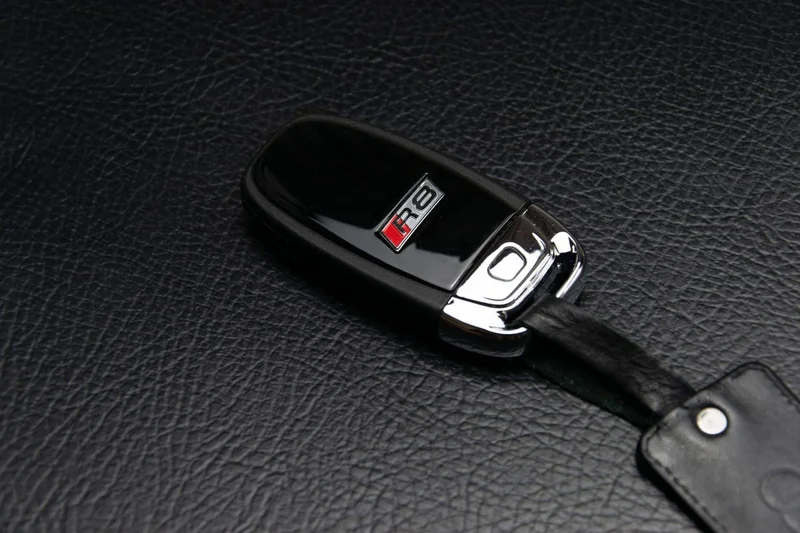
Replacing the battery takes 3 to 5 minutes using a flat screwdriver or a coin. However, it is crucial not to touch the flat sides of the new battery with your fingers, as finger grease can oxidize the contacts and halve its lifespan. Handle it by the edge or use a clean cloth.
- Extract the mechanical backup key by pressing the side button or pulling the latch.
- Open the casing by inserting a flat screwdriver into the designated slot and gently twisting.
- Remove the old battery using the screwdriver tip, noting its reference and orientation (usually + facing up).
- Install the new battery while respecting polarity, avoiding contact with the flat surfaces.
- Close the casing by snapping the two halves together and test immediately at 5 meters from the vehicle.
Opening the Key Casing: Two Methods Depending on Models
There are two types of key casings. The first, known as "clipped", is common in most Renault, Peugeot, Citroën, Ford, and Dacia keys: a slot on the edge allows a flat screwdriver to be inserted and levered to separate the two halves. The second type, "screw-based", is found in BMW, Audi, Mercedes, and some Volkswagens: a Torx T6 or T8 screw keeps the casing closed, requiring the appropriate screwdriver. Key battery catalogs sometimes specify the type of opening by model.
Installing the New Battery Without Oxidizing the Contacts
The positive polarity (+) is almost always oriented upwards, towards the printed face of the battery visible in the compartment. Incorrect orientation won’t damage the key but will prevent it from functioning. If you notice any green residue (oxidation), gently clean the metal contacts in the compartment with a cotton swab lightly moistened with 70% alcohol. This simple precaution can extend the new battery's lifespan by 6 to 12 months on average.
Testing and Resynchronizing the Key if Necessary
On 95% of vehicles, the key functions immediately after replacement. However, for certain Peugeot, Citroën, or Ford models, a resynchronization procedure is required: insert the key into the ignition, turn it to the "accessories" position without starting, wait 10 seconds, then press the lock button. The vehicle manual details the exact procedure. If the key remains unresponsive after resynchronization, the internal electronics may be at fault.
How to Start Your Car When the Key Battery is Dead?
A discharged key can still start the vehicle. Two backup systems are available. First, bring the key physically close to the Start/Stop button or the reader in the steering column: the vehicle's antenna generates an electromagnetic field that passively powers the transponder chip, allowing the car to start. Alternatively, vehicles with a mechanical lock can use the integrated metal backup key within the remote casing.
The Badge Technique Against the Start/Stop Button
For "keyless" vehicles (Renault, Peugeot, Citroën, Toyota, Volkswagen since around 2015), press the key directly against the Start/Stop button while simultaneously pressing the brake pedal. The vehicle detects the chip without a battery and allows starting. In BMWs, the key fits into a dedicated slot next to the Start button. In Mercedes vehicles, the key must be held close to the steering wheel. The exact procedure is always found in the manual under "emergency start" or "low battery."
Using the Integrated Mechanical Backup Key
Most remote keys contain a retractable metal key, hidden within the plastic casing. A sliding button on the side or a latch allows it to be extracted. This mechanical key opens the driver's door via a hidden lock, often concealed by a plastic cover beneath the handle. Once inside, the badge technique against the Start/Stop button can be employed to start the vehicle. Note that on some vehicles, using the mechanical key to open the door may trigger the alarm, which will automatically turn off upon starting the engine.
Where to Buy Your Car Key Battery and What Does It Cost?
A CR2032 branded battery costs between €1.50 and €3 each. It can be found in four main places: supermarkets (battery aisle, Varta or Duracell packs priced at €2.50), tobacco shops and pharmacies (priced between €2 and €4 each), auto centers like Norauto or Feu Vert (ranging from €3 to €5, sometimes with free installation), and online platforms such as Amazon (10-pack for around €8, or €0.80 each). It's advisable to avoid unbranded batteries sold for less than €1, as their actual capacity often drops significantly within months.
Concrete Example: Comparing a 3-year cycle for a key requiring a battery change every 2 years.
Option 1: purchase at the supermarket + self-installation:
- €2.50 (Varta pack)
-
- €0 (labor)
- = €2.50 over 3 years
Option 2: dealership visit:
- €5 (battery) + €15 (labor)
- = €20 per intervention
Reliable Brands: Varta, Duracell, Renata, Ansmann
Four brands dominate the lithium button battery market, offering consistent quality and long shelf life (often 8 to 10 years from the manufacturing date): Varta (German, widely available in Europe), Duracell (American, available everywhere), Renata (Swiss, a watch reference often used in OEM by manufacturers), and Ansmann (German, good value for money). Avoid low-quality store-brand batteries and those sold individually without original packaging, as freshness cannot be guaranteed.
Professional Battery Replacement: What Does It Cost?
In brand dealerships, expect to pay between €15 and €30 for replacement (battery + installation). In auto centers (Norauto, Feu Vert, Speedy), the price drops to €5 to €10, sometimes free if you purchase the battery on-site. A specialized automotive locksmith may charge around €10 to €15 for this service.