Driving Review: The Mercedes CLA Hybrid
The Mercedes CLA Hybrid combines electric and combustion power, appealing to younger buyers with its luxury features and performance. Discover its specifications and driving experience.
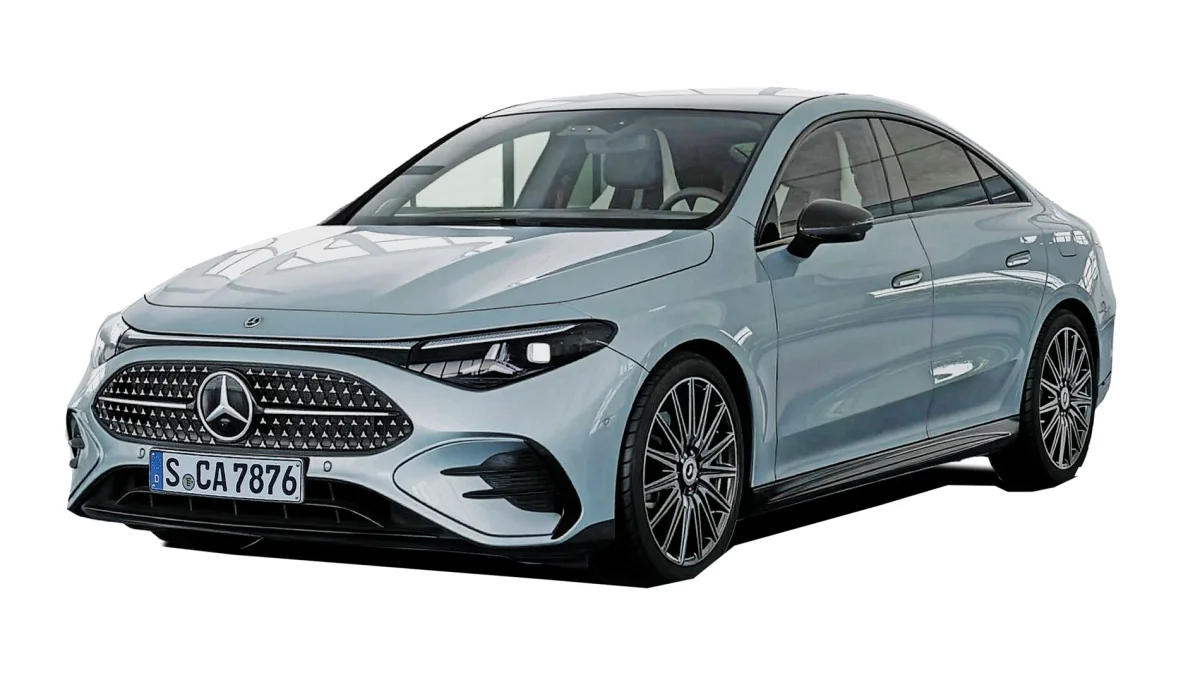
Mercedes-Benz initially emphasized electric vehicles under its brand, but the Stuttgart-based automaker quickly pivoted to meet customer demands for versatility. The latest generation of the CLA, aimed at attracting younger buyers, debuted with a fully electric model before introducing a hybrid variant, available for order since June. This hybrid features a four-cylinder gasoline engine offered in three power outputs: 136, 163, or 190 horsepower, complemented by a 30-horsepower electric motor.
The test vehicle we drove struck a balance, allowing for the choice between two-wheel or all-wheel drive, with the latter adding to the base price of €51,000. Given the nuances of German tax laws, some company car users might find the entry-level electric model, starting at €49,000 with 224 horsepower, more appealing. Notably, all-wheel drive is only available in the most powerful electric version, which boasts 354 horsepower and starts at €57,000.
The Star Power
From an exterior perspective, the CLA’s design gives little away about its propulsion method, adorned with the iconic Mercedes stars. While some may find the styling a bit ostentatious, it certainly makes an impression, particularly in nighttime settings. A friend, seeing the car at dusk, remarked that it looked like a luxury vehicle worth over €100,000. Admittedly, Anna may not be a car expert, but the CLA successfully conveys a sense of prestige that resonates even with those less familiar with automotive details.
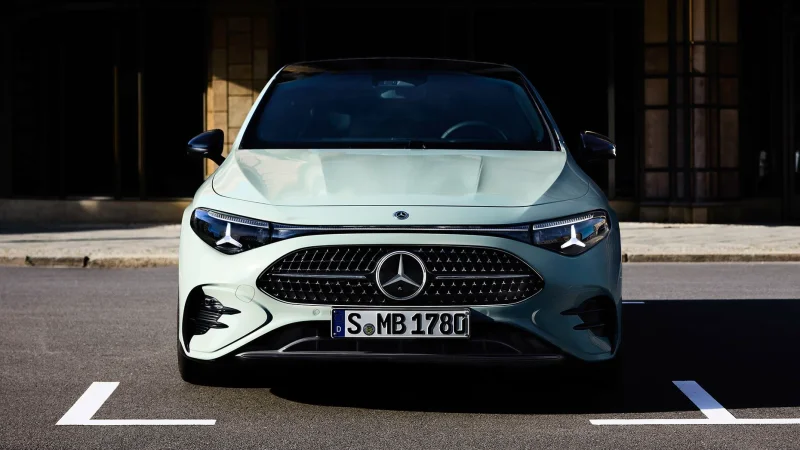
As one approaches the CLA with the key in hand, the vehicle responds with a welcoming hum while the door handles extend outward. However, a point of criticism arises: a brand synonymous with safety should consider fixed door handles, even if it results in a minor increase in fuel consumption. The doors open and close with a reassuring solidity expected from Mercedes, leading into an interior that, particularly in the AMG Line Plus trim (which includes additional features for over €9,000), exudes luxury.
The sports seats, featuring black surfaces with white accents and red stitching, mimic high-quality leather with impressive finesse. The red seatbelts add a touch of flair, but the front center console disappoints, appearing to be brushed aluminum while feeling decidedly plastic under the arm.
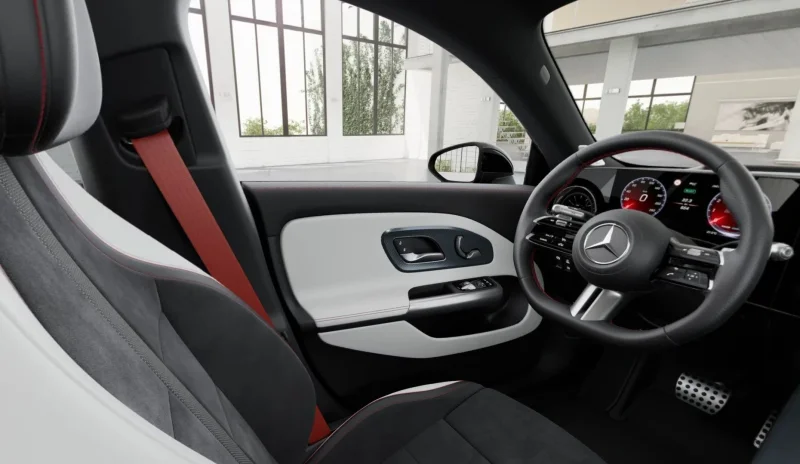
The driver’s view is dominated by a massive screen stretching from the A-pillar to the opposite side, concealing three individual displays behind it. The graphics are meticulously designed, though they only serve as virtual indicators on a rather uninspiring vertical surface. Mercedes has retained some analog controls for the steering wheel and beneath the central monitor, and the leather-wrapped steering wheel feels premium to the touch.
Now, let’s address the driving experience to determine if the integration of electric and combustion power has been successful. A brief technical note: Mercedes employs a different hybrid technology compared to pioneers like Toyota and others such as Renault and Volkswagen. While the Japanese brands utilize two electric motors and a planetary gear set, eliminating traditional gears, Mercedes positions the electric motor behind the combustion engine on the input shaft of a conventional eight-speed transmission. This design is theoretically better suited for highway driving but may compromise efficiency in urban settings.
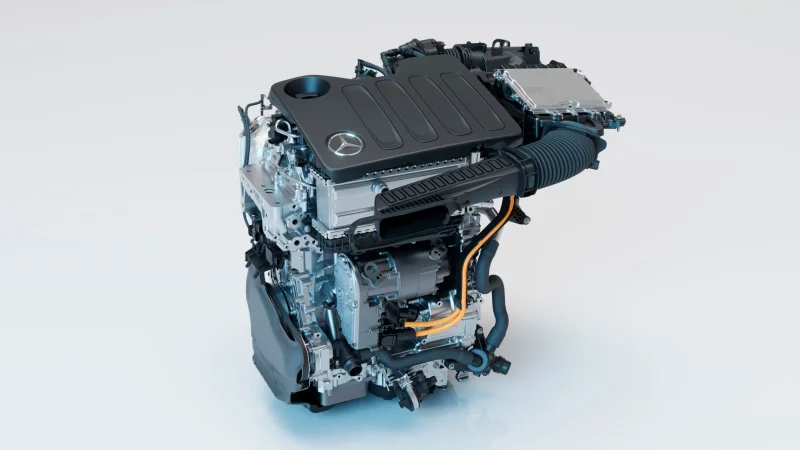
In practice, this approach means the combustion engine kicks in shortly after electric driving begins, announcing its presence quite audibly. Comfort during slow speeds is somewhat compromised, requiring constant attention to the right foot as the pedal response is not linear. Additionally, the gentle electric acceleration on inclines, as experienced during our garage exit simulation, results in noticeable jerking—a sensation engineers refer to as torque ripple, which should not be present in modern vehicles.
However, when the accelerator is fully engaged, the power is abundant, allowing for quick acceleration into speed ranges where other hybrids might struggle. The CLA can theoretically reach speeds of up to 228 km/h, although beyond 180 km/h, performance decreases and wind noise becomes significant.
Consumption Highly Dependent on Driving Style
On long journeys, the CLA performs reasonably well but lacks excitement, with fuel consumption recorded at 6.5 liters per 100 kilometers, only slightly above the official figure of 5.5 liters. In Eco mode, we managed to achieve an impressive 4.9 liters. However, under challenging conditions, such as high external temperatures and significant city driving, consumption surged to 9.0 liters. Thus, efficiency largely hinges on the driver’s behavior.
Does everything depend on the driver? The CLA attempted to cater to our needs but occasionally missed the mark, like when the windows, lowered to cool the seats before departure, rolled up automatically while we loaded luggage into the surprisingly spacious trunk. Nonetheless, the MBUX system’s voice recognition was exceptional, likely benefiting from Mercedes’ recent collaboration with Microsoft and Google, making for a highly intuitive user experience.
But what advantages does the hybrid offer? The test vehicle weighs 1,760 kilograms, nearly 300 kilograms lighter than the electric CLA we drove four months ago, yet this weight reduction did not translate into significantly enhanced agility. One clear benefit is the refueling time; the hybrid version can take on approximately 100 kilowatt-hours at the pump in just one minute, significantly reducing downtime at inconvenient rest stops. A diesel option, once a hallmark of Mercedes, would further extend range, but it is no longer available in this model.
Conclusion
STRENGTH: The hybrid offers real choice, equipped with as much technology as the electric version. WEAKNESS: The drivetrain lacks refinement, resulting in high consumption in city driving. SOUND CHECK: The surround system immerses you in concert-like acoustics.
Specifications
Mercedes-Benz CLA 200 4MATIC
Recommended Price: €51,158 Test Vehicle Price: €66,021
Four-Cylinder Gasoline Engine: 1499 cc displacement with 163 PS (120 kW) power at 6000 rpm Hybrid Transmission: with integrated electric motor (22 kW) and eight gears System Power: 184 PS (135 kW), maximum torque 330 Nm All-Wheel Drive Dimensions: 4.72/1.86/1.45 meters, wheelbase 2.79, turning circle 11.2 meters Curb Weight: 1760 kg, permissible total weight 2200 kg, trunk volume 405 liters, unbraked towing capacity 750 kg, braked towing capacity 2000 kg Tire Size: 225/40 R19 Top Speed: 228 km/h Acceleration 0-100 km/h: in 7.9 seconds Fuel Consumption: from 4.9 to 9.0 liters in testing, averaging 6.5 liters of premium gasoline per 100 kilometers, 125 g/km CO2 with a standard consumption of 5.5 liters, tank volume 51 liters
Comfort & Safety Features: Adaptive high beam assistant, Burmester 3D surround sound system, theft alarm with collision detection, parking assist, head-up display, knee and center airbags, speed adaptation based on route, sports seats with massage function, panoramic roof, heat-insulating glass
Competitors Mercedes-Benz CLA 200 Electric Internal rival, 224 PS, starting at €49,400 BMW 320d Still offers diesel, 190 PS, starting at €51,500 Lexus ES 300h Large hybrid, 196 PS, starting at €59,600