Choosing the Right Michelin Tires in 215/60 R17
In the 215/60 R17 size, Michelin offers four primary tire ranges: Primacy 5, CrossClimate 3, E Primacy, and Agilis+. Prices in 2026 range from €115 to €175 per tire. Learn how to choose the right model based on your driving needs.
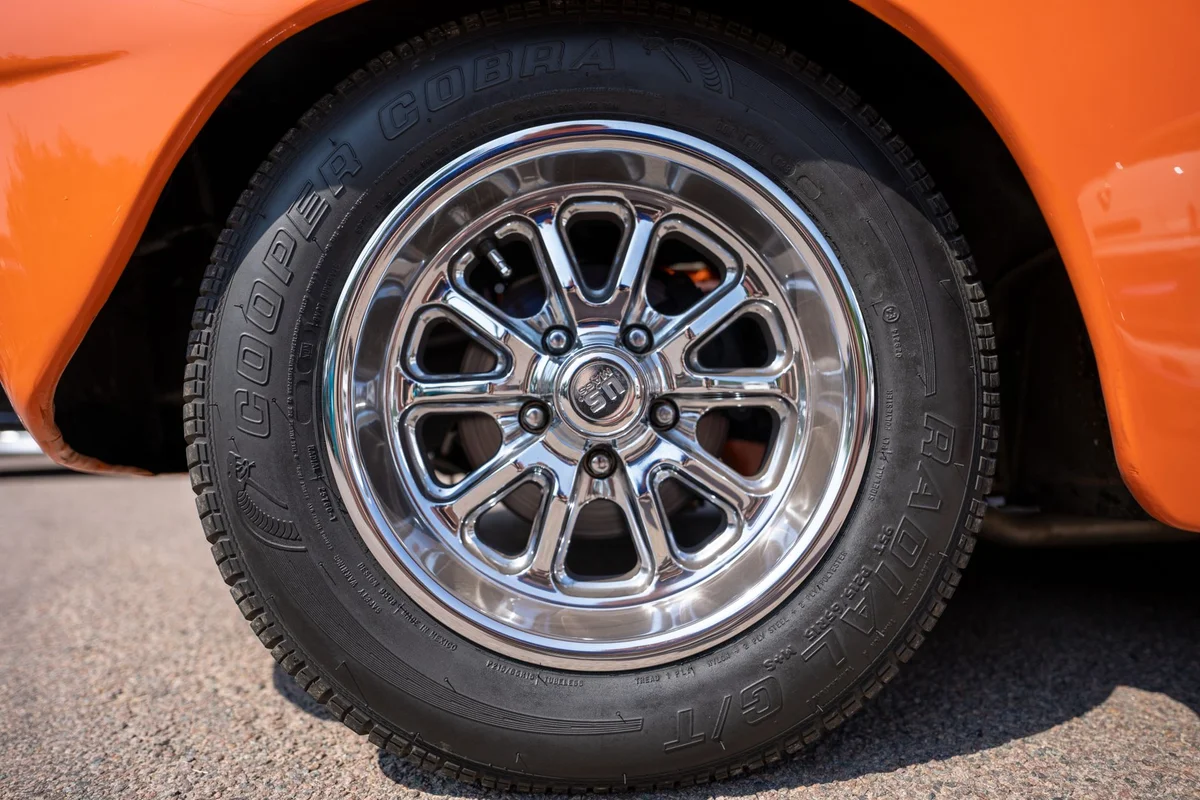
In the 215/60 R17 size, Michelin offers four primary tire ranges: Primacy 5 (all-season), CrossClimate 3 (four-season with snow certification), E Primacy (low rolling resistance for hybrids and electric vehicles), and Agilis+ (for light commercial vehicles). Prices observed in 2026 range from €115 to €175 per tire, depending on the model and purchasing channel. Selecting the appropriate tire involves considering three key factors: your annual mileage, the region you drive in, and your vehicle's engine type. Here’s how to make an informed decision.
🔑 Key Points
- ✓ The marking 215/60 R17 96H indicates a maximum load of 710 kg per tire and a speed rating of 210 km/h.
- ✓ The CrossClimate 3 eliminates the need for a second set of winter tires, saving you €400 to €500.
- ✓ Prices in 2026 range from €115 to €175 per tire based on the model and retailer.
- ✓ There can be a price difference of €30 per tire for the same model between different retailers.
Understanding the 215/60 R17 Marking on Michelin Tires
The marking 215/60 R17 96H precisely describes the tire’s dimensions and usage limits. Here’s the breakdown: 215 mm is the tread width, with a sidewall height that is 60% of this width (approximately 129 mm), radial construction (R), and an inner diameter of 17 inches for fitting on the rim. The load index 96 allows for a maximum of 710 kg per tire, while the speed index H is capped at 210 km/h. These specifications must align with what is indicated in the vehicle’s maintenance manual or on the driver’s door plate. A lower index could void insurance coverage in case of an accident.
Quick Breakdown of Width, Sidewall Height, and Rim Diameter
The width of 215 mm refers to the contact patch with the road, directly influencing lateral grip and rolling resistance. The sidewall height of 60% (approximately 129 mm) strikes a balance between ride comfort and driving precision, making this size popular among compact SUVs like the Peugeot 3008, Renault Koleos, or Ford Kuga. The 17-inch measurement corresponds to the tire's inner diameter, which must match the rim's diameter precisely. A similar size, such as the 215/50 R17 used on sedans, is incompatible due to the differing sidewall height, which would alter ground clearance.
Load Index 96 and Speed Index H: What Do They Mean in Practice?
The load index 96 means a tire can support up to 710 kg at its nominal pressure. For a loaded SUV (4 passengers plus luggage and roof box), the total weight can easily reach around 2,400 kg distributed across four tires, translating to 600 kg per wheel. This provides a decent margin, though not excessive. The H speed rating (210 km/h) is more than sufficient for typical driving conditions in France, where the maximum speed limit on highways is 130 km/h.
Concrete Example: If your maintenance manual specifies 96V, you may only use 96H tires in winter or all-season tires labeled M+S. For summer tires, it is crucial to adhere to the V rating. Violating this rule may result in denial of compensation in the event of a claim.
Available Michelin Models in 215/60 R17
Michelin, the French tire manufacturer based in Clermont-Ferrand, offers four main ranges in this size for 2026. Each range targets a specific use case, with distinct European labeling for wet grip, rolling resistance, and external noise (EU Regulation 2020/740). The following table summarizes the characteristics and price ranges noted among major retailers.
| Model | Recommended Use | EU Labeling | Indicative Price | |----------------|----------------------------------|--------------|-------------------| | Primacy 5 | Summer, sedans and SUVs | B/A/70dB | €135 to €165 | | CrossClimate 3 | Four seasons, 3PMSF | B/B/71dB | €145 to €175 | | E Primacy | Hybrids and electric vehicles | A/A/69dB | €140 to €170 | | Agilis+ | Light commercial vehicles | C/B/71dB | €115 to €145 |
(Sources: allopneus.com, pneus.fr, norauto.fr, 1001pneus.fr, data from March 2026)
Michelin Primacy 5: The Versatile Summer Choice
The Primacy 5 replaced the Primacy 4 in 2024, targeting drivers who primarily drive on roads (urban and highway) and seek longevity and low noise. Michelin claims an 18% increase in mileage compared to the previous generation. This tire excels on wet surfaces (rated A), but remains a strict summer tire: its grip significantly decreases in temperatures below 7 °C.
Michelin CrossClimate 3: The All-Season Solution
The CrossClimate 3 features the 3PMSF (Three Peak Mountain Snowflake) marking, allowing its use in areas subject to the Mountain Law (48 French departments since 2021). It eliminates the need for a second set of winter tires and the cumbersome storage that comes with it. Tests on testpneus.fr indicate that its braking distance on dry surfaces is 2 to 3 meters longer than that of the Primacy 5 at 100 km/h, which is a trade-off to consider.
Concrete Case: Marc, a 43-year-old sales representative near Lyon, drives 20,000 km annually between the Lyon metropolitan area and alpine resorts. By switching from the Primacy 4 to the CrossClimate 3 in 215/60 R17, he saves on the purchase of four dedicated winter tires (a saving of €400 to €500) while still meeting the 3PMSF requirement for mountainous areas.
Michelin E Primacy: Optimized for Electric and Hybrid Vehicles
The E Primacy focuses on rolling resistance (rated A, the highest score). Michelin claims up to a 7% increase in range for electric vehicles compared to standard tires. It is the original equipment on several plug-in hybrid SUVs and is particularly suitable for models like the Peugeot 3008 Hybrid, Kia Niro, or Toyota RAV4 Hybrid.
Michelin Agilis+: Designed for Light Commercial Vehicles
The Agilis+ is aimed at vans and small commercial vehicles (such as Renault Kangoo, Peugeot Partner, Citroën Berlingo). Its reinforced structure supports high loads and wear associated with intensive professional use. It is not suitable for family SUVs, as comfort is compromised compared to passenger tire ranges.
Choosing the right model depends on three variables: your annual mileage, geographical location (flat, mountainous, harsh winters), and vehicle type (gasoline, hybrid, electric). A driver in Paris covering 8,000 km/year mostly in the city will have different needs than a professional in Grenoble who regularly travels to the Chartreuse or Vercors mountains. A common mistake is selecting based solely on price, which can lead to choosing tires that do not suit the actual driving profile.
Urban and Suburban Use: Favor Comfort and Longevity
For predominantly urban use (less than 15,000 km/year, rarely dropping below 5 °C), the Primacy 5 is a sensible choice. Its claimed longevity and excellent noise level (70 dB) make it particularly suitable for SUVs used in urban areas. If you drive a plug-in hybrid or electric vehicle, the E Primacy enhances range by 5 to 7%.
Mountainous Areas or Harsh Winters: Choose the CrossClimate 3
Since the Mountain Law 2 (November 2021), 48 departments require winter equipment from November 1 to March 31. The CrossClimate 3, certified 3PMSF, legally replaces chains and winter tires. It is also the obvious choice for residents in the northeast, the Massif Central, and regions with harsh winters.
Electric or Plug-In Hybrid Vehicle: The E Primacy is Essential
On an electric SUV weighing around 2 tons, rolling resistance significantly impacts range. The E Primacy, rated A for rolling resistance, can provide an additional 25 to 35 km of WLTP range on a vehicle originally rated for 400 km. For a Renault Scenic E-Tech or Peugeot 3008 E, the difference becomes cost-effective from the first year.
Pricing for Michelin 215/60 R17 Tires and Where to Buy
Prices for this tire size in 2026 range from €115 to €175 per tire, excluding mounting costs. Price differences can reach €30 per tire between retailers for the same model, amounting to €120 for a set of four. Comparing prices at at least two retailers before purchasing is therefore always beneficial. The best deals are typically found online with specialized retailers in Michelin 215/60 R17, offering delivery to partner fitting centers.
Price Ranges by Model in 2026
The CrossClimate 3 is the most expensive (priced between €145 and €175), followed by the E Primacy (€140 to €170), Primacy 5 (€135 to €165), and Agilis+ (€115 to €145). Additionally, expect to pay €15 to €25 per tire for mounting, balancing, and a new valve at an auto center.
Auto Centers, E-Commerce, or Used Tires: Pros and Cons
Auto centers (Norauto, Feu Vert, Euromaster) provide the advantage of comprehensive service in one appointment. E-commerce specialized retailers often offer prices 15 to 25% lower, with delivery to a partner fitter, particularly for Primacy ranges in 215/60. Used tires carry real risks: inability to verify the internal structure history, and the DOT (date of manufacture) is often outdated. They should be avoided unless for a secondary vehicle with low mileage.
Maintenance and Lifespan of Michelin 215/60 R17 Tires
The lifespan of a Michelin tire in 215/60 R17 varies from 40,000 to 70,000 km, depending on the model, driving style, and inflation pressure. A mere 0.3 bar under-inflation can increase fuel consumption by about 1.5% and shorten the lifespan by 10 to 15%. The most cost-effective maintenance step is to check tire pressure monthly and before each long trip, even before rotating tires.
What is the Recommended Inflation Pressure for 215/60 R17?
The recommended pressure depends on the vehicle, not the tire alone. It is indicated on the driver’s door label or in the maintenance manual. For a Peugeot 3008 in 215/60 R17, typical pressure is 2.3 bar front and 2.3 bar rear under normal load, and 2.5/2.7 bar under maximum load. On a Renault Koleos, the value may rise to 2.4/2.4 bar. Check every 30 days when tires are cold.
When to Replace Michelin Tires
The legal wear limit is set at 1.6 mm of tread depth (Article R314-1 of the Highway Code). In practice, Michelin recommends replacement at 3 mm for summer tires and 4 mm for all-season or winter tires, as grip on wet surfaces significantly decreases below these levels. Wear indicators (small bumps at the bottom of the tread grooves) indicate 1.6 mm. A tire over 10 years old should be replaced even if it appears new, as the rubber ages and hardens.
FAQ: Your Questions About Michelin 215/60 R17 Tires
What is the best winter tire in 215/60 R17?
The Michelin Alpin 6 remains the benchmark for dedicated winter tires in this size. It is 3PMSF certified and optimized for temperatures below 7 °C. If you are looking for an all-year-round compromise rather than a dedicated winter tire, the CrossClimate 3 is more suitable, avoiding the need for double storage and seasonal mounting. Expect to pay between €155 and €180 per tire for the Alpin 6 in 215/60 R17.
What are Michelin's sub-brands for tires?
Michelin has several secondary brands positioned in the mid-range and entry-level segments: BFGoodrich (acquired in 1990, focusing on sports and 4x4), Kleber (a French public brand), Riken, and Kormoran (entry-level). In the 215/60 R17 size, Kleber offers the Quadraxer 3 range (equivalent to four-season) priced around €95 to €120, which is 30 to 40% cheaper than a CrossClimate 3.
What is the recommended inflation pressure for 215/60 R17 tires?
The recommended pressure ranges between 2.2 and 2.5 bar depending on the vehicle model and load. It is always indicated on the driver’s door label or in the maintenance manual, never on the tire itself. Check when cold (morning is best).