
The Costly Mistake of DIY Oil Changes: A Cautionary Tale
A cautionary tale about the pitfalls of DIY oil changes, highlighting the importance of proper preparation and handling of used motor oil.
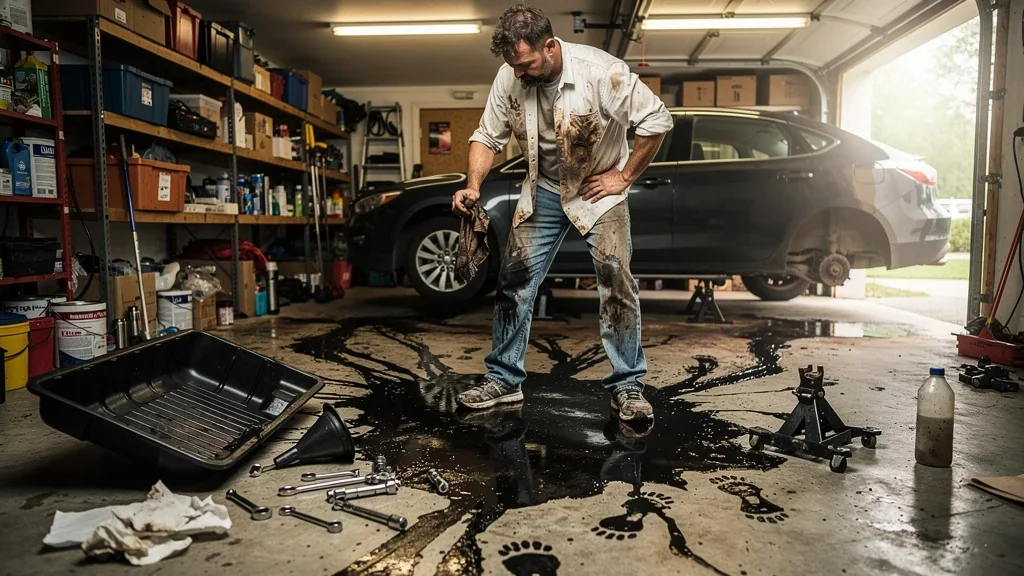
The experience of attempting a do-it-yourself oil change can quickly spiral into chaos, as one individual discovered firsthand. What began as a simple task turned into a messy ordeal, with oil splattered across the garage floor, leaving a lasting impression of regret.
The scene was set with a car parked askew, the hood closed, and the engine still warm. A flickering neon light illuminated the workspace, and a makeshift setup was in place, but crucial tools were missing. Instead of using a proper oil catch pan, the person opted for an old cardboard box, believing it would suffice. The garage floor was bare concrete, a bit dusty, with a couple of old stains lingering near the workbench. It was a typical Saturday morning filled with misplaced confidence. Having performed oil changes before, the individual proceeded without caution, a decision that would soon backfire.
The turning point came during the transfer of oil. The recovery jug, already half full, was the wrong choice for pouring in the leftover oil, and without a clean container at hand, the situation deteriorated rapidly. An unstable funnel and a dirty lid compounded the problem, leading to a quick overflow that was signaled by the ominous sound of gurgling. In a moment of misguided instinct, the individual tilted the jug further, believing it would help, only to make matters worse.
The first drop of oil followed the jug's edge, quickly followed by a stream that spread across the concrete. In a panic, the person fumbled with the greasy jug, causing it to crash against the workbench. It was at this moment that the realization hit: the mess had escalated from a simple spill to a full-blown disaster.
The oil seeped into the porous concrete, soaking the cardboard and creating a slippery hazard. Unbeknownst to the individual, the soles of their shoes were tracking oil as they moved about the garage. The smell of hot oil permeated the air, clinging to clothes and skin, creating an unpleasant environment. Despite attempts to air out the space by opening doors and windows, the odor lingered.
For the next hour and a half, the individual scrubbed, wiped, and cleaned, using up a significant amount of absorbent sheets, microfiber cloths, and even a degreaser that had been saved for special occasions. While the floor eventually regained some semblance of cleanliness, the time spent was irretrievable. Tasks like checking brake pads and coolant levels were postponed, as the Saturday that was meant for vehicle maintenance had devolved into a cleaning fiasco.
The most humbling moment came when the individual considered their options: throw everything away, finish cleaning, or call for help. The realization that a poorly managed oil change could lead to a mess spilling outside the garage added to the embarrassment. Not only had they damaged their own workspace, but they also risked contaminating the outside area.
Seeking redemption, they prepared to dispose of the used oil properly but encountered yet another hurdle. The jug was not sealed correctly, and the oil had stained its exterior, making it unacceptable for disposal. The person had to return to the recycling center, rinse the container, and ensure it was clean before they could finally dispose of it correctly. The experience illustrated the importance of proper preparation and awareness regarding the handling of used motor oil.
Reflecting on the ordeal, it became clear that the oil should have been treated with more care. A closed, stable container is essential for transporting used oil, and the route from the garage to the disposal site should be well-planned. The individual learned that a simple oversight in preparation can lead to complications that could have been easily avoided.
In hindsight, the necessary steps should have included not only a proper catch pan but also a clean container and a stable funnel. The workspace should have been protected, and the oil should have been stored properly to prevent any mishaps. This experience served as a reminder that even minor oversights can lead to significant issues, especially when dealing with hazardous materials like used motor oil.
Moving forward, the individual vowed never to repeat this mistake. They recognized that the cost of a hasty decision could lead to a much larger expense in time and resources. Proper planning and execution are crucial for any DIY maintenance task, and this lesson was learned the hard way.