
Three-Month Review of a €35 OBD Device Purchased Online
A detailed examination of a €35 OBD device over three months, revealing its strengths and limitations in diagnosing engine issues in a 2014 Peugeot 308.
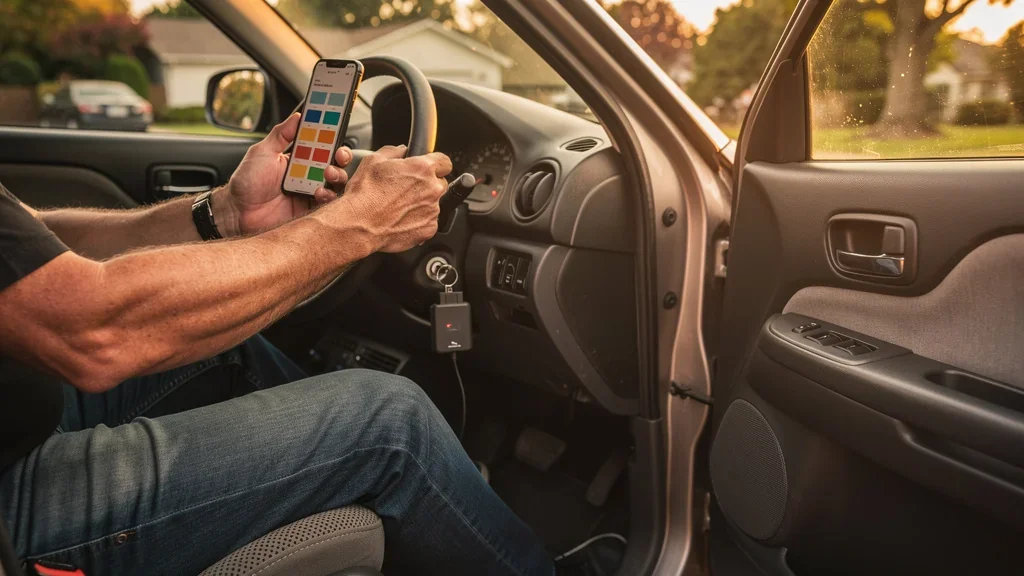
The OBD device I purchased for €35 made its presence known immediately when I connected it under the steering wheel of a 2014 Peugeot 308. On a chilly morning outside the Contrôle Technique République, I turned the ignition, and within a minute, the Car Scanner ELM OBD2 displayed the code P0171. This quick response led me to suspect that the warning light may have been cleared just before the sale.
Initial Connection and Testing
I began my assessment with this used vehicle, which I was somewhat familiar with. The engine warning light had caught my attention prior to the technical inspection. I opened the driver's side door and inserted the ELM327 into the OBD port beneath the steering column. With the phone resting on the passenger seat, I waited for the Bluetooth connection to establish. I kept the ignition on, with the hood closed and the engine cold, aiming to see what data was available right from the start, without any battery disconnections or other preparations.
Using the Car Scanner ELM OBD2 app on my phone, the first fault code appeared in under a minute, without any complicated menus. The display also provided information such as engine temperature, battery voltage, RPM, and occasionally fuel trim adjustments. I appreciated its straightforwardness, avoiding any unrealistic diagnostic promises.
My main goal was to verify a simple question: would a code reappear immediately after being cleared? I noted the P0171 code in my notebook before pressing the erase button. Having previously experienced a fault disappearing too quickly, I wanted a reliable indication, not just a reassuring display.
Observations After Clearing the Code
After erasing the code, I re-scanned without making any repairs in between. The warning light reappeared in less than five minutes. I turned off the ignition, restarted the vehicle, and the app displayed the same fault again. Once, I even received the exact message "adapter not responding" right after starting, which raised my eyebrows.
Over the three-month period, I conducted checks during my drives. I recorded a voltage of 12.4V with the ignition on, an idle speed around 850 RPM, and the engine temperature rose normally after a few minutes in city traffic, which is crucial for assessing the condition of the auxiliary battery. When I accelerated, the readings followed with a slight delay. I also experienced Bluetooth disconnections twice during the same trip, which resumed at the next traffic light.
The turning point came when I thought I had resolved the issue, only to see the warning light return after 30 kilometers. I had cleared the code, driven calmly, and believed I had saved myself some trouble. However, the same warning reappeared, making it clear that I had not actually fixed anything, just reset the alert. This misstep served as a clear reminder.
Daily Frustrations with the Device
I quickly noticed the shortcomings of the inexpensive device as the Bluetooth connection began to falter while driving. At times, the engine temperature displayed on the screen, only to disappear when I pressed the accelerator harder—an issue I should have recognized before purchasing a used vehicle. Additionally, after several weeks, I experienced slower readings and longer startup times than initially.
While I accepted these limitations given the price, I found the device to be less stable than I had expected. I remained cautious about the information it provided. The device showed generic engine codes, but nothing related to ABS, airbags, or ESP. This was where I identified the most misleading limitation for a used car. A reassuring dashboard could conceal other issues, and a single OBD menu does not encompass the entire vehicle. I became wary as soon as the warning light turned off.
I also verified the same fault during other tests, and the pattern was consistent: quick readings, erasing the code, return of the fault, and stabilization only after actual repairs. This allowed me to distinguish between a mere cosmetic fix and a persistent issue. For a pre-purchase inspection, the device served as a useful filter, but it was too basic for deeper diagnostics.
Key Takeaways for Future Purchases
After three months, one crucial lesson stood out: an engine warning light can disappear from the dashboard without the underlying issue being resolved. I checked the Peugeot 308 multiple times, found the same code after clearing it, and then saw the fault return after 30 kilometers. This experience helped me avoid the illusion of a magically resolved problem. I took my testing further in my article on my comprehensive diagnostics.
I plan to keep this OBD device for quick filtering rather than comprehensive diagnostics. It helped me read generic engine codes in under a minute, but it cannot replace a more advanced tool that covers additional systems. If I need to delve deeper, I will use a more serious device or visit a garage like Saint-Lazare, where diagnostics extend beyond just the engine warning light.
My conclusion is straightforward: I would recommend this device for initial screenings before purchasing a used vehicle, particularly to verify if a recently cleared engine code was done too hastily at an independent garage. However, I would not recommend it for checking ABS, airbags, ESP, or for a complete diagnostic assessment. For someone willing to disconnect after each check and focus solely on generic engine data, it does the job. For everything else, I need something more robust.