Transmission Costs in 2026: New and Used Options
In 2026, replacing a transmission costs between €1,200 and €3,500, depending on the type and solution chosen. A used manual transmission can be under €1,000, while a new automatic often exceeds €4,000. Explore options and key considerations.
Replacing a transmission in 2026 will typically cost between €1,200 and €3,500, depending on the type of transmission and the chosen solution (new, used, or remanufactured). A used manual transmission can often be installed for under €1,000, while a brand-new automatic transmission frequently exceeds €4,000. The decision hinges on one key factor: the relationship between the cost of the replacement and the vehicle's Argus value. Below are precise price ranges based on purchase options, transmission types, and French brands, along with important thresholds to consider before accepting a quote.
🔑 Key Points
- ✓ A used manual transmission costs between €250 and €700, excluding installation.
- ✓ A new automatic transmission starts at €2,500 and can exceed €5,000 for premium models.
- ✓ Labor costs range from €500 to €1,200, reflecting 6 to 12 hours of work.
- ✓ Repairing becomes unreasonable if the quote exceeds 50% of the vehicle's Argus value.
A basic used transmission can be found starting at €250, while a new automatic can reach €5,000, excluding labor. Four options are available: original new, used from a wrecking yard, remanufactured (factory refurbished), and reconditioned by an independent specialist. Each option presents its own balance of price, reliability, and warranty. The new option offers peace of mind but at a higher cost, while the used option can save an older vehicle at a lower price, albeit with uncertain longevity. For most French cars over five years old, remanufactured transmissions offer the best compromise.
Purchase Options
| Option | Price (Part Only) | Warranty | Best For | |-------------------|-------------------|--------------|----------------------------------| | Original New | €1,500 - €5,000 | 2 years | Recent vehicles under warranty | | Used from Wrecking Yard | €250 - €900 | 3 to 6 months| Older cars of low value | | Remanufactured | €700 - €2,500 | 1 to 2 years | Best compromise for 5-12 years | | Reconditioned | €600 - €2,000 | 6 to 12 months| Tight budget with security |
(Sources: French wrecking networks and transmission specialists, 2026 rates)
New Transmission: The Most Expensive Option
An original new transmission ordered through a dealership ranges from €1,500 to €5,000, depending on the model, not including installation. For a Peugeot 308 II petrol, expect to pay around €2,200 for a new manual transmission, while an automatic EAT8 can cost between €3,800 and €4,500. This option is only justifiable for vehicles under manufacturer warranty or valued over €15,000.
Used Transmission: The Most Accessible Option
For a cheap used transmission, French wrecking yards offer parts starting at €250 for common models (like the Clio, 208, or C3). However, the risk lies in the lack of internal wear checks. A reputable wrecking yard will display the original mileage and often provide a 3 to 6-month warranty. You can compare prices for used transmissions across referenced wrecking yards to find the best deal for your model.
Remanufactured and Reconditioned: The Right Compromise
The remanufactured transmission option involves purchasing a transmission refurbished by a specialized workshop (with bearings, synchronizers, and seals replaced) in exchange for your old unit. The average price is €900 to €1,800 for a manual and €1,500 to €2,500 for an automatic. Common warranties range from 12 to 24 months, making it the best reliability-to-price ratio for vehicles aged 5 to 12 years.
Case Study: Marc, a 43-year-old salesman in Isère, drives a 2017 Renault Mégane IV diesel with 165,000 km. His manual transmission is grinding in cold weather. By opting for a remanufactured unit from a transmission specialist, he pays €900 for the part and €600 for labor, totaling €1,500, compared to over €2,800 quoted by the dealership for a new original unit.
Price by Transmission Type (Manual, Automatic, Robotized)
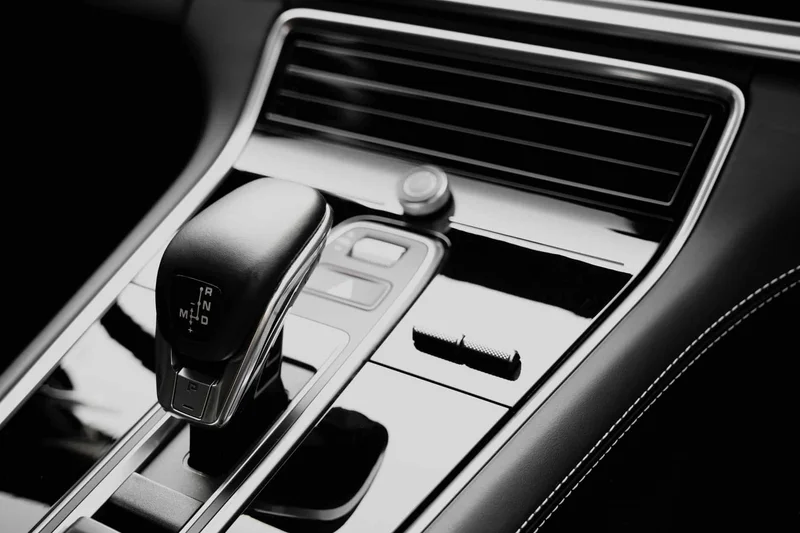
The transmission type is a significant factor in determining costs. A manual transmission operates on proven principles with 5 to 6 gears, dry clutch, and standardized synchronizers. In contrast, an automatic transmission with a torque converter or dual-clutch (DSG) involves more complexity, including electronics, solenoids, a dedicated control unit, and specific oil. Naturally, this complexity results in costs that can be 2 to 3 times higher for automatic systems. The PRNDL positions also affect mechanical wear. Our insights on automatic lever positions explain how certain driving errors can accelerate failure.
| French Model | Manual (Installed Remanufactured) | Automatic (Installed Remanufactured) | |-------------------|------------------------------------|--------------------------------------| | Renault Clio IV/V | €1,100 - €1,400 | €2,200 - €2,900 (EDC) | | Peugeot 308 II | €1,300 - €1,600 | €2,800 - €3,800 (EAT6/8) | | Citroën C4 Picasso | €1,200 - €1,500 | €2,500 - €3,400 | | Renault Mégane IV | €1,400 - €1,700 | €2,700 - €3,600 (EDC) |
Manual Transmission: The Least Expensive to Replace
A manual transmission is the most economical to replace due to its mechanical simplicity and widespread availability in the used market. For a Clio or a 208, the total replacement cost typically ranges from €1,000 to €1,500. Notably, in 60 to 70% of cases, it is actually the clutch that is at fault rather than the transmission itself. A preliminary diagnostic can sometimes prevent unnecessary expenses.
Automatic Transmission: Costs Can Escalate Quickly
A torque converter automatic transmission (like the Aisin AT6 or ZF 8HP) costs between €2,500 and €5,000 when new, with longer labor times (8 to 12 hours). Premium German models (BMW ZF 8HP, Mercedes 9G-Tronic) can exceed €6,000 when installed. Regular preventive fluid changes every 60,000 km can significantly extend lifespan and prevent premature failure.
Robotized Transmission (DSG, EDC): In Between
Dual-clutch transmissions (DSG from Volkswagen, EDC from Renault, or PDK from Porsche) combine the convenience of automatic systems with the efficiency of manuals. For remanufactured options, expect to pay €1,800 to €3,500 all-inclusive. Be cautious: on DSG7 systems, reliability drops after 120,000 km if the oil has never been changed. This is the most common failure observed in these transmissions.
Symptoms of a Failing Transmission
A transmission nearing the end of its life typically shows gradual degradation. Initially, you may notice difficulty engaging gears, followed by gears slipping during acceleration, and finally, unusual noises or jolting during maneuvers. Identifying these signals early can sometimes save the transmission through simple fluid changes or synchronizer replacements, rather than incurring a full replacement costing €1,500 and up.
Difficulty Shifting Gears or Gears Slipping
A hard, rough, or impossible shift when cold indicates worn synchronizers (manual) or hydraulic issues (automatic). If a gear slips during acceleration, it often points to a worn fork or damaged secondary bearing. At this stage, total failure could occur within a few thousand kilometers.
Unusual Noises, Vibrations, or Burnt Odors
A whining noise in neutral with the pedal released suggests a worn output bearing. Crunching sounds in reverse indicate problems with synchronizers. A burnt odor signals overheating fluid, which is typical in automatic transmissions that have not had fluid changes performed for over 80,000 km.
Warning Light or Fluid Leak
For automatics, an orange transmission warning light on the dashboard (or a message stating "gearbox fault") often triggers a limp mode, causing the vehicle to remain stuck in one gear. A red puddle under the vehicle confirms a leaking ATF fluid. Driving in this condition can permanently damage the transmission within a few dozen kilometers.
The cost of a transmission replacement breaks down into two main components: the part (as discussed in previous sections) and labor, estimated between €500 and €1,200. The intervention requires removing the transmission, often the engine cradle, and sometimes the exhaust. A mechanic typically charges €60 to €100 per hour depending on the region, with €90 to €150 in a dealership. The time required varies from 6 hours for a front-wheel drive city car to 12 hours for a German rear-wheel drive vehicle, as detailed in this technical guide on transmission replacement.
Steps for Replacement at the Garage
The mechanic lifts the vehicle, disconnects the battery, removes the driveshaft or axle, drains the fluid, and then uncouples the transmission from the engine. A new clutch is almost always recommended at the same time (expect €250 to €500 for additional parts), as the removal process is already underway. Our dossier on clutch kit installation timing outlines the steps for coupling the transmission and clutch.
How Many Labor Hours to Expect?
For a petrol city car with a manual transmission, anticipate 6 to 8 hours, translating to €500 to €800. For an SUV with an automatic transmission, the range increases to 9 to 12 hours, costing €900 to €1,500. Don't forget to factor in the specific fluid (€60 to €180) and a new clutch if it’s manual.
Concrete Example: Sophie, a 38-year-old nurse in Nantes, drives a Peugeot 3008 petrol from 2018, which has an EAT8 automatic transmission that failed at 132,000 km. She received quotes from both the Peugeot dealership and an independent transmission specialist.
Dealership Quote (New Transmission):
- €3,900 (new original transmission)
-
- €1,100 (labor for 10 hours)
-
- €140 (specific ATF fluid)
- = €5,140 total
Specialist Quote (Remanufactured Transmission):
- €1,950 (remanufactured transmission with a 24-month warranty)
-
- €850 (labor for 9 hours at €95 per hour)
-
- €120 (ATF fluid)
- = €2,920 total, saving €2,220
Can You Change the Transmission Yourself?
Technically, yes, but the operation requires a lift or pit, a transmission jack, a torque wrench, and often a diagnostic tool to reset an automatic transmission. Without this equipment, the operation cannot be performed safely. The only savings would be on labor (€500 to €1,200) against a high risk of damaging a new clutch if misaligned.
Is It Worth Repairing or Replacing Your Transmission?
The 50% rule is crucial: if the quote exceeds half the Argus value, the operation is economically unwise. Thomas Renard's experience on Voiture Média (an independent automotive blog) confirms that 7 out of 10 owners who repair a transmission on a vehicle over 15 years old sell the car within 18 months, often at a loss. Checking the Argus value before committing funds remains your best safeguard.
The Cost-to-Value Ratio Rule
Obtain a complete quote (part + labor), check the Argus value on largus.fr, and apply the rule: if it exceeds 50% of the value, it’s better to consider selling it as-is to a professional or a DIY enthusiast. For instance, a 2011 Clio III valued at €2,200 with a transmission quote of €1,700 is not worth repairing.
Repairing a Transmission: When Is It Possible and What Are the Costs?
A partial repair (bearings, synchronizers, fork) costs between €400 and €900, excluding labor. This is only feasible on manual transmissions if the diagnosis accurately identifies the faulty part. A transmission specialist can open the unit for €150 to €250 before deciding, which can prevent paying for a complete transmission unnecessarily.
When Is It Better to Change Cars?
If your vehicle has over 200,000 km, is more than 15 years old, and other components are aging (clutch, timing belt, suspension), a transmission quote of €1,500 often signals it’s time to sell. The budget can then be effectively redirected as a down payment on a newer vehicle.