Understanding the Crit'Air Sticker: What You Need to Know
The Crit'Air sticker is essential for vehicles in low-emission zones, with fines for non-compliance. Learn about its classifications, requirements, and how to avoid penalties.
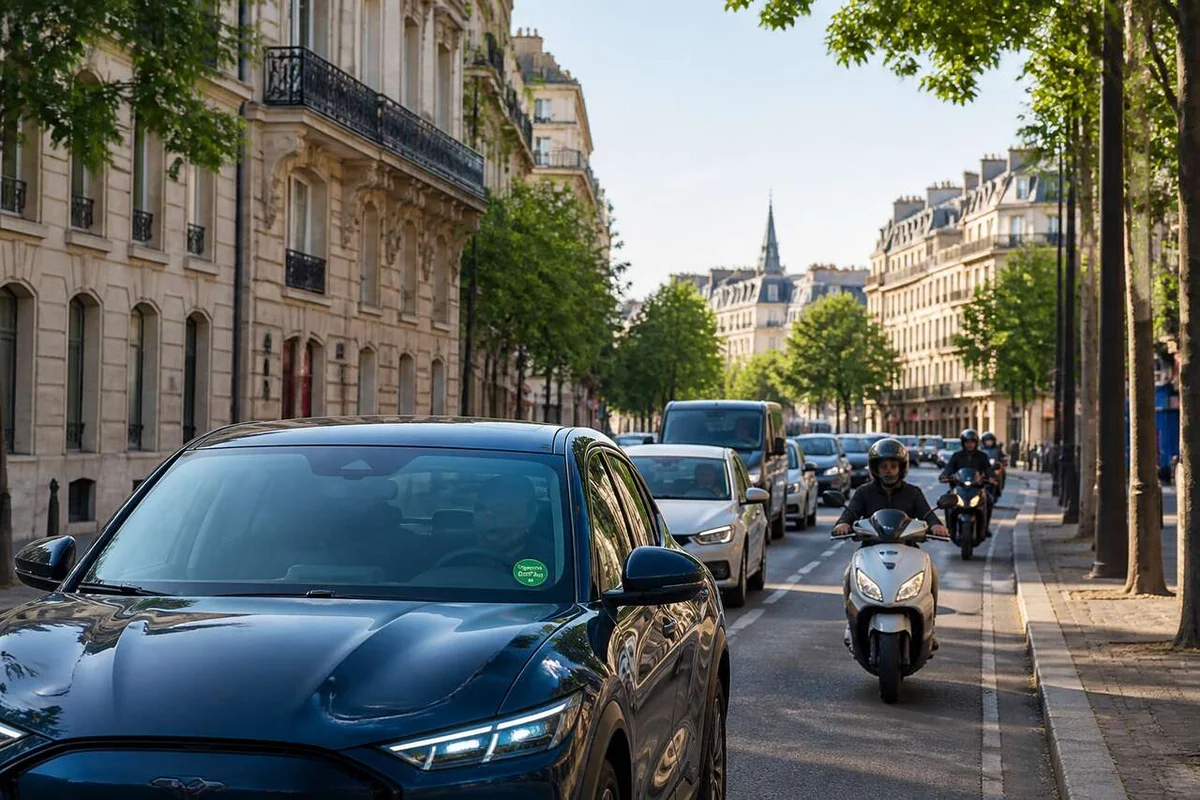
The Crit'Air sticker, a small air quality certificate introduced in 2016, has become a significant tool in environmental policing. Failing to display this sticker during a traffic control in low-emission zones can now result in a fine of €68. Understanding its classification, mandatory zones, and limitations is crucial for avoiding penalties and anticipating future restrictions.
Key Takeaways
- The Crit'Air sticker categorizes vehicles into six classes (0 to 5) based on their engine type and registration date.
- It is mandatory in permanent low-emission zones (ZFE-m) and during pollution episodes that trigger differentiated circulation rules.
- Checks combine visual inspections and automated license plate recognition (LAPI) in certain cities.
- Not displaying the sticker or having a non-compliant version can lead to a fixed fine, which may be combined with parking fines.
- The official cost for the sticker is approximately €4; any site charging more should be approached with caution.
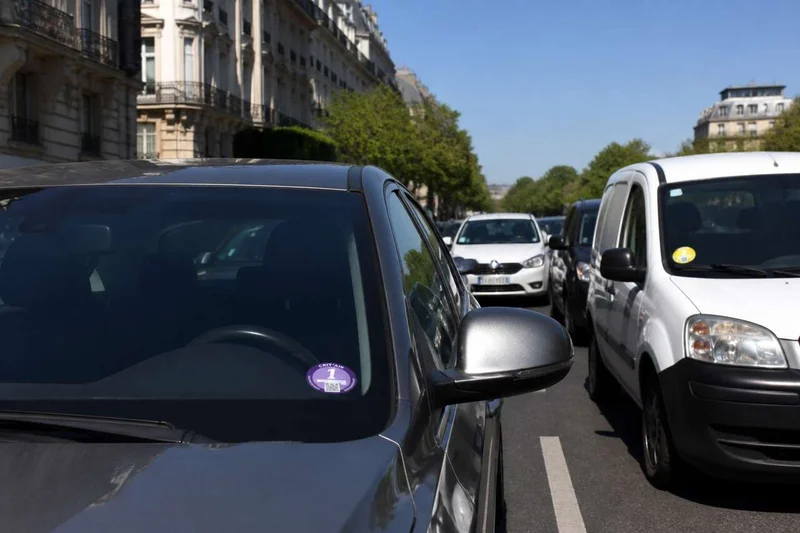
Purpose of the Crit'Air Sticker in Pollution Control
The Crit'Air sticker serves a specific health objective: to reduce urban populations' exposure to fine particles and nitrogen oxides emitted by road traffic. As a visible air quality certificate on the windshield, it can be read by enforcement agents during traffic checks or by automated systems.
Distinct Restriction Mechanisms
Motorists often confuse the two distinct mechanisms at play. On one hand, low-emission mobility zones (ZFE-m) impose permanent restrictions, active year-round with a progressive schedule. On the other hand, differentiated circulation is initiated temporarily during pollution episodes recognized by local authorities, typically lasting only a few days.
- ZFE-m: a permanent system defined by local authorities, with Crit'Air thresholds tightening over time.
- Differentiated circulation: activated by a prefectural order during pollution peaks, with temporary rules displayed on affected roads.
This distinction is crucial for understanding the system: a vehicle permitted one day may be banned the next if a pollution episode is declared, regardless of any changes to its Crit'Air sticker.
Determining the Crit'Air Classification
The classification is based on objective criteria found on the registration certificate: the Euro standard of the engine, the type of fuel, and the date of first registration. The process is automated during the online application, ensuring no subjective judgments are involved.
The Six Categories: From Cleanest to Most Polluting
| Class | Engine Type | Registration Reference | |-----------|-------------------------------------|--------------------------------| | Crit'Air 0 | Electric, hydrogen | All dates | | Crit'Air 1 | Petrol, plug-in hybrid | After January 1, 2011 | | Crit'Air 2 | Petrol 2006-2010, diesel after 2011 | By fuel type | | Crit'Air 3 | Older petrol and diesel models | Older registrations | | Crit'Air 4 | Older generation diesel | Models predating recent standards| | Crit'Air 5 | Diesel over 17 years old | The oldest vehicles |
Vehicles not classified are those registered before 1997 for petrol or 2001 for diesel; they do not receive a sticker and are generally banned from regulated areas.
Anticipating Your Class Without Error
A single vehicle model can belong to different classes depending on its production year. For instance, a diesel registered in 2010 receives a Crit'Air 3, while the same model registered in 2012 qualifies for Crit'Air 2 due to evolving Euro standards. Therefore, it is advisable to check your classification on the official website rather than relying on approximate online tables, as this classification directly impacts where and when a vehicle can operate.
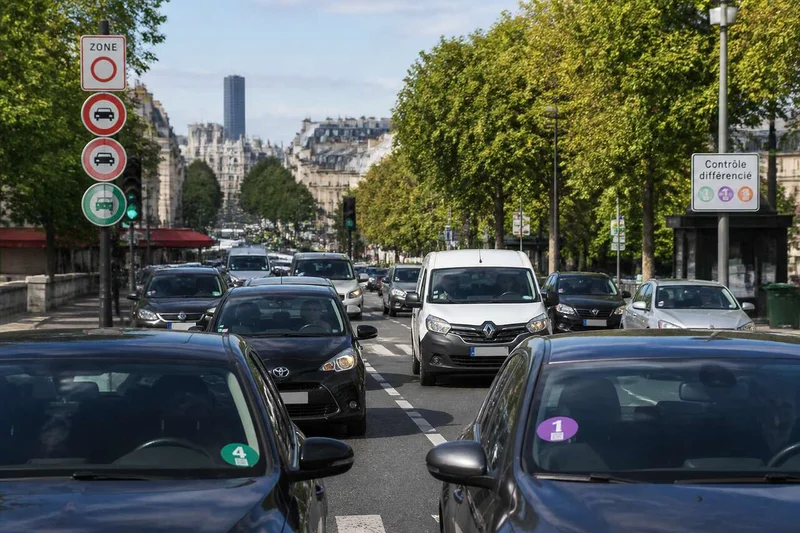
When and Where the Sticker is Mandatory: ZFE and Differentiated Circulation
The 2021 Climate Law mandated the establishment of ZFE-m in all urban areas with populations over 150,000, rapidly expanding the number of affected areas. Each local authority sets its own thresholds, schedules, and timelines for tightening restrictions.
A Permanent Framework, Yet Variable by City
In some metropolitan areas, vehicles with Crit'Air 4 and 5 stickers are already permanently banned, while in others, only class 5 is currently affected. Timing also varies: some ZFE-m enforce restrictions on weekdays during the day, while others extend these rules to weekends. Entry signs indicate the minimum class allowed, an essential reference before embarking on an unknown route.
Triggering Pollution Episodes
The prefecture can activate differentiated circulation whenever air pollution exceeds a certain threshold, often following a weather alert related to spikes in particulate matter or ozone. This temporary measure adds to the ongoing ZFE-m restrictions. Motorists are informed through local media, variable message signs, and sometimes SMS alerts.
- Permanent bans: linked to ZFE-m, valid year-round according to local schedules.
- Temporary bans: related to pollution episodes, decided by prefectural order for a limited duration.
This overlapping of rules explains why many drivers find themselves caught off guard during a check, unaware that a temporary restriction has been added to the usual one.
Enforcement and Sanctions: What Authorities Check
On the ground, enforcement begins with a visual inspection: checking for the presence of the sticker and ensuring that the displayed class matches the observed vehicle type. An officer may also cross-reference this information with the registration certificate during a routine traffic stop.
The Rise of Automated Checks
Several major cities have implemented license plate recognition (LAPI) systems capable of automatically identifying a vehicle's Crit'Air class based on its registration plate, without physical interception. This system, still unevenly distributed across different regions, allows for increased checks without requiring additional personnel on the streets.
The Sanction Regime
Penalties take the form of a fixed fine, which varies depending on the vehicle type and the nature of the infringement:
- Absence of the mandatory sticker or a non-compliant sticker: fines for light vehicles, increased fines for heavy goods vehicles and utility vehicles.
- Parking in a regulated area with an unauthorized vehicle: potential for a post-parking fine in addition.
- Recidivism: local authorities can enhance surveillance on the busiest routes.
While this punitive framework is still seen as insufficiently deterrent by some observers, it is gradually tightening as ZFE-m regulations mature. However, various specific situations may not conform to the general rule, warranting a careful review of existing exemptions.
Exemptions, Exceptions, and Noteworthy Cases
The system includes several exceptions designed to avoid penalizing essential or hard-to-replace uses.
Structural Exemptions
- Emergency vehicles, police, and priority vehicles: exempt while performing their duties.
- Holders of a mobility inclusion card: possible exemptions based on local orders.
- Classic vehicles, often identified by a specific registration certificate: treatment varies by municipality.
- Certain professionals and craftsmen: temporary exemptions granted during the ZFE-m transition phase.
Commonly Misunderstood Daily Situations
Forgetting to display the sticker does not exempt one from penalties: the law does not recognize good faith as a reason for cancellation. Additionally, changing a windshield necessitates reattaching a new sticker, as the old one cannot be removed without being destroyed. If moving to a city with a ZFE-m, it is advisable to verify your classification before traveling. The loaning of vehicles also raises questions: it is the vehicle's sticker that matters, not the driver's. Finally, foreign vehicles operating in France must also obtain a French air quality certificate to enter regulated areas. Given these numerous specific cases, knowing the exact application process is essential to avoid any issues.
Obtaining Your Sticker: Procedures, Costs, and Checks
The application must be made exclusively on the official air quality certificates website, by entering the information on the registration certificate: registration number, fuel type, and date of first registration.
Official Price and Pitfalls to Avoid
The cost of the sticker is about €4, including shipping. Many fraudulent sites mimic the official process and charge significantly more, sometimes over ten times the actual price. Thus, it is essential to check the website's address before entering any payment details.
Processing Times and Receipt
An electronic receipt is sent via email immediately after the application, allowing justification of the process in case of a check before receiving the physical certificate. The paper sticker is then mailed, with delivery times varying depending on the time of year.
Where to Place the Sticker and How to Verify Your Classification
The sticker should be affixed visibly, typically at the bottom right of the windshield on the passenger side, without obstructing the driver's view. Before traveling to a new area, it remains useful to check local regulations on the official website, as these rules can change regularly based on local authority decisions.