
Understanding the Total Cost of Ownership for Electric Vehicles
When considering an electric vehicle, it's crucial to look beyond the purchase price and monthly payments. Understanding the Total Cost of Ownership (TCO) reveals the true financial implications of owning an EV compared to traditional vehicles.
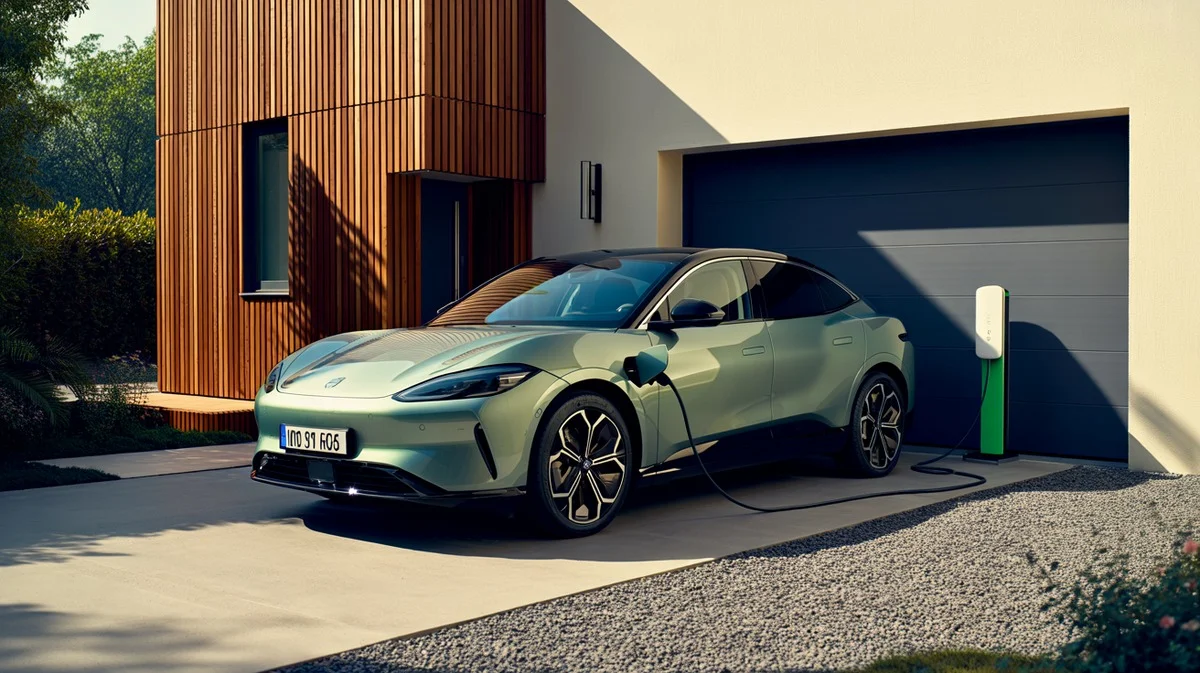
For many, the process of purchasing a vehicle has traditionally been straightforward: compare the purchase price, secure an auto loan, and manage monthly repayments. However, this approach falls short when it comes to electric vehicles (EVs). The displayed price at dealerships only captures a fraction of the financial reality, and focusing solely on monthly financing payments overlooks critical aspects of the overall cost. To make an informed choice between internal combustion engine vehicles and electric ones, consumers need to consider the Total Cost of Ownership (TCO).
TCO: A Comprehensive Comparison Tool
TCO encompasses all expenses associated with a vehicle throughout its ownership, including acquisition price, financing costs, energy or fuel expenses, maintenance, insurance, taxes, and resale value. This holistic perspective is essential for a meaningful comparison between gasoline-powered and electric vehicles.
When looking only at the purchase price, electric vehicles typically come with a higher initial cost than their gasoline counterparts in the same category. This higher upfront price directly impacts the loan amount and monthly payments for an electric vehicle. However, traditional calculations often stop here, missing crucial ongoing costs.
Once on the road, the expense dynamics shift. The cost of electricity is significantly lower than that of gasoline or diesel for equivalent mileage. Moreover, maintenance costs are reduced; EVs do not require oil changes, timing belts, or as much brake work due to regenerative braking. Over the years, these savings can substantially alter the financial picture.
A Comparative Example: Gasoline vs. Electric Over Five Years
To illustrate the TCO effectively, consider a representative example based on average assumptions. This scenario is indicative and not a financing offer, as figures may vary depending on the borrower's profile, the chosen vehicle, and market conditions.
Scenario A: Compact Gasoline Sedan
- Purchase Price: €22,000
- Financing over 60 months: monthly payment around €390 (indicative, excluding insurance)
- Fuel costs over 5 years (15,000 km/year, average consumption 6.5 L/100 km, fuel price €1.80/L): approximately €8,775
- Estimated maintenance over 5 years: approximately €3,000
- Estimated total cost over 5 years (excluding insurance and residual value): around €35,000
Scenario B: Equivalent Compact Electric Sedan
- Purchase Price: €33,000 (before a €4,000 ecological bonus for eligible households, resulting in a net price of €29,000)
- Financing over 60 months: monthly payment around €520 (indicative, excluding insurance, based on €29,000)
- Electricity costs over 5 years (15,000 km/year, consumption 16 kWh/100 km, average price €0.20/kWh): approximately €2,400
- Estimated maintenance over 5 years: approximately €1,200
- Estimated total cost over 5 years (excluding insurance and residual value): around €33,700
In this example, despite a higher monthly payment of about €130, the electric vehicle shows a slightly lower total cost over five years, thanks to savings on energy and maintenance. Additionally, the increasing residual value of electric vehicles in the used car market could further enhance this financial outcome.
Limitations of Traditional Auto Loan Calculators
Standard auto loan calculators typically compare two variables: the borrowed amount and the loan duration, resulting in a monthly payment figure. While this is useful for assessing monthly repayment capacity, it does not reflect the actual cost of using the vehicle.
Focusing solely on the monthly payment can lead consumers to dismiss electric vehicles due to their higher borrowing amounts, disregarding the recurring savings that could offset or even exceed the additional monthly costs. This highlights a well-documented cognitive bias in financial decision-making: immediate and visible costs often weigh more heavily than future, less tangible savings.
To assist consumers in overcoming this bias, specialized financing providers are developing tailored solutions for electric vehicles. For instance, Cofidis has created an auto loan offering specifically for EVs, designed to support purchases with conditions suited to this market.
"Many potential buyers shy away from electric vehicles because they only compare monthly payments without considering usage savings," explains a Cofidis expert. "Our role is to help clients view the entire financial picture before making their decision."
Incentives for Purchase: A Key Factor
Financing an electric vehicle is often influenced by public incentives that significantly alter the financial equation. The ecological bonus, which varies based on income and vehicle price, can amount to several thousand euros, directly reducing the capital to be financed. Some local authorities also offer additional grants. The social leasing program, renewed for 2025, has enabled low-income households to access long-term rental offers at preferential rates.
These incentives are not guaranteed and their conditions change regularly. Therefore, it is advisable to check the current programs at the time of purchase with official sources. What remains clear is that incorporating these incentives into the TCO calculation can substantially lower the effective entry price of electric vehicles, thus affecting the necessary loan amount.
Practical Implications for Borrowers
Adopting a TCO perspective before committing to an auto loan does not mean abandoning monthly payment comparisons; these remain a relevant indicator for assessing monthly repayment capacity. However, it does require broadening the comparison to encompass the entire duration of vehicle ownership.
Individuals who drive between 15,000 and 20,000 kilometers annually, primarily in urban or suburban areas, and have access to home or workplace charging, should calculate their TCO over four to five years before deciding. The findings can be surprising, as illustrated by the representative example above.
The automotive financing market is evolving to reflect this reality. Lenders are offering adapted loan durations, solutions that include guaranteed residual values, or usage costs. Before making a commitment, it remains essential to compare available offers and ensure that the monthly payments align sustainably with one’s financial situation.