Understanding Your Car's Trade-In Value: A Comprehensive Guide
Explore the key factors determining your car's trade-in value: mileage, overall condition, maintenance history, and more.

When it comes to assessing the trade-in value of a vehicle, professionals approach the task differently than private sellers. They start with a base valuation, then subtract risks and anticipated refurbishment costs before arriving at a final figure. Grasping this process can help sellers anticipate offers, identify what is genuinely negotiable, and differentiate between surface-level impressions and actual workshop costs.
Key Takeaways
- The trade-in value begins with the Argus rating, adjusted for condition, mileage, and professional margins.
- Mechanical condition and refurbishment costs often outweigh aesthetic considerations.
- Depreciation accelerates with age and certain mileage thresholds.
- A complete maintenance log and a recent technical inspection secure the proposed price.
- Market demand and Crit’Air standards directly influence vehicle attractiveness.
How Professionals Calculate Trade-In Value
The trade-in value is the amount a professional—be it a dealer, broker, or buyback platform—is willing to pay for a vehicle, typically as part of a new or used car purchase. This figure is usually lower than the initial purchase price due to the natural depreciation of vehicles over time and differs from the resale value between private parties.
Starting Point: The Argus Rating
The Argus rating remains the most commonly used reference in France for estimating used vehicles. This valuation system considers the model, age, mileage, overall condition, equipment, and market demand for that specific model. It is regularly updated to reflect market fluctuations and new sales data. If a vehicle is too old or rare to be rated, its estimation relies on past depreciation rates or observed sale prices.
Adjustments for Condition and Market
From this baseline, professionals adjust the valuation based on the vehicle's actual condition, its mileage consistency, and local demand for that particular model. For instance, a highly sought-after SUV in a suburban area will be valued differently than a diesel city car in a low-emission zone.
Deductions for Costs and Margins
Finally, professionals subtract estimated refurbishment costs, preparation fees, and administrative expenses, then add their necessary profit margin to cover resale risks and generate revenue. This stage explains the sometimes significant gap between the displayed rating and the dealer's trade-in offer.
This gap is not arbitrary; it reflects real market risks, such as the potential difficulty in reselling the vehicle quickly, and often hidden refurbishment costs that the seller may not recognize. The most significant factor is the vehicle's actual condition and refurbishment costs, warranting closer examination.
The Most Influential Factor: Actual Condition and Refurbishment Costs
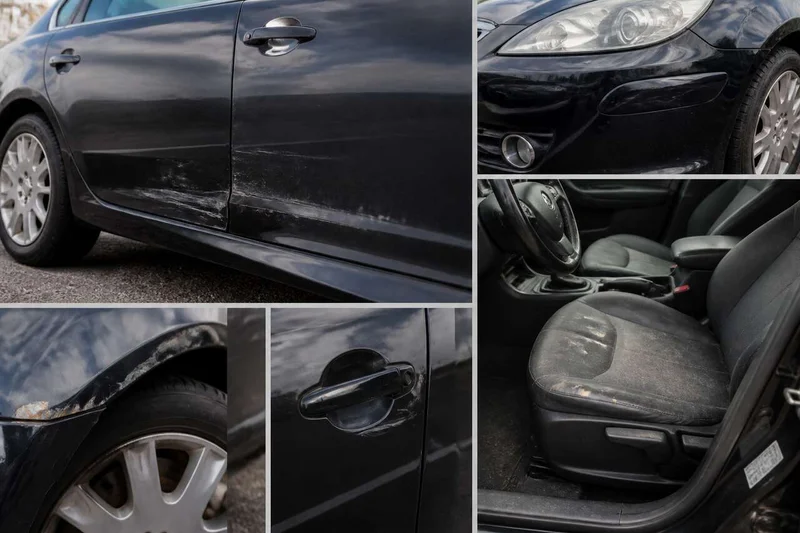
The overall condition of a vehicle directly affects the proposed price. A well-maintained car—featuring a tidy body, clean interior, and regular mechanical upkeep—commands a higher trade-in value. Conversely, significant mechanical issues, visible aesthetic damage, or excessive wear will naturally lower the offer.
Visible Issues: Body Condition and Interior
Scratches, dents, warped wheels, stained upholstery, or persistent odors are immediately noticeable during the first inspection. While these issues can be easily rectified, they are often overlooked. A professional cleaning and minor paint touch-ups can significantly enhance the vehicle's perception without incurring substantial costs.
Hidden Costs: Mechanical Condition and Wear Parts
This is where the bulk of depreciation often occurs. Professionals calculate the replacement costs for the following components:
- Worn or uneven tires
- Brake pads and discs nearing the end of their lifespan
- Timing belt not replaced within recommended intervals
- Clutch showing signs of slippage
- Weak battery, particularly in hybrid or electric vehicles
Each of these items represents a workload in the workshop, including parts and labor. Professionals systematically include these in their offers, explaining why a mechanical defect invisible to a non-specialist can significantly reduce the offer by several hundred euros.
Expertise: A Necessary Step for Objective Diagnosis
A technical assessment formalizes these observations and helps avoid disputes. It serves as a quantified basis for negotiation, benefiting both the seller and the professional buyer. This technical diagnosis is always combined with two other critical variables: the age of the vehicle and its mileage, which fundamentally shape the depreciation.
Age and Mileage: Depreciation and Its Thresholds

The vehicle's age directly influences its value. Depreciation is typically rapid in the first year, then slows down over time. A new car can lose a significant portion of its value within the first few months, after which the depreciation curve flattens.
Mileage: A Determining Indicator
Mileage remains one of the most scrutinized criteria by professionals. A lower mileage significantly enhances the vehicle's value, while above-average mileage for the vehicle's age leads to additional depreciation. Professionals always compare the displayed mileage against an expected annual average, typically around 12,000 to 15,000 kilometers depending on usage.
| Vehicle Age | Estimated Consistent Mileage | Impact on Trade-In | |-------------|------------------------------|--------------------| | 1 year | 10,000 to 15,000 km | High valuation | | 3 years | 35,000 to 45,000 km | Moderate depreciation| | 5 years | 60,000 to 75,000 km | Standard depreciation| | 8 years+ | 100,000 km and above | Marked depreciation, enhanced mechanical inspection|
Consistency Over Raw Numbers
A low mileage on an older vehicle can raise suspicions if the history does not clearly justify it. Conversely, high mileage that aligns with regular professional use and rigorous maintenance reassures more than an isolated figure that seems implausible. This overall consistency between age, usage, and mileage directly leads to the next examination: that of maintenance and vehicle history.
Maintenance, History, and Compliance: Securing the Trade-In
A well-documented maintenance history is a major value-enhancing factor. An up-to-date maintenance log reassures the professional buyer and can significantly increase the trade-in value, as it reduces uncertainties about the vehicle's actual condition.
Maintenance Log and Invoices: Proof of Diligence
Detailed invoices for services such as oil changes, timing belt replacements, or manufacturer inspections help reconstruct a coherent history. They prevent professionals from having to provision for preventive refurbishments, directly translating into a more favorable offer.
Technical Inspection: A Trust Signal
A recent technical inspection without major failures provides immediate reassurance. Conversely, significant defects or noted wear points lead professionals to anticipate additional work, which they will deduct from the initial offer.
Risk Signals to Watch For
Certain elements particularly alert professional buyers:
- Engine or electronic warning lights illuminated at the time of estimation
- A high number of successive owners over a short period
- Inconsistencies between displayed mileage and visible wear on seats or pedals
- Undeclared accidents visible on the bodywork
These signals prompt professionals to include an additional safety margin in their calculations, on top of already identified refurbishment costs. A complete, transparent, and coherent file limits this precautionary margin. Finally, there are external factors, including market conditions and regulations.
Market, Engine Type, and Regulations: Supply, Demand, and Crit’Air
The trade-in value is also influenced by local and national market demand for a given model. A recent compact SUV typically finds buyers faster than an older diesel sedan, directly affecting the price a professional is willing to offer.
Supply, Demand, and Seasonality
Certain times of the year favor the trade-in of family vehicles or convertibles, depending on seasonal usage. A broker adjusts offers based on existing stock and expected turnover in each segment.
Engine Type and Regulatory Impact
The Crit’Air standard significantly alters a vehicle's attractiveness, especially in low-emission zones where more municipalities are implementing restrictions. An older diesel classified as Crit’Air 4 or 5 sees its trade-in value noticeably penalized, while a newer gasoline or hybrid vehicle retains a better rating.
The Specific Case of Electric and Hybrid Vehicles
For electric vehicles, battery condition and actual range become specific risk criteria. Professionals factor in the potential replacement cost of the battery in their evaluations, which can heavily impact the final offer, especially for older models.
These market parameters are not directly negotiable, but they determine the available leeway for trade-in offers. The next step is to explore practical measures to enhance an offer despite these conditions.
Enhancing Trade-In Value: Practical Levers and Negotiation Margin
Several concrete actions can optimize trade-in value before presenting the vehicle to a professional.
Preparing the Vehicle Before Estimation
- Perform necessary mechanical repairs, even minor ones.
- Fix small aesthetic imperfections: scratches, dents, and scuffed wheels.
- Deep clean the vehicle's interior and exterior.
- Gather the maintenance log, invoices, and spare keys.
- Highlight options and finishes that enhance the model's value.
These simple actions reduce perceived risks for professionals and limit deductions related to refurbishment costs.