Mercedes-AMG GT 63 PRO: New F1 Safety Car for 2026
The Mercedes-AMG GT 63 PRO 4MATIC+ debuts as the new Official FIA F1® Safety Car at the 2026 Hungarian Grand Prix, showcasing advanced features and a commemorative design.

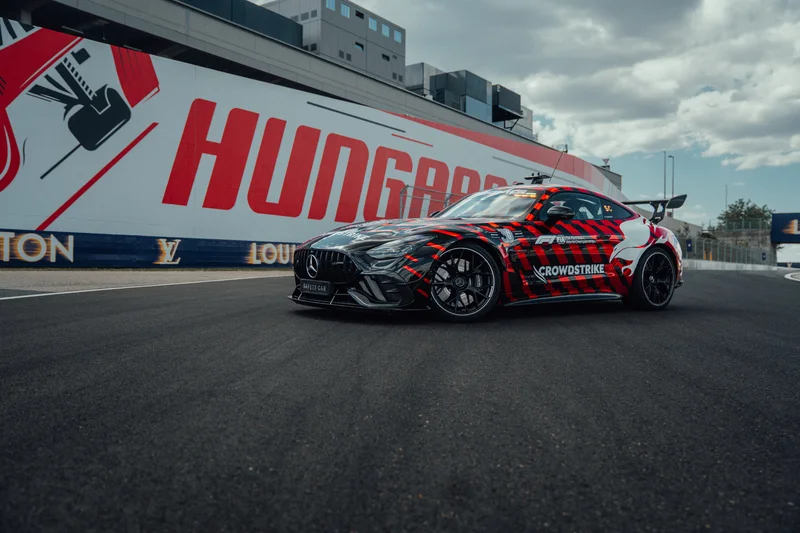
Budapest, July 24, 2026 – The Mercedes-AMG GT 63 PRO 4MATIC+ makes its debut as the new Official FIA F1® Safety Car this weekend at the Formula 1 AWS Hungarian Grand Prix, marking the 14th time a vehicle bearing the three-pointed star has taken on this crucial role. Notably, it is the first Safety Car equipped with fully variable all-wheel drive.
Celebrating 30 Years of Mercedes-AMG Safety Cars in F1
Since 1996, Mercedes-Benz and Mercedes-AMG have been providing the Official FIA F1® Safety Car, setting a standard for safety in the pinnacle of motorsport. To commemorate the 30th anniversary of this legacy, Mercedes-AMG continues the tradition with the GT 63 PRO 4MATIC+, a high-performance model from the GT family, making its debut at the Hungaroring. This new Safety Car replaces the Mercedes-AMG GT Black Series, which served from 2022 and was utilized in a total of 51 instances, most recently during the first four laps of the 2026 Belgian Grand Prix.
Engine, Performance, and 4MATIC+ All-Wheel Drive
The Mercedes-AMG GT 63 PRO 4MATIC+ is powered by a 4.0-liter V8 biturbo engine that produces 450 kW (612 hp) and a maximum torque of 850 Nm, achieving a top speed of 317 km/h. Power is delivered through the AMG Speedshift MCT 9G transmission with nine gears. For the first time, the Official FIA F1® Safety Car employs the AMG Performance 4MATIC+ system, ensuring optimal traction in both dry and wet conditions. The standard AMG High Performance Ceramic Composite Brake System provides consistent and precise braking performance, even under extreme loads, while the AMG Active Ride Control with active roll stabilization allows for precise adjustments to the suspension setup.
Aerodynamics Tailored for Safety Car Duties
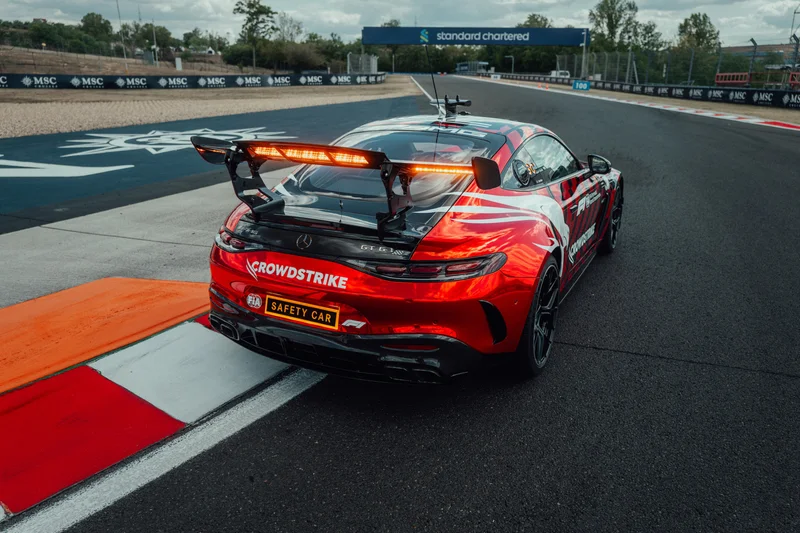
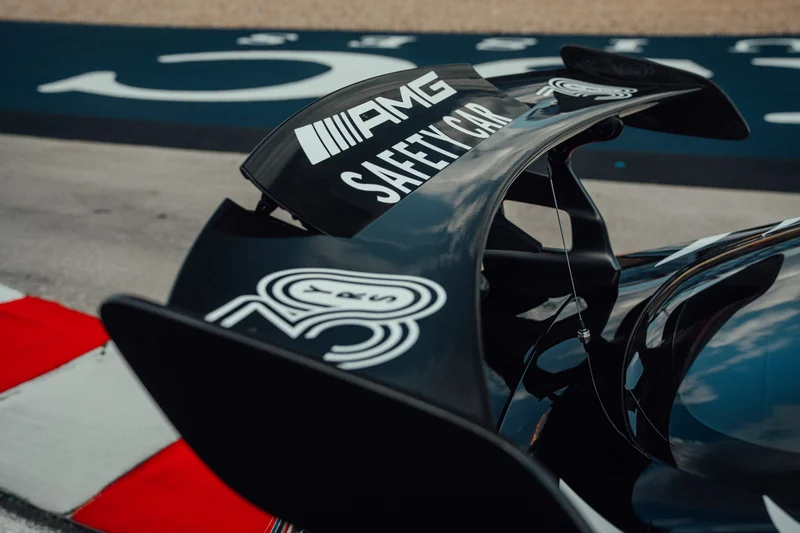
A key feature of the Mercedes-AMG GT 63 PRO 4MATIC+ is the integration of a signaling system within the rear wing, enhancing visibility and aerodynamic efficiency. The green and orange light modules convey different instructions to the cars on track, with orange signaling a no-overtaking zone and green permitting overtaking of the Safety Car. The aerodynamics have been further refined with a new front splitter, an updated rear wing featuring active flaps, and dive planes at the front, all of which improve stability in high-speed corners and generate additional downforce at the front axle.
Safety, FIA Communication, and Pirelli Tires
To facilitate essential communication with race control, the vehicle is equipped with radio, GPS, and camera systems, alongside a control panel in the center console and slightly larger FIA tablets compared to previous models. Safety features include a roll cage, six-point safety belts, racing seats from RECARO, an internal fuel tank, and Makrolon glass for the windshield and rear window. The Official FIA F1® Safety Car is fitted with Pirelli P Zero R ultra-high-performance tires, featuring a dedicated dual-tread compound, validated in collaboration with Mercedes-AMG at the Nürburgring and Nardò. The 75-liter fuel tank uses PETRONAS Primax Pro-Race M2 with a 100 octane rating, composed of 40% sustainable elements (10% ethanol, 30% eFuel).
Debuting at Hungaroring with a Commemorative Livery
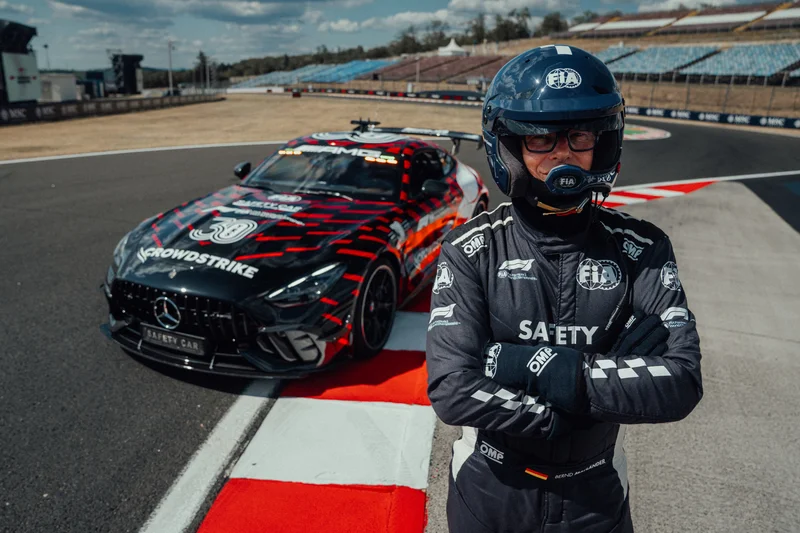
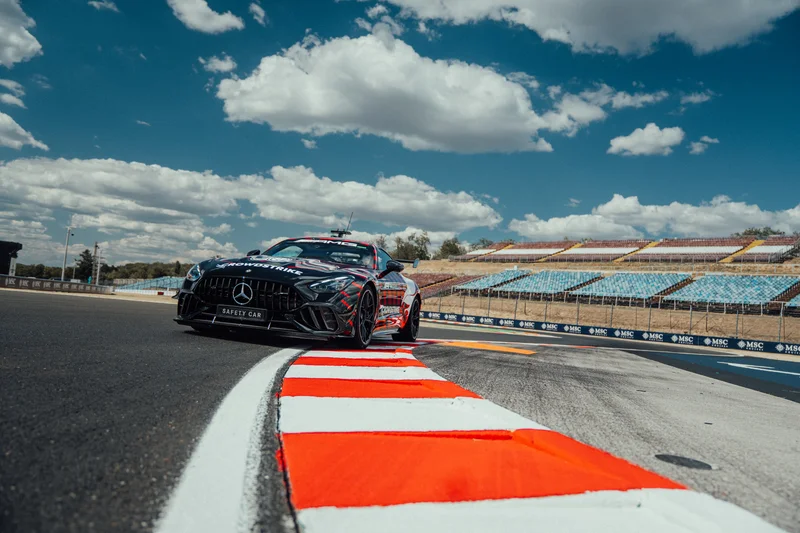
At the Hungarian Grand Prix at the Hungaroring, two modified Mercedes-AMG GT 63 PRO 4MATIC+ vehicles are on standby for emergencies. Both Safety Cars feature a celebratory design honoring 30 years of Mercedes-Benz and Mercedes-AMG Safety Cars in Formula 1®, showcasing a black paint job complemented by red graphics, including partner CrowdStrike branding and the integrated 30th-anniversary logo on the hood, roof, and rear wing.
Insights from Simon Wilbers and Bernd Mayländer
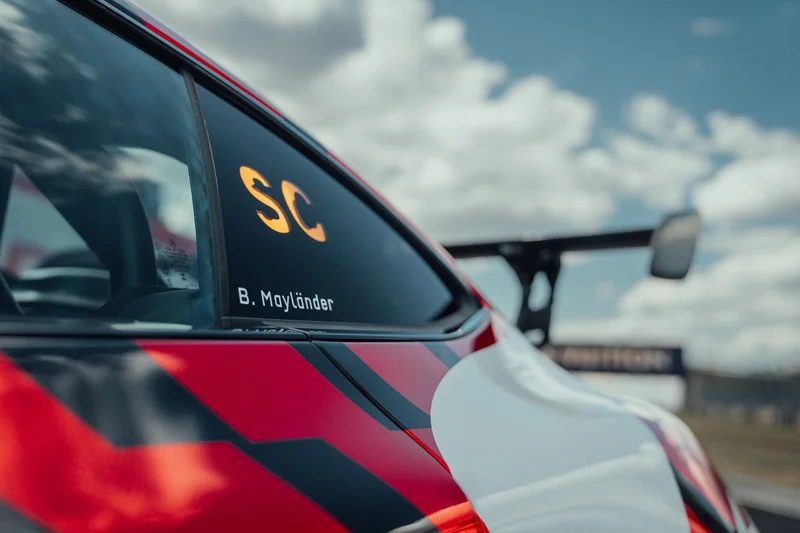
Simon Wilbers, Head of Mercedes-AMG Motorsport, stated: "For 30 years, Mercedes-Benz and Mercedes-AMG have held a special responsibility in Formula 1® by providing the Safety Cars. It is both an honor and a challenge for us to continue this long tradition with a vehicle that once again raises our standards. The Mercedes-AMG GT 63 PRO 4MATIC+ combines exceptional performance with precision, control, and safety, making it the ideal choice as the Official FIA F1® Safety Car and an extraordinary road car." Bernd Mayländer, the long-time driver of the Official FIA F1® Safety Car, added: "The Mercedes-AMG GT 63 PRO 4MATIC+, in the role of Official FIA F1® Safety Car, merges the highest levels of safety with impressive sportiness and driving pleasure. It is the first Safety Car with all-wheel drive. I am looking forward to driving the new Safety Car in real conditions in Hungary."
Frequently Asked Questions about the Mercedes-AMG GT 63 PRO Safety Car
When does the new Mercedes-AMG GT 63 PRO 4MATIC+ debut as a Safety Car?
The Mercedes-AMG GT 63 PRO 4MATIC+ debuts as the Official FIA F1® Safety Car at the Formula 1 AWS Hungarian Grand Prix at the Hungaroring in Budapest during the weekend of July 24-26, 2026, succeeding the Mercedes-AMG GT Black Series that has been in service since 2022.
What are the technical specifications of the new Safety Car's engine?
The engine is a 4.0-liter V8 biturbo producing a maximum of 450 kW (612 hp) and 850 Nm of torque, paired with the AMG Speedshift MCT 9G transmission, allowing for a top speed of 317 km/h.
Why is the Mercedes-AMG GT 63 PRO 4MATIC+ the first Safety Car with all-wheel drive?
For the first time, the AMG Performance 4MATIC+ system, which features fully variable all-wheel drive, is employed, ensuring optimal grip in both dry and wet conditions, thereby enhancing vehicle control on the track.
How long have Mercedes-Benz and Mercedes-AMG been providing the Formula 1 Safety Car?
Mercedes-Benz and Mercedes-AMG have been supplying the Official FIA F1® Safety Car since 1996: the GT 63 PRO 4MATIC+ is the 14th vehicle to serve in this role over 30 years of history.
What tires and fuel does the Formula 1 Safety Car use?
The vehicle is equipped with Pirelli P Zero R ultra-high-performance tires featuring a dedicated dual-tread compound and utilizes a 75-liter tank of PETRONAS Primax Pro-Race M2 fuel with a 100 octane rating, composed of 40% sustainable components including ethanol and eFuel.
What do the green and orange lights on the Safety Car signify?
The light modules integrated into the rear wing convey instructions to the cars on track: the orange lights indicate a no-overtaking zone, while the green lights allow drivers to overtake the Safety Car.