
Confusion Arises from Contradictory Road Signs in Sweden
Confusion arises from a combination of road signs in Sweden, where one instructs drivers to yield while another warns of future yielding requirements. Expert analysis clarifies the situation.
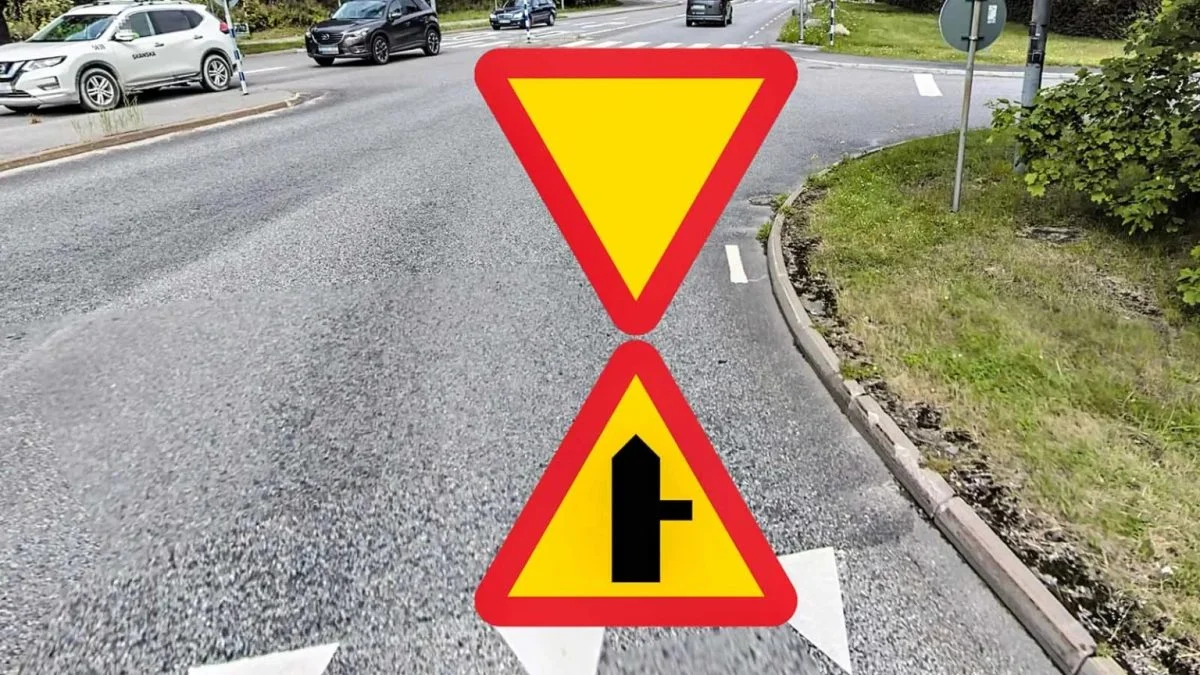
At first glance, two road signs may seem to convey opposing messages. One instructs drivers to yield, while the other warns that vehicles ahead will need to yield to them. This perplexing combination of signs has been noted in Sweden, where road safety expert Jeanette Jedbäck Hindenburg explains that it can confuse many motorists.
The two signs in question are the B1, which indicates an obligation to yield, and the A29, a warning sign that alerts drivers to an intersection where vehicles from side roads must stop or yield.
When these signs are placed together, some drivers may interpret them as contradictory. However, it's crucial to understand that the two signs do not refer to the same point on the road. This distinction is vital for comprehending the intended message.
Understanding the Signs: Immediate Action vs. Future Warning
Hindenburg clarifies that drivers must interpret the signs in the correct sequence. The first sign relates to yielding.
As drivers approach the intersection, they must heed the B1 sign and yield before merging onto the main road. Once they have entered, however, the situation changes. The second sign serves as a warning for a point further ahead, indicating that at the next intersection, vehicles from the secondary road will need to yield.
In practical terms, this means: first, allow others to pass to enter the main road, and then stay alert for another intersection ahead where the rules will be different. Thus, there is no genuine contradiction. The confusion primarily arises because both signs can be mounted on the same pole, leading many to perceive them as a single message.
The Visual and Psychological Challenge
The confusion is largely visual and psychological. Drivers see two pieces of information regarding yielding simultaneously and may mistakenly believe both apply to the immediate intersection in front of them. However, this is not the case.
The yield sign has immediate applicability, while the warning sign pertains to a future intersection, serving to alert drivers well in advance of potential hazards. This is the fundamental purpose of warning signs.
These signs are typically positioned at a sufficient distance from the actual hazard to allow drivers enough time to recognize the danger and adjust their driving accordingly. On faster roads, warnings can appear 100 meters or more before the relevant point, ensuring drivers have adequate time to respond.
The Importance of Remembering Warning Sign Functions
According to Hindenburg, this concept is well understood by new drivers. During their theory lessons, they learn from the outset that a warning sign anticipates what lies ahead.
However, over time, some drivers may forget parts of the knowledge acquired during their driving tests. When a warning sign is placed next to another that requires immediate action, the interpretation can become less intuitive.
This is precisely what happens with this particular combination. The key takeaway is that drivers should not assume that two nearby signs describe the same situation. It is essential to first understand what type of sign is being observed and which point on the road it pertains to.
Removal of Confusing Signage in Nacka
A notable instance of this confusing sign combination was near the entrance to Per Hallströms väg in Nacka, Sweden. The dual signage was eventually removed, although the exact reason for this decision remains unclear. It is widely believed that the combination gained notoriety for the confusion it caused among drivers. However, this does not mean that such combinations are entirely eliminated.
Reports indicate that similar sign pairings can still be found in other areas of Sweden. Here, understanding the meanings of the two signs becomes crucial: first yield, then merge onto the road, and later be warned of another intersection.
Key Takeaway for Drivers Facing Conflicting Signs
The Swedish example highlights the importance of not merely focusing on the shape or symbol of a sign but also remembering its function. One sign may require immediate action, while another prepares the driver for what they will encounter several meters ahead.
In the case of the B1 and A29 combination, the first message is “yield”. The second sign does not negate this instruction; it merely alerts drivers that they will soon encounter another intersection where the traffic rules will change.
Thus, it is not a genuine paradox in signage but rather a situation where two accurate pieces of information presented simultaneously can be misinterpreted if one forgets that warning signs serve to anticipate what lies ahead on the road.