
Danube Reveals WWII Shipwrecks Near Prahovo as Water Levels Drop
The persistent heat and dropping water levels in the Danube have revealed WWII shipwrecks near Prahovo, Serbia. These wrecks, sunk by German crews in 1944, pose navigational hazards and are the focus of a recovery project supported by the EU.
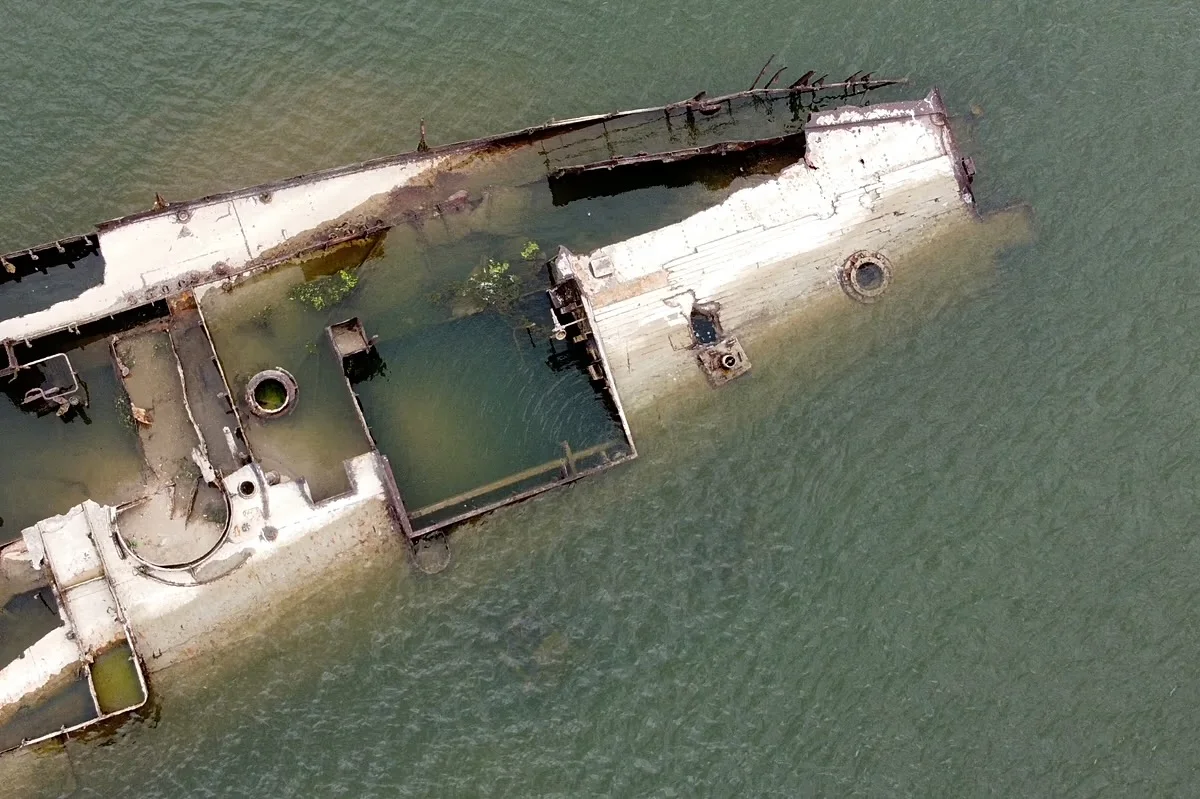
The persistent heat and subsequent drop in the Danube River's water levels have unearthed a remarkable testament to World War II history. Near Prahovo in eastern Serbia, the remains of numerous German warships sunk in 1944 by their own crews during the Wehrmacht's retreat from the advancing Red Army are now visible.
This phenomenon has become a familiar sight each summer during particularly dry spells. As the river's water recedes, the metal carcasses emerge, serving as a reminder of one of the lesser-known episodes of the conflict on the Balkan front. The German weekly Focus has highlighted this issue, detailing the history of these wrecks and the initiatives underway for their removal.
In the autumn of 1944, German forces were retreating both on land and along the Danube. To prevent military equipment from falling into Soviet hands, crews were ordered to sink their vessels. This strategy also aimed to create an artificial barrier to obstruct the navigation of Soviet troops along Europe's second-longest river.
Over eighty years later, this decision continues to have tangible consequences. The wrecks still pose navigational hazards, particularly during low water periods when the river level significantly decreases, complicating the passage of ships.
To tackle this issue, a project has been initiated with support from the European Union through the Western Balkans Investment Framework (WBIF), backed by the European Investment Bank (EIB). This initiative aims to recover the 21 wrecks deemed most dangerous to navigation within a five-kilometer stretch of the Danube near Prahovo.
The first recovery operations began in 2024. Specialized crews have started extracting some vessels using ropes and specialized equipment after clearing them of decades of mud and sediment. Serbian authorities report that modern technologies now enable interventions that would have been extremely complex or even impossible in the past.
However, the recovery process is fraught with challenges. Approximately 200 wrecks, including warships, barges, tugs, and transport vessels, lie on the riverbed. Many military units may still contain unexploded munitions, necessitating delicate operations carried out by specialized divers and bomb disposal teams. In some instances, the size of the wrecks makes complete recovery unfeasible; for these vessels, the decision has been made to bury them deeper in the riverbed to eliminate the risk to navigation.
The intervention also carries significant economic implications. Prior to the project's initiation, the presence of the wrecks caused delays and restrictions in commercial navigation, with estimated losses of around five million euros annually for Serbia. In July 2024, the EIB allocated a grant of 16 million euros to support the efforts, which are expected to conclude by 2028. The goal is to make the Danube safer and more competitive as a transport route, promoting a shift of an increasing share of freight traffic from roads to waterways and contributing to the development of inland navigation throughout the Balkan region.