
Nikon Unveils New Telephoto Zoom Lens: The Nikkor Z 70-200 mm f/2.8 VR S II
Nikon has launched the Nikkor Z 70-200 mm f/2.8 VR S II, a telephoto zoom lens for mirrorless cameras, featuring advanced stabilization and a lightweight design.
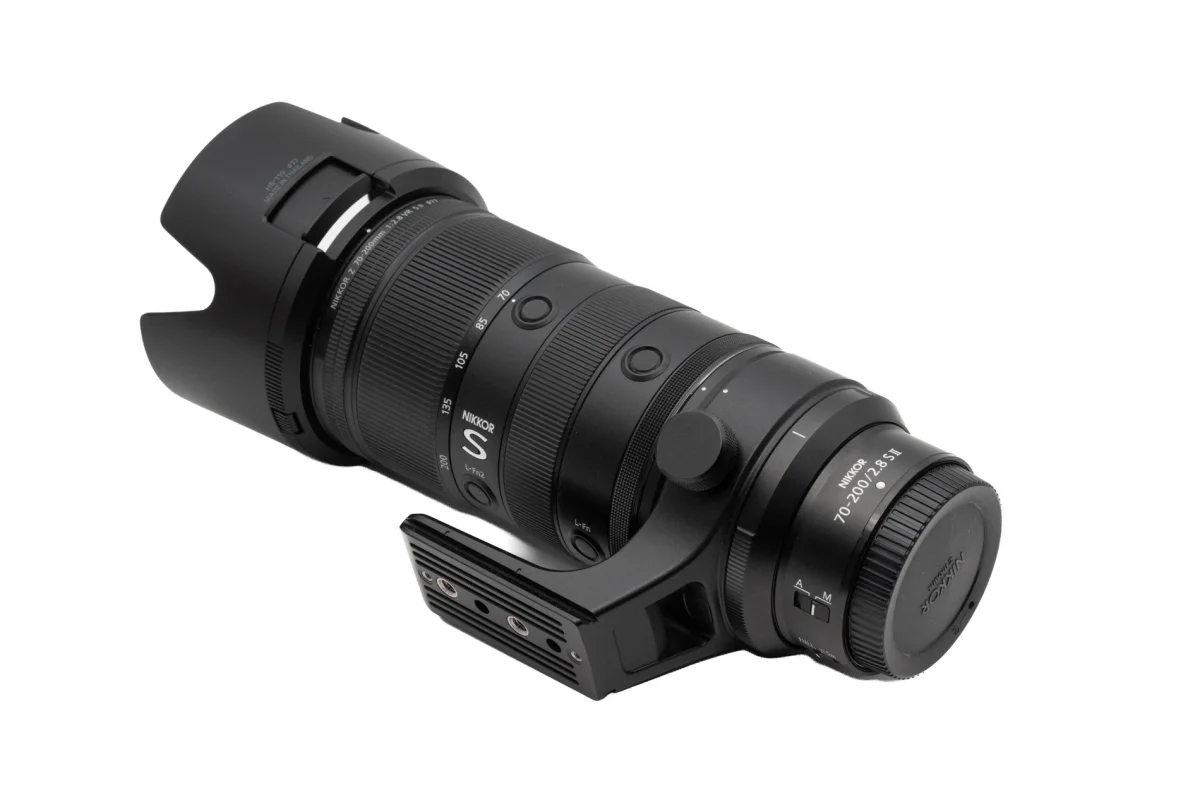
Nikon has recently launched an updated version of its classic telephoto zoom lens designed for the Z-series of mirrorless cameras. The new Nikkor Z 70-200 mm f/2.8 VR S II is priced at €3,350 and features an optical construction of 18 elements arranged in 16 groups, including double-sided aspherical lenses. The built-in image stabilizer offers up to six stops of compensation, and Nikon’s Syncro-VR technology promises enhanced stabilization capabilities. Currently, this functionality is available for the Z9, Z8, Z6III, Z5II, Zf, and ZR camera bodies.

One of the first advantages noted upon unboxing the lens is its surprisingly low weight, tipping the scales just under one kilogram. When paired with a Nikon Z7II, the zoom excels in both speed and precision, capturing stunning images of a reservoir in the valley below. The lens renders the mist of a waterfall against the light into a brilliant display of highlights. The bokeh produced is pleasing, thanks to its diaphragm constructed from eleven rounded blades. This design also helps in transforming harsh reflections of sunlight on water into beautifully colored circles. The autofocus operates effectively even in low-light conditions, such as the dim interiors of churches or shaded pathways.
Reflecting on Progress
A comparison with its predecessor from the 1990s offers insight into the advancements made. Nikon introduced its first autofocus lens for the F-system with a focal length of 80 to 200 millimeters and a constant aperture of 2.8 during that era. This heavy lens was primarily used for stage photography, including concerts and theater productions. The wide aperture was a significant advantage. The Nikon ED AF Nikkor 80-200 mm 1:2.8 served photographers for many years, beginning its journey with manual focus on cameras like the FM2 and F3, transitioning to autofocus with the F800 and F4, and finally embracing the digital age with the D100. Ultimately, this classic lens became a relic as photographers shifted to the Z-series mirrorless systems.
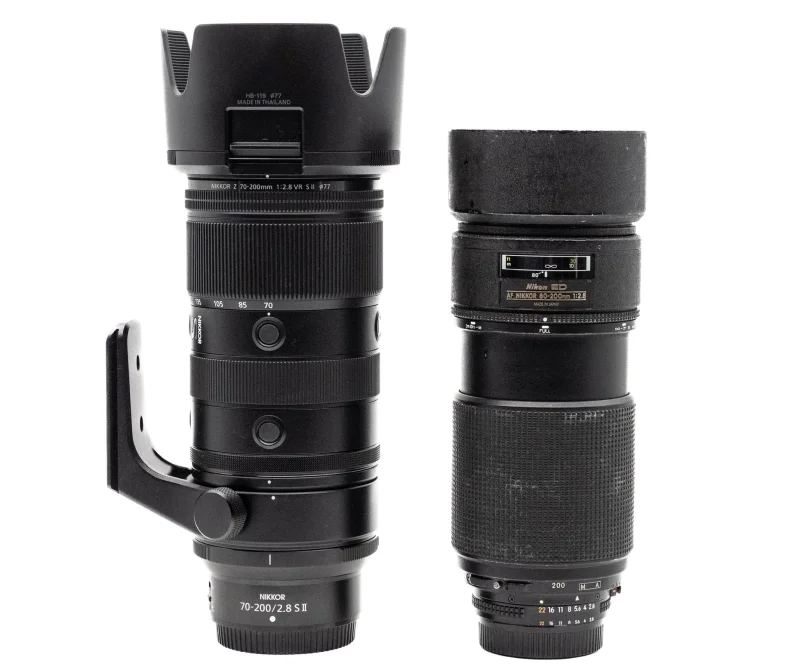
The shorter 70-millimeter focal length of this versatile family of lenses was first introduced by Nikon in the early 2000s, while the longer 200-millimeter focal length has remained a staple across various generations of this powerful zoom lens. This year is particularly significant, as 2026 will mark the 200th anniversary of photography. The occasion, especially celebrated in France as the "Bicentenaire de la Photographie," pays homage to the innovation that has profoundly influenced modern visual culture. When Joseph Nicéphore Niépce captured the view from his window in 1826 using heliography, he produced the first photograph in history, a feat that would have been unimaginable without the advanced, light-sensitive lenses available today.
Looking ahead, Nikon is set to take another step in the evolution of telephoto lenses with an announcement made in May regarding the development of a new Z-Nikkor with a focal length of 120 to 300 millimeters. This upcoming lens is expected to feature an integrated 1.4x teleconverter, extending the zoom range to 420 millimeters while maintaining a maximum aperture of f/4.0.