Polestar 2 Performance Review: 1750 km Behind the Wheel of the Scandinavian Electric Sedan
The Polestar 2 Performance offers a unique driving experience, blending Scandinavian design with impressive performance. Discover the insights from a week-long test drive covering 1750 km.
For a long time, the Polestar 2 was a vehicle I observed from a distance, primarily due to its unavailability in France. The backstory is well-known: the Polestar logo — two intertwined chevrons — bore a striking resemblance to Citroën's emblem, which hindered its official launch in France for several years. This changed in June 2025, when Polestar officially entered the French market.
Taking advantage of this development, I spent a week driving the Polestar 2 Long Range Dual Motor Performance, a powerful variant boasting 476 horsepower and equipped with the Performance pack. To truly understand the vehicle, I covered an impressive 1750 km during my week-long test drive.
A Car That Sparks Curiosity
One of the first things that struck me during this test was the curiosity the Polestar 2 generates. Whether parked, at a charging station, or simply on the street, several people approached me, inquiring about the car. This level of interest is quite rare in today's automotive landscape, particularly in the electric vehicle segment, where familiar models dominate. Polestar remains relatively unknown in France, and this air of exclusivity certainly works in its favor.
The vehicle attracts attention and often prompts the same question: "Is it a Volvo?" Not exactly, although Polestar's history is closely linked to Volvo.
Contemporary Design
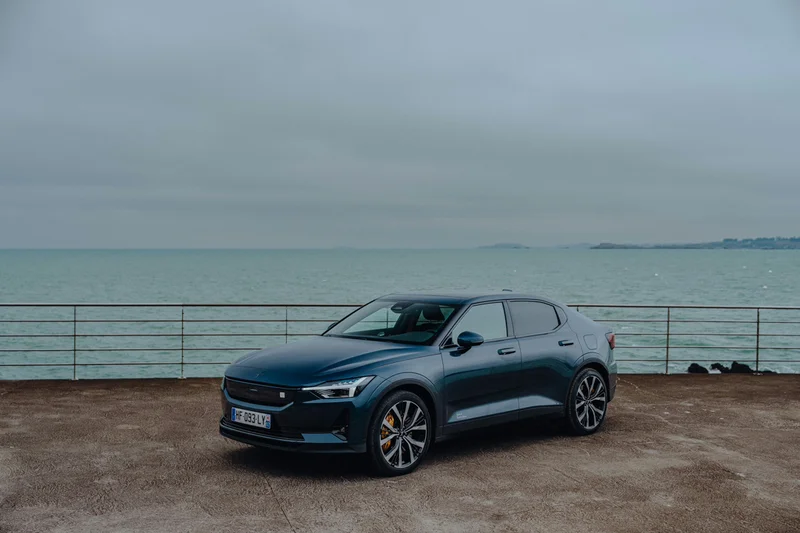
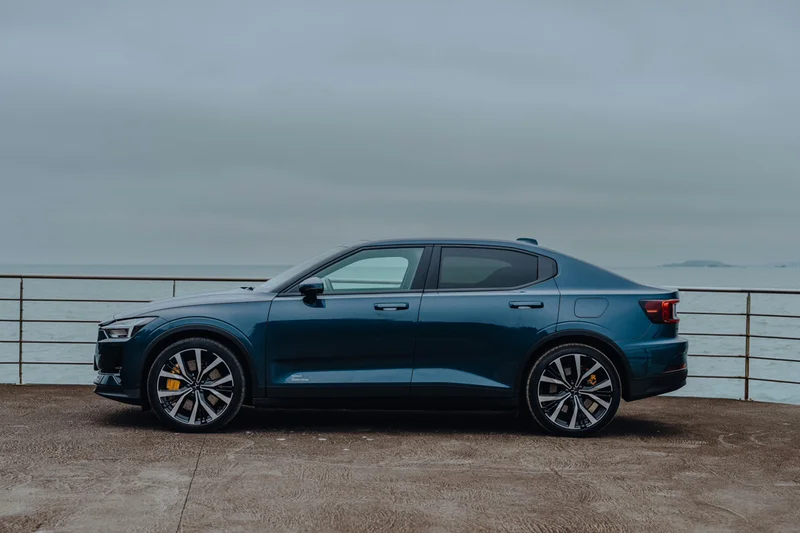
Although the Polestar 2 was launched several years ago, its design feels far from outdated. On the contrary, it maintains a modern, sleek, and somewhat timeless aesthetic. This Scandinavian approach is characterized by simplicity, efficiency, and a lack of unnecessary embellishments.
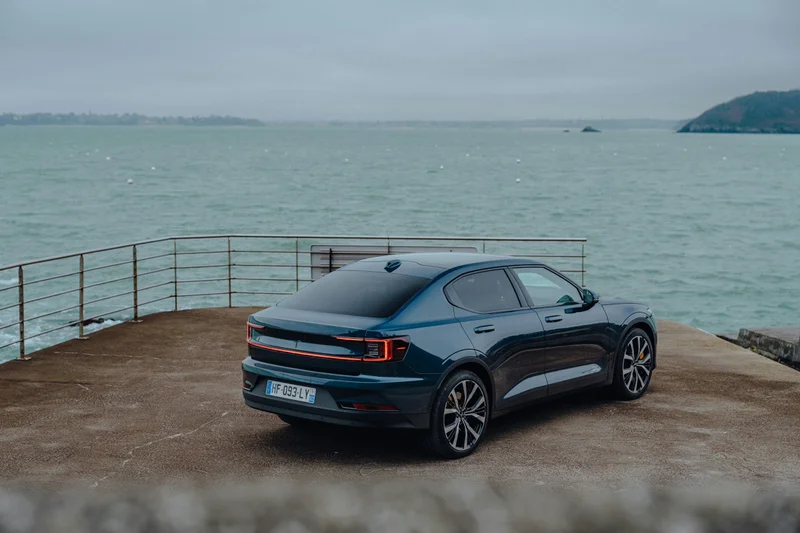
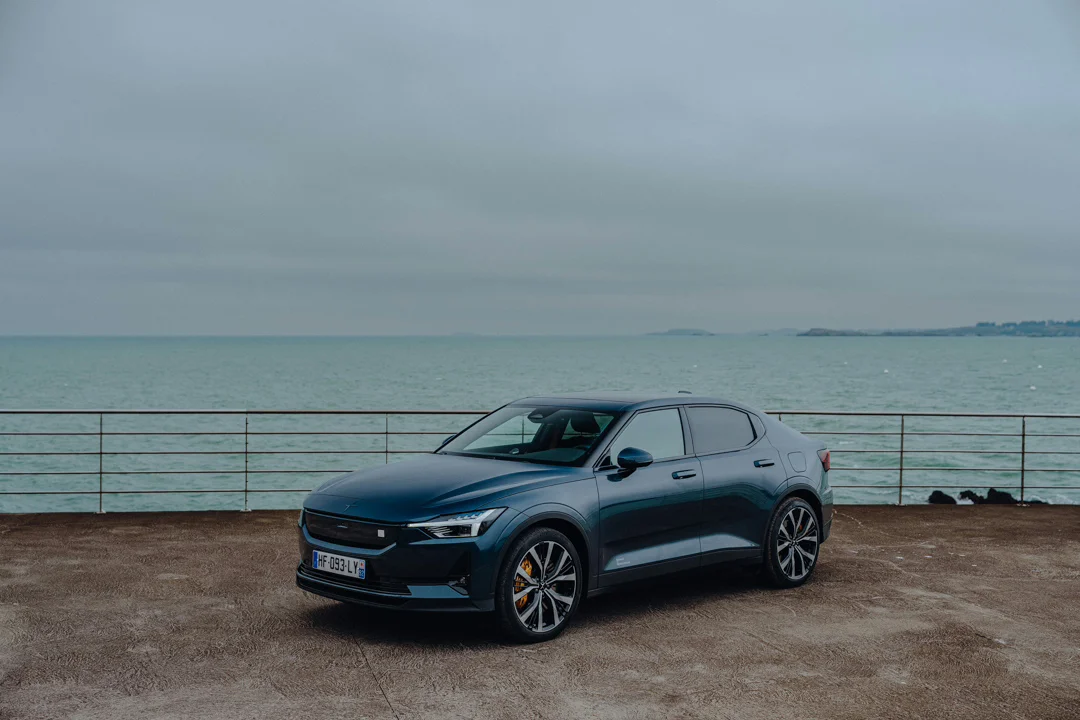
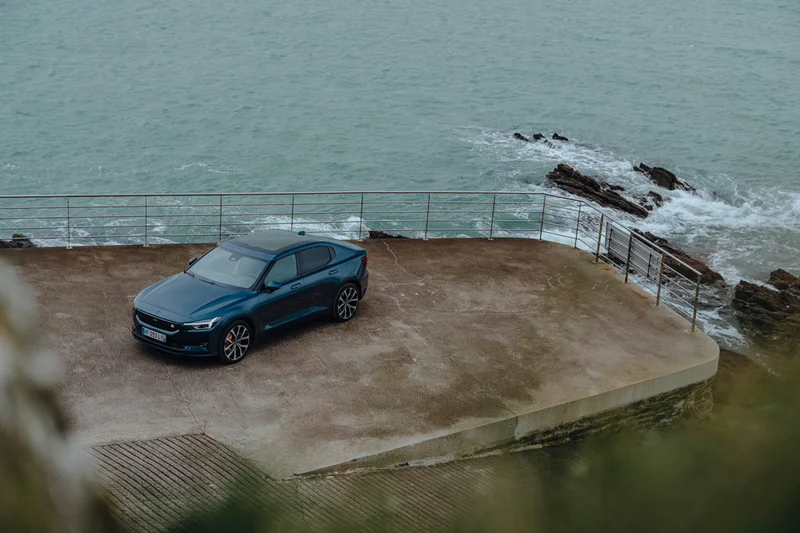
The test model was finished in Midnight Blue, a deep hue that stands out from the more common white Polestars often featured in brand communications. Paired with the Performance pack, this color scheme works exceptionally well. The prominent Brembo Swedish Gold brake calipers immediately catch the eye, complemented by large perforated discs, giving the car a distinctly sporty character.
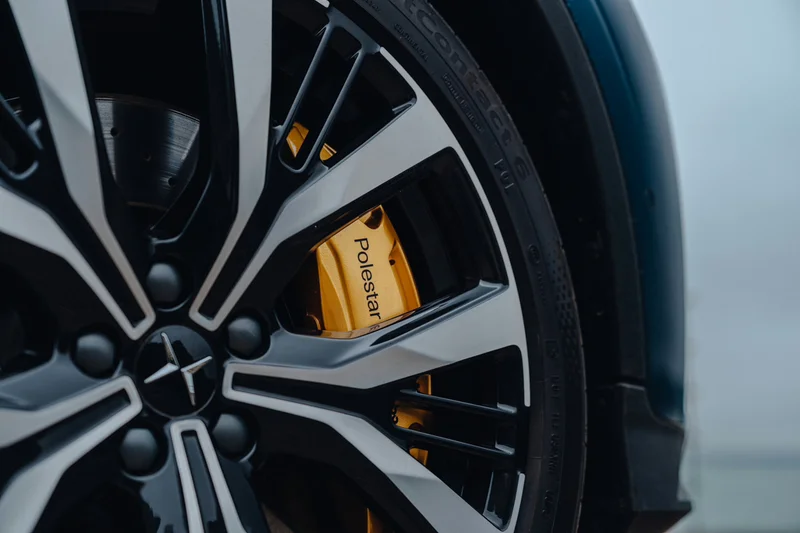
On closer inspection, several unique details highlight the Polestar brand, including discreet badges and stickers on the side skirts indicating the motor's power in kW. These subtle touches contribute to the model's visual identity, striking a balance between elegance and sportiness.
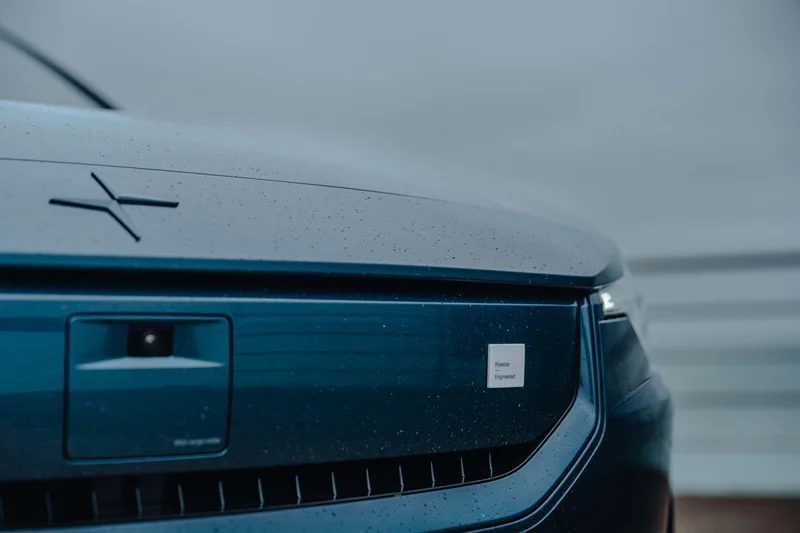
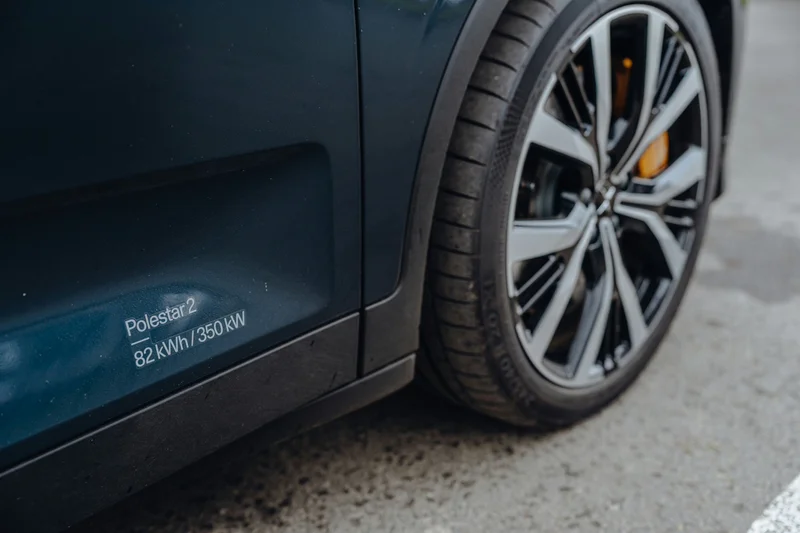
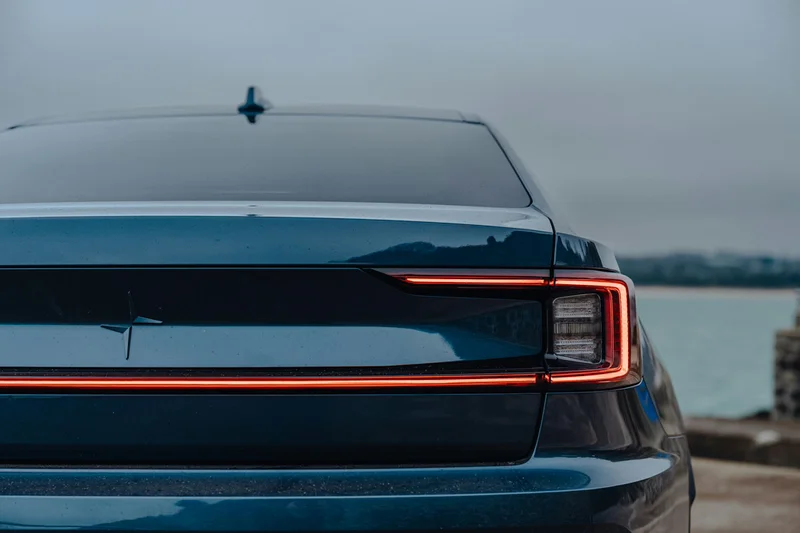
Overall, the car maintains a relatively understated presence in the current automotive landscape. Yet, as one approaches, it becomes evident that it doesn't quite resemble the others. Even six years post-launch, the Polestar 2 continues to turn heads.
Inside: Scandinavian Minimalism
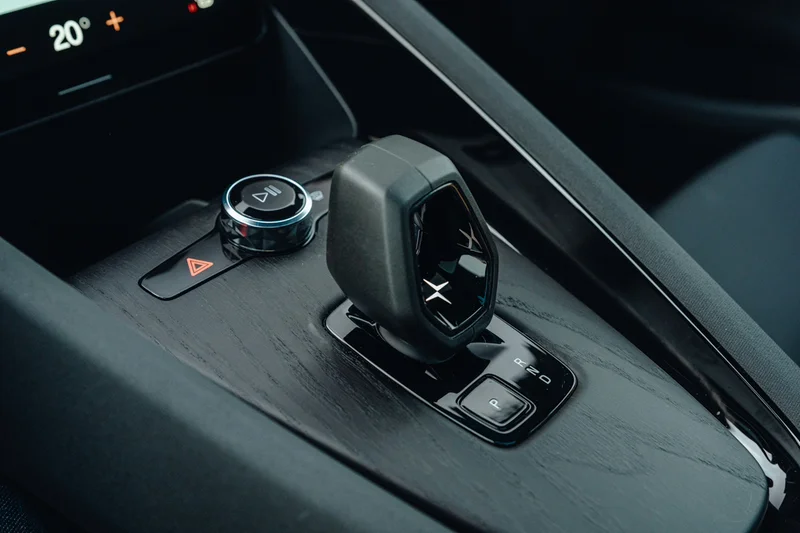
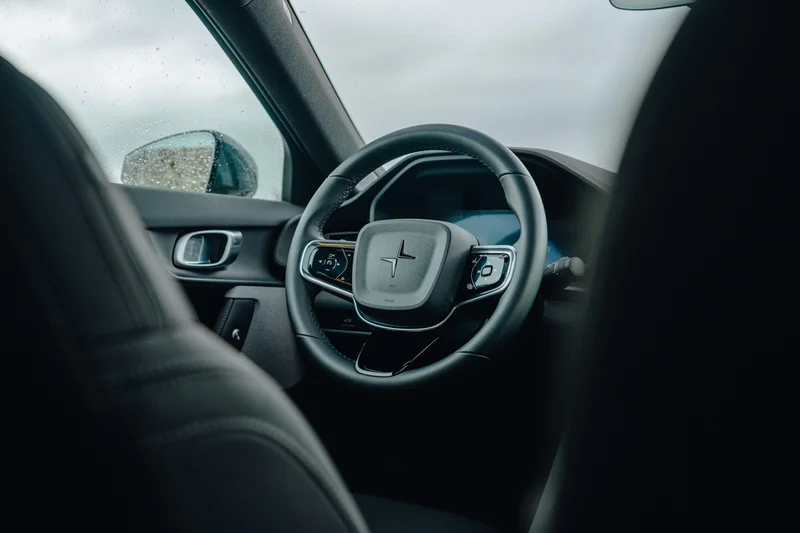
Stepping inside, the typical ambiance of Nordic brands is immediately apparent. The interior is minimalist, clean, and exceptionally well-constructed. The materials used are of high quality, creating a serious and well-finished environment, while the ergonomics remain intuitive despite the limited number of physical buttons.
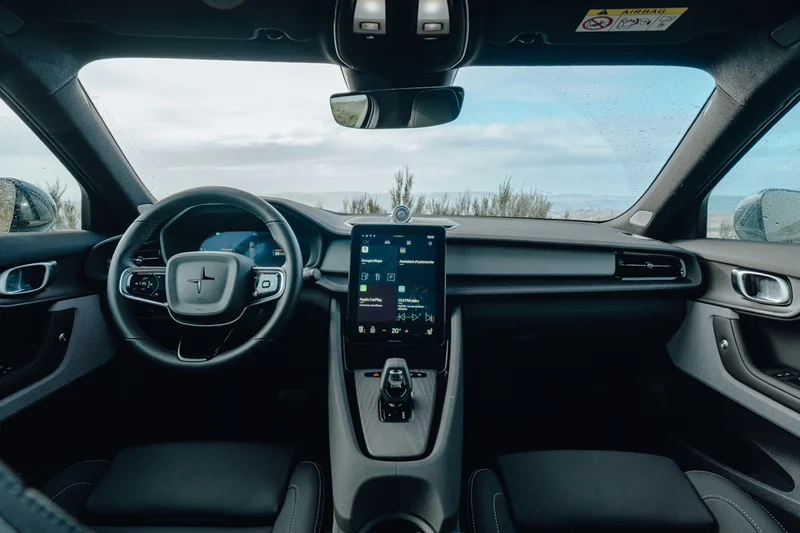
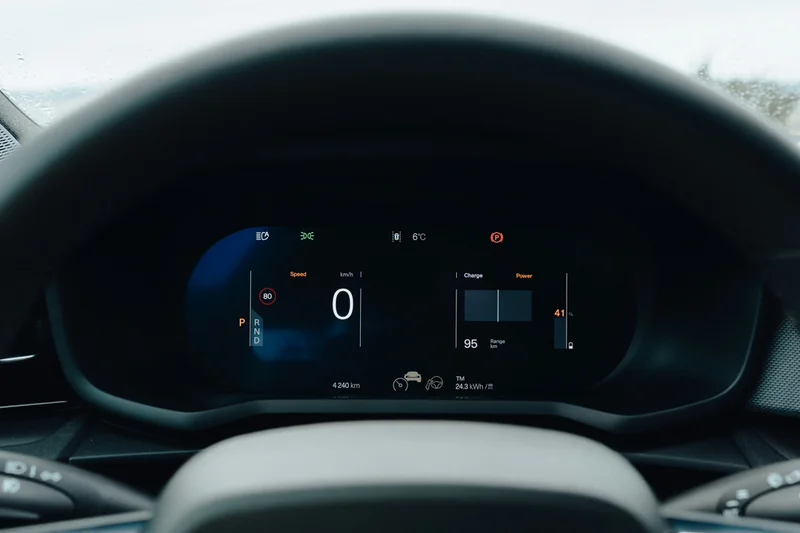
The cabin centers around two screens: a digital display behind the steering wheel and a central vertical screen that consolidates most functions. The instrument cluster is also minimalistic, featuring only two different displays.
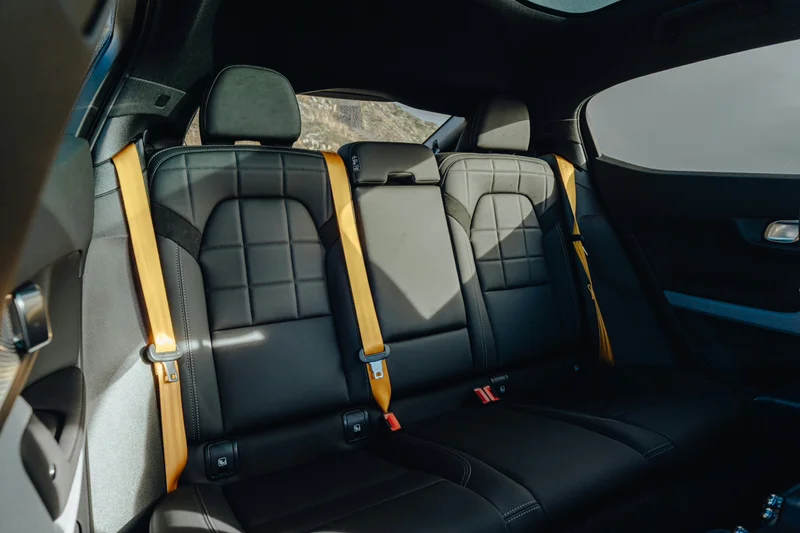
The MicroTech bio-attributed seats are pleasant to the touch and provide a good level of comfort. They are electrically adjustable and heated, as is the steering wheel. Additionally, the panoramic roof brings ample light into the otherwise dark interior. While rear-seat space is adequate, the roofline does create a slight sense of confinement.
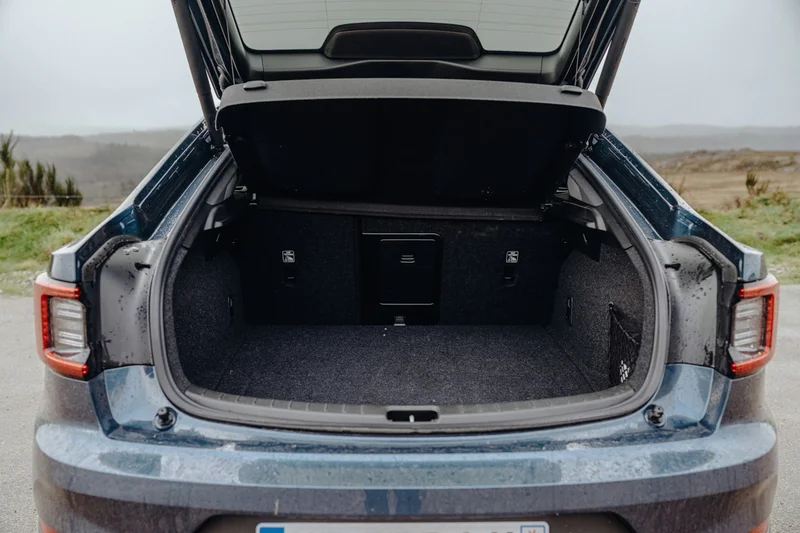
The trunk offers 405 liters of space, making it suitable for weekend getaways. However, this volume is relatively modest for a sedan of this size, comparable to the Tesla Model 3's 425 liters but less than the Hyundai Ioniq 5's 527 liters. Nevertheless, the trunk is easily accessible, and loading is straightforward, partially compensating for the limited space. The small front trunk is particularly handy for storing charging cables.
Android Automotive: A Seamless Integration
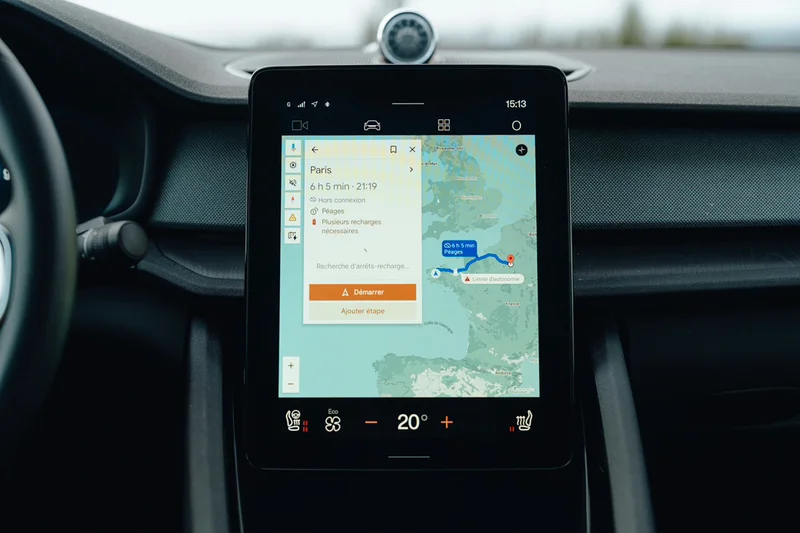
The Polestar 2 operates on Android Automotive, featuring an interface developed by Polestar. The system is fluid, responsive, and well-integrated with the car. Google Maps is directly linked to energy management and the charging planner.
A significant advantage of Android Automotive is the ability to download applications natively, including audio streaming services and route planners.
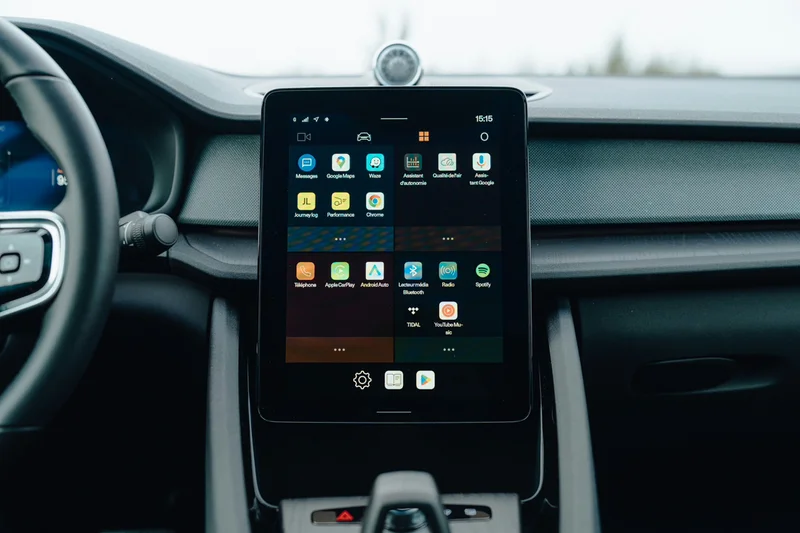
During my trip from Paris to Brest, the system effectively managed charging stops, continuously adjusting the estimated range upon arrival. I found myself using Apple CarPlay only for calls and music.
However, there were minor software bugs that reminded me of the platform's age. Issues like a brief screen freeze at startup and occasional Bluetooth connectivity problems were noticeable but not deal-breaking over the week.
An Impressive Audio Experience
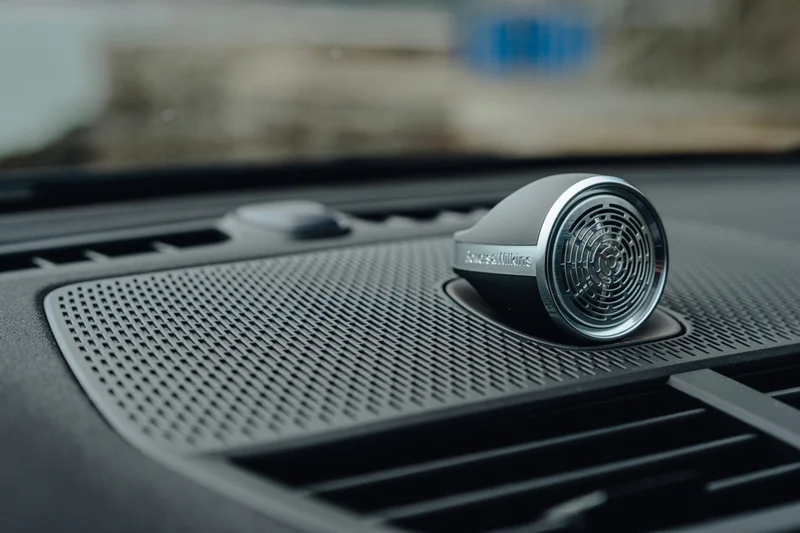
The Bowers & Wilkins audio system was one of the standout features of this vehicle. Once properly tuned, it delivers powerful, clear, and detailed sound.
The car's sound insulation contributes significantly to this experience. At 130 km/h on the highway, wind noise is well-contained, allowing for an enjoyable audio experience.
In these moments, several well-crafted details become apparent. For instance, the sound of the turn signals is surprisingly deep and muted, a detail noted by several passengers during my drive. Such nuances, while seemingly trivial, enhance the overall ambiance of the vehicle. Similarly, the discreet projection of the Polestar logo onto the panoramic roof adds a visually appealing touch, especially when first discovered.
On the Road: A Refined Chassis
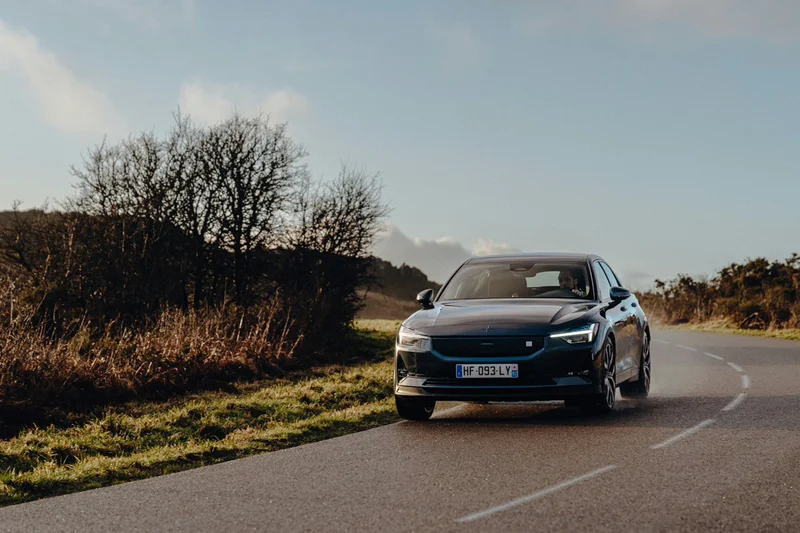
The Polestar 2 Performance truly reveals its character on the road. From the first kilometers on secondary roads, the chassis inspires confidence. The initial dynamic cornering experience is telling: the car positions itself naturally, the front end grips immediately, and the acceleration out of the curve is impressive.
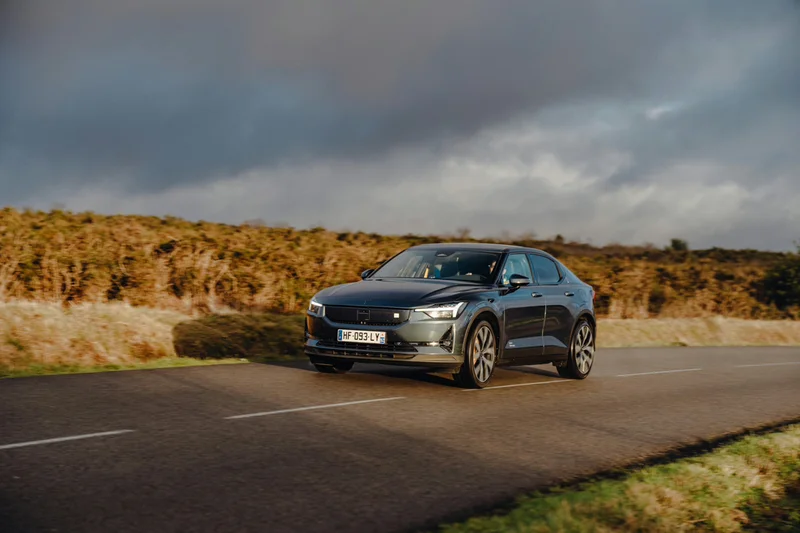
Despite weighing over two tons, the car never feels heavy. Its low center of gravity, due to the batteries situated in the floor, offers remarkable stability and a genuine sense of poise on the road.
The steering is direct and firm when the sportiest setting is selected. The Öhlins suspension contributes significantly to the chassis's rigidity: the damping is firm yet manageable for daily driving and becomes a true asset on winding roads.
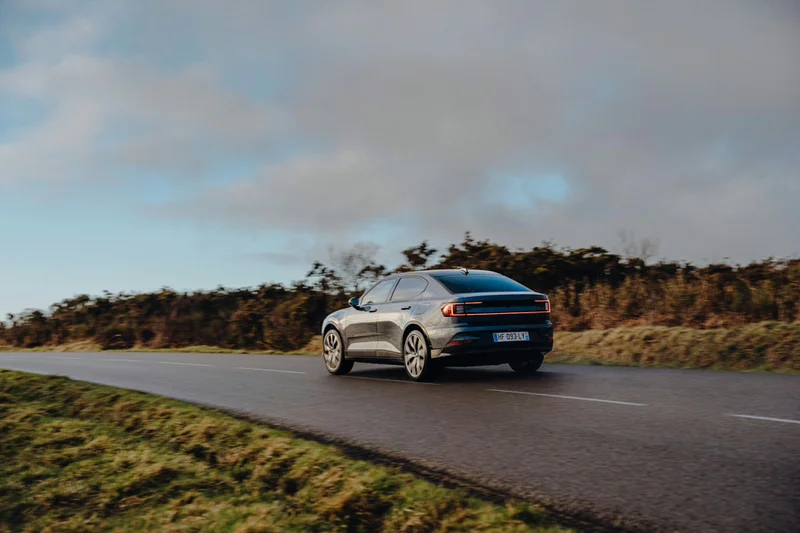
All-wheel drive ensures excellent traction. The 476 horsepower and 740 Nm of torque provide more than enough power for quick accelerations. The Brembo brakes are equally impressive, offering immediate bite and a natural pedal feel.
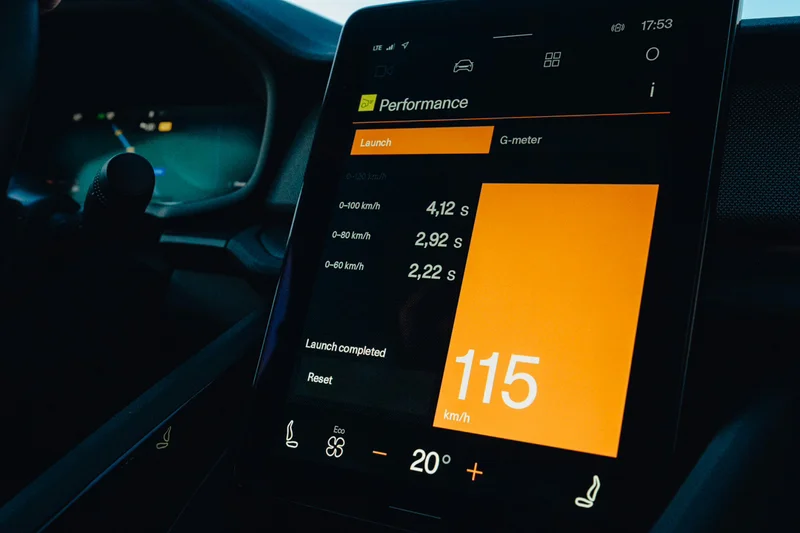
To measure performance, a small application is integrated into the system for tracking personal bests (legally, of course). I recorded a 0 to 100 km/h time of 4.12 seconds, while the manufacturer modestly claims 4.2 seconds. This was achieved on a wet road, demonstrating the overall effectiveness of the Polestar 2. A true delight!
In daily driving, I primarily used the “One Pedal” driving mode. Well-calibrated, it allows for managing most situations without needing to touch the brake pedal.
Consumption, Range, and Charging
Throughout the 1750 km driven during this week-long test, the average consumption was recorded at 24.1 kWh / 100 km. However, this figure requires some context. The external temperatures hovered around 2°C during the test, a significant portion of the journey was on the highway, and I indulged in some spirited driving on country roads.
Under these conditions, consumption naturally varied. On the highway, particularly during my trip from Paris to Caen, I observed around 24 kWh / 100 km. In more aggressive driving scenarios, consumption could rise to approximately 33 kWh / 100 km. Conversely, during calmer driving on secondary roads, it dropped to around 21.5 kWh / 100 km.
Given these figures and the winter conditions, the real-world range is approximately 300 to 320 km.
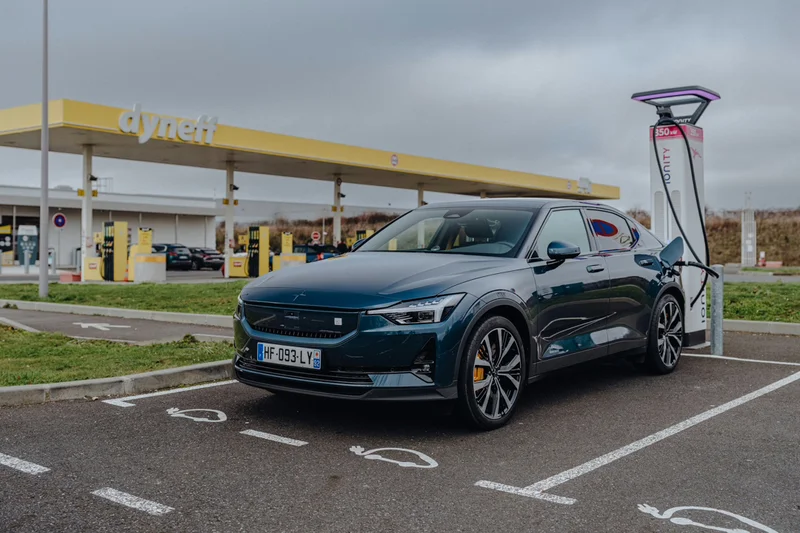
Regarding charging, the Polestar 2 performs reasonably well, despite the aging platform. During various stops, it took about 33 minutes to charge from 10% to 80%. The observed charging power never exceeded roughly 150 kW, but the charging curve remains stable up to about 50%, gradually decreasing thereafter. This consistency allows for quick range recovery without a drastic drop in power after a few minutes.
Pricing and Positioning
The pricing aspect is also worth discussing. In the configuration tested — Long Range Dual Motor with Performance and Prime packs — the Polestar 2 exceeds €64,000.
On paper, this price may seem steep. However, considering the features offered, the positioning is ultimately coherent. With manufacturing quality comparable to European standards, a highly refined chassis, Öhlins suspension, Brembo brakes, and a particularly comprehensive equipment list, the Polestar 2 stands well against its competitors.
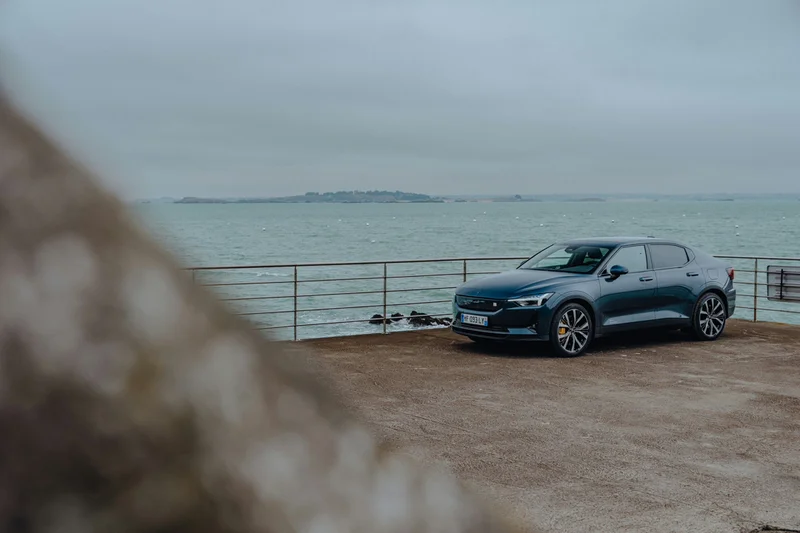
Compared to the Tesla Model 3 Performance, which is highly capable but more minimalistic, or certain premium electric sedans that quickly become pricier, the Polestar presents an interesting proposition: a well-finished, dynamic, and relatively exclusive electric sedan.
It's also important to mention the new Mercedes CLA 250+, recently awarded Car of the Year 2026, which boasts exemplary range and starts around €48,000, but is built on a much more recent electric platform.
Conclusion
After 1750 km and a full week behind the wheel, the Polestar 2 Performance left me with a clear impression. While it may not be the most efficient electric vehicle on the market, it compensates with a distinct personality. Its clean design, meticulous details, and especially its well-developed chassis give it a strong identity.
On the road, it is stable, enjoyable to drive, and sufficiently dynamic to provide pleasure when the terrain turns engaging. In daily use, it remains comfortable, well-insulated, and equipped with a highly integrated multimedia system, despite a few lingering software bugs.
In an increasingly uniform electric vehicle landscape, the Polestar 2 benefits from its uniqueness, continuing to intrigue many on the road.