Understanding the 3PMSF All-Season Tire: Who Benefits and Why
A detailed exploration of the 3PMSF all-season tire, its benefits, drawbacks, and suitability for different driving conditions and profiles.
On a chilly morning, as I set out on the road with a 3PMSF tire that had been mounted for six months, I began to assess whether this all-season tire truly justifies avoiding the hassle of seasonal swaps. Living with my partner and without children, I also consider the costs and convenience. In this article, I will explore who benefits from this compromise and who might be better off looking elsewhere.
What is a 3PMSF All-Season Tire and Why It Matters
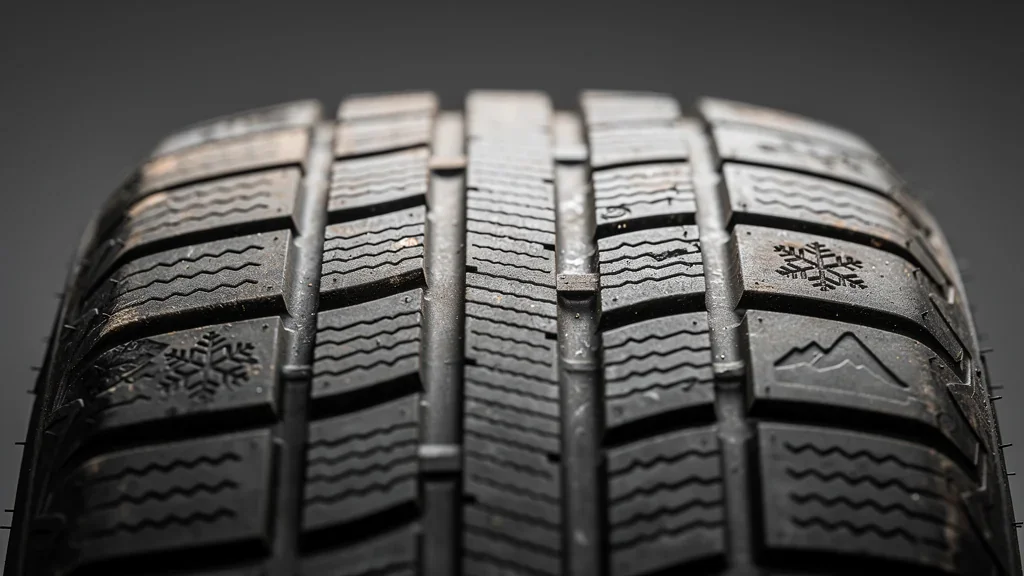
The 3PMSF marking serves as a crucial indicator for me. I specifically look for the 3D pictogram depicting a snowflake within a mountain on the sidewall, rather than just a pretty logo on the packaging. While the old M+S marking still holds some relevance, I no longer regard it with the same importance. To me, the 3PMSF signifies that an all-season tire has undergone more rigorous regulatory tests for winter conditions. It may not qualify as a pure winter tire, but it significantly enhances road safety when temperatures drop.
The True Meaning of the 3PMSF Marking
The 3PMSF marking—the well-known snowflake in the mountain—is understood as a certification for tires that can handle light to moderate snow. This tire must demonstrate adequate traction on snow and a minimum level of snow grip. This is clearer than the vague M+S designation, which has less stringent requirements. I also pay attention to the rubber composition, the presence of sipes, and the depth of the tread, as the logo alone does not tell the whole story.
The Mountain Law Mandates 3PMSF Compliance by 2024
In mountain regions, the mountain law has prompted me to take legal compliance more seriously. Starting in 2024, I no longer want to risk non-compliance. I've seen too many drivers mistakenly believe they were safe with M+S tires, only to find out they weren't suitable for certain areas. Practically, French regulations compel me to verify the tire homologation before winter, especially when signs indicate the need for appropriate equipment.
Positioning All-Season Tires in the Market
The all-season tire occupies a middle ground. It doesn’t have the grip of a true winter tire but performs better than a worn summer tire once temperatures drop below 7 °C. In the market, I identify three categories: winter tires, summer tires, and all-season tires. The best hybrid 3PMSF tires aim to strike a balance between cold, rain, and daily use. However, I remain cautious about entry-level models that bear the label without delivering on the road.
My Daily Experience with a 3PMSF All-Season Tire
I have been driving on this tire with my 2016 Toyota Corolla hybrid, which has 130,000 km on the clock. My driving consists of urban, secondary roads, and some highway travel. One November evening around 7:30 PM, I ventured out in the cold rain and immediately noticed the difference compared to my worn summer tires. The first braking on wet pavement felt sharper than the second, as the rubber had just begun to warm up. I was convinced faster than expected, as the body roll remained moderate, which gave me confidence.
I don’t drive like a commercial vehicle on the highway. My daily trips involve stops, roundabouts, and short accelerations. In the city, the versatile tire spared me the seasonal change dilemma, which is crucial when time is limited. My maintenance budget hovers around €50 per month, so I was also mindful of the cost savings. As an automotive journalist for CarBling, I understand that a solid compromise is preferable to an overly optimistic promise.
Driving Conditions and Experience
I drive year-round, facing distinct weather variations. I also encounter cold, damp conditions followed by warmer asphalt. With my partner, without children, I am not looking for a tire that can do everything perfectly. I seek a simple, clear installation and decent handling when transitioning from dry to wet roads. My usage places me right in the sweet spot for the 3PMSF tire: not frequenting the mountains every weekend, but experiencing enough cold to make my choice significant.
What Impressed Me About This 3PMSF All-Season Tire
What stood out to me was the cold performance. At 5 to 7 °C, the silica rubber remains pliable, and the braking grip doesn’t drop off abruptly. In cold rain, the ESP indicator lit up later than it did with my old tires. I also appreciated the initial quietness. Plus, not having to worry about seasonal changes simplified my life. I returned home in the evening without the concern of needing to book a garage for the following week.
- reassuring grip on cold and wet roads
- adequate traction for exiting a parking lot or ramp
- stable handling on a few highway trips
- no seasonal changes to manage twice a year
Drawbacks and Surprises
Let’s be clear: in summer, the steering becomes less responsive, and the tire feels more squished in turns. On long, hot trips, the car feels more sluggish. I also noticed an increase in noise after several thousand kilometers, with a low hum at 80 to 100 km/h on rough surfaces. Additionally, in slushy snow, the advantages diminish as the tread patterns round off.
- less precise handling in summer, especially on hot asphalt
- increased noise at stabilized speeds on rough roads
- faster wear in urban settings and during repeated braking
- noticeable limitations in deep or compacted snow
Performance Shifts I Noticed
The real turning point came on a cold morning. After returning home late the previous night, the wet road surprised me with better-than-expected braking performance. Later, on an incline with packed snow, I quickly realized the limitations over a few meters. This tire is not a 4x4. Upon removal, I noticed the shoulders already showing wear, reminding me that the wear indicator doesn’t tell the whole story; performance declines before it does.
Detailed Evaluation Based on Key Criteria
I rated this all-season tire on five criteria. I’m not looking for a perfect score but rather the level of confidence I felt day after day. I monitored the speed rating, load index, and tire pressure, as a good snowflake doesn’t compensate for poor installation. I also observed the asymmetrical profile, rolling resistance, and the condition of the sipes.
Selected Criteria and Evaluation Methodology
I focused on winter grip, summer handling, wear, comfort, and versatility. I primarily assessed what I felt behind the wheel rather than what a specification sheet promises. I also noted the car's behavior in slow turns, short braking distances, and cold conditions. This is where the tire speaks most clearly.
Evaluation Table of Criteria
| Criterion | Score /10 | Quick Comment | |-------------------|-----------|-------------------------------------------------| | winter grip | 7 | Good grip below 7 °C, acceptable on light snow | | summer handling | 5 | Soft steering and less precise cornering in heat | | wear | 6 | Rapid wear in the city, steadier on cold roads | | comfort and noise | 7 | Quiet at first, more noise after use | | versatility | 8 | Solid compromise for varied daily use |
The 7 for winter performance seems fair. It’s not a pure winter tire, but it holds up well for most cold mornings. The 5 for summer isn’t punitive, but I did notice the drop. The 6 for wear reflects my observations on short trips. The 8 for versatility is a no-brainer, as this tire saved me from two seasonal installations each year.
Who Should Consider This Tire (and Who Shouldn’t)
I find this tire suitable for drivers who don’t frequently venture into serious mountain conditions but drive almost daily. I’ve seen benefits for those wanting a single set for autumn, cold rain, and occasional snow. A complete set can range from €300 to €600, including installation, depending on size, which is manageable. When comparing this to two sets of tires and the hassle of switching, I understand the appeal.
Typical Profiles and Associated Recommendations
- urban or suburban, short trips, budget-conscious – yes
- driver wanting to avoid two garage visits per year – yes
- severe mountain conditions with heavy snow and steep slopes – no
- high-mileage highway driver in summer, heavy load, fast pace – no
Pros and Cons by Driver Profile
| Driver Profile | Pros | Cons | |-------------------------------|----------------------------------------------|----------------------------------------------| | urban, short trips | simplicity, manages cold well | faster wear in the city, increasing noise | | suburban, mixed | versatility, mountain law compliance | average summer handling, decreased precision | | regular winter mountain driver | basic compliance, smoother starts | limited grip on deep snow | | long-distance highway driver | solid compromise outside extreme heat | vague steering and less sharp braking in summer |
I would not recommend this tire for someone seeking precise handling on dry roads in summer. I also wouldn’t suggest it for a driver who frequently ascends to high altitudes with heavy snow. In those cases, a dedicated winter tire or a targeted summer tire would be more coherent. However, for mixed and simple usage, the 3PMSF still has a legitimate place.
Alternatives Considered Before Choosing
Before settling on this choice, I explored three options. Classic winter tires remain the most reliable on snow. Summer tires perform better when it’s hot. I also compared all-season tires without 3PMSF and quickly eliminated them due to non-compliance and ambiguity regarding the true classification of all-season tires. In this regard, I prefer a clear label.
Considerations and Selection Criteria
I primarily weighed cold weather, rain, wear, and simplicity. I didn’t want a tire that forced me to think about every weather episode. I also considered well-known models, from Michelin CrossClimate to Continental, Goodyear, Bridgestone, and Nokian Tyres, without being swayed by brand names. A TÜV test might look good on paper, but I focus first on driving feel and braking performance.
Comparison Table of Alternatives
| Option | Strengths | Weaknesses | |-----------------------------|------------------------------------------------|----------------------------------------------| | classic winter tires | maximum grip on snow, more decisive braking | seasonal changes, noise, cost | | reinforced summer tires | sharp summer handling, slower wear | no serious snow performance, unsuitable for mountains | | all-season without 3PMSF | sometimes lower price, simple use | weak winter performance, potential non-compliance |
This comparison taught me one key lesson: the 3PMSF doesn’t win because it’s glamorous; it wins because it remains reliable on cold roads. Other choices excel in their own domains but require more discipline. I dislike wasting time switching strategies every three months.
The Importance of Maintenance and Pressure for Optimal Performance
This is where many miss the mark. A poorly inflated 3PMSF tire quickly loses its grip. I’ve observed how tire pressure affects noise, shoulder wear, and the sensation of floatiness. Since this experience, I check my tire pressure every month or two. If slightly under-inflated, the tire becomes noisier and the car feels less stable.
Why Regular Pressure Checks Matter
Pressure affects everything. Too low, and it wears down the tread, increases noise, and leads to a floaty driving experience. Too high, and it makes the ride harsh and reduces contact on cold roads. I prioritize keeping my tires properly inflated to ensure I get the most out of my 3PMSF tires.