
Complete Guide to Tires for Vans and Motorhomes: Essential Considerations for Your Travels
Explore our comprehensive guide on tires for vans and motorhomes: selection criteria, recommended brands, and maintenance tips for safe travels.
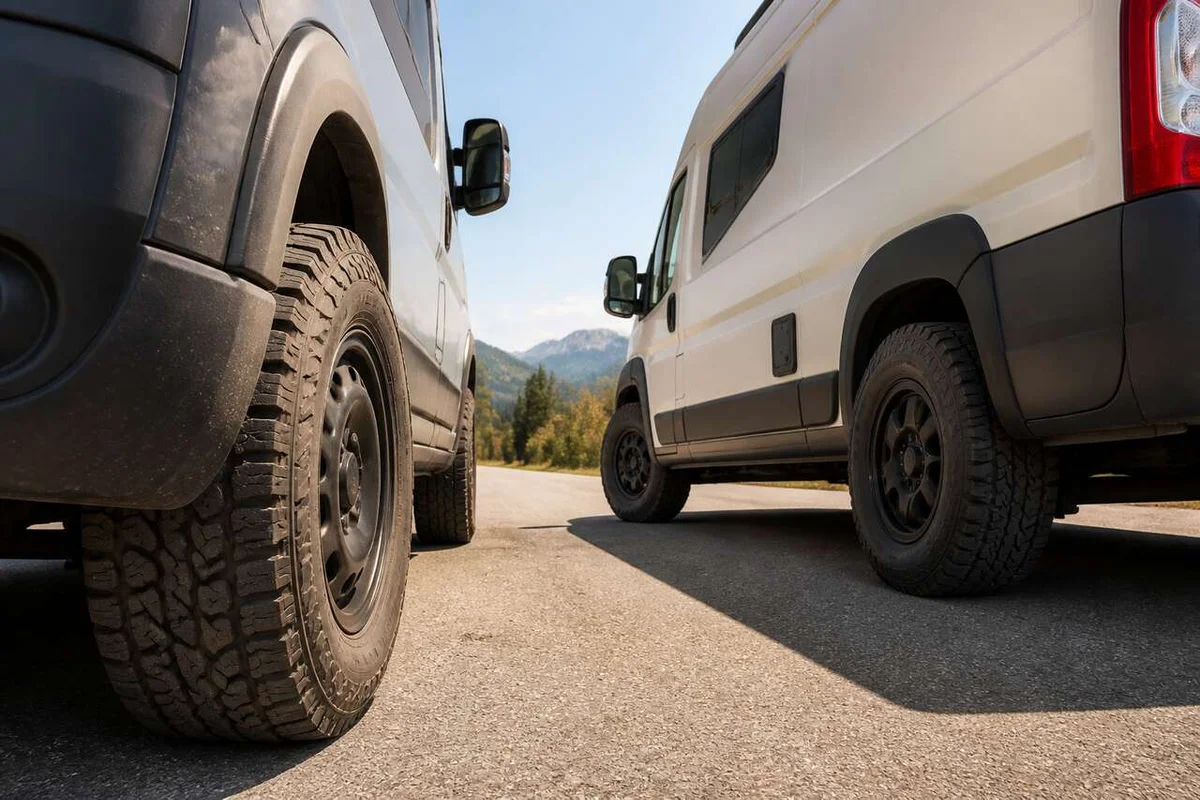
When it comes to vehicles like vans and motorhomes, tires play a crucial role, especially for those who frequently travel or park for extended periods. This guide focuses on the practical aspects of selecting tires based on the vehicle's actual weight and usage rather than theoretical debates about markings like C and CP. Key considerations include the differences between utility tires and motorhome tires, understanding markings, choosing between summer, winter, or all-season options, and maintaining proper tire pressure and checks to ensure safe travels.
Key Takeaways
- The C marking is suitable for vans, while the CP marking is recommended for motorhomes, including over-cab, profile, and integral types, as per the ETRTO guidelines established in 2003.
- Always verify the load index and speed rating against the actual weight of the vehicle, which should be measured axle by axle.
- Tire pressure directly affects load capacity: up to 5.5 bars at the rear for CP tires, with a valve suitable for pressures above 4.5 bars.
- Tires on the same axle must be identical in brand, model, size, and indices, and should be replaced in pairs.
- Technical inspections penalize not only under-dimensioned tires but also aged or cracked tires, even if they show minimal wear in terms of mileage.
Differences Between Tires for Vans, Utility Vehicles, and Motorhomes
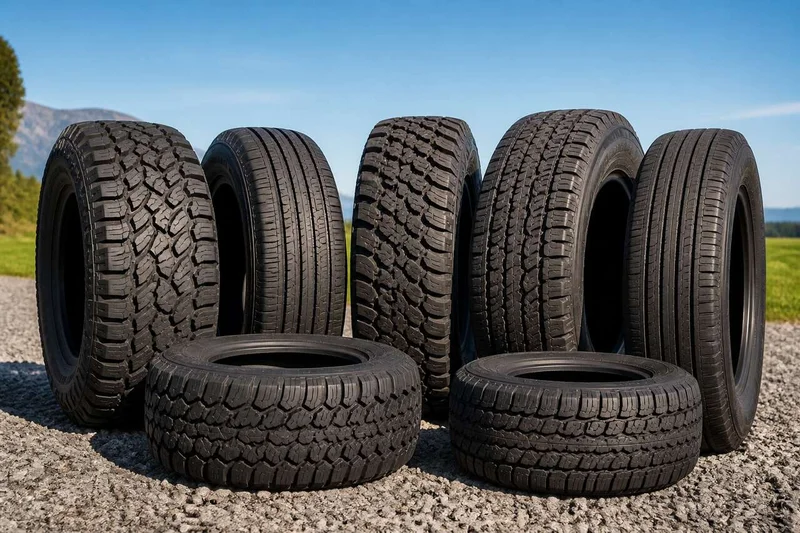
A delivery van and a fully-equipped motorhome may share the same chassis and engine, often based on the Fiat Ducato. However, their tires face different challenges. The empty weight of a utility vehicle remains relatively stable regardless of daily loads, whereas a motorhome has a higher intrinsic weight due to its structure and built-in equipment, plus added travel loads like luggage, bicycles, and water reserves.
The center of gravity also plays a significant role. For example, an over-cab motorhome is taller than other types, leading to uneven weight distribution. Factors such as a full water tank at the front, a loaded bike rack at the rear, and centrifugal force during turns can all affect the actual load borne by each tire, sometimes exceeding the total weight listed on the vehicle's registration.
Fully-equipped motorhomes, which are larger and more comfortable, typically weigh even more. This weight, if not properly distributed or assessed, can cause the tire's structure to heat up faster than that of a standard utility vehicle. Increased heat, combined with prolonged parking in one spot, can weaken the tire's structure and accelerate aging, leading to cracks that may not be immediately visible.
For strictly professional use, a C-marked tire, appropriately sized for the actual load, is suitable. It’s the nature of the use, not just the vehicle's body type, that should guide tire selection.
-
PNEU ALL SEASONS TRAC SAVER 175/70 R14 84T TRACMAX
Tracmax X Privilo AS Trac Saver 175/70 R14 84T all-season tire GTAM T267402 without rim - Price is for a tire without a rim. The profile image may vary based on tire size. Tire width: 175 mm | Aspect ratio: 70% | Rim width: 14 inches | Load index 84 (maximum load capacity of 500 kg) | Speed index T (up to 190 km/h). Please compare the proposed tires with those on your vehicle. It is common for the size mounted on the vehicle to differ from that listed in your documents. The proposed tires are from current production, meaning they are no more than 36 months old. Older production tires are marked by us with the DOT mention.
-
GRIPMAX 205/65 R16 107T Pneu 4 saisons LCamion
Technical information: Wet grip - B; Energy efficiency - C; Acoustic pressure level [dB] - 73; Noise emission level - B; Tire width - 205; Aspect ratio - 65; Type - R; Diameter - 16; Load index - 107; Speed index - T; Season - GAN; Snow grip - 1; EPREL-id - 452793; Reinforced version - C; M+S - Yes. Quick compatibility check in one business day: not sure if the auto part is compatible? Just send us your vehicle identification number (VIN). Our team of experts will check compatibility and respond within one business day! Please verify that this spare part is compatible with your vehicle using your vehicle data and note any existing restrictions/criteria.
-
BERLIN TIRES 195/70 R15 104R Pneu 4 saisons LCamion
Technical information: Wet grip - B; Energy efficiency - D; Acoustic pressure level [dB] - 73; Noise emission level - B; Snow grip - 1; Tire width - 195; Aspect ratio - 70; Type - R; Diameter - 15; Load index - 104; Speed index - R; Reinforced version - C; EPREL-id - 1206450; M+S - Yes. Quick compatibility check in one business day: not sure if the auto part is compatible? Just send us your vehicle identification number (VIN). Our team of experts will check compatibility and respond within one business day! Please verify that this spare part is compatible with your vehicle using your vehicle data and note any existing restrictions/criteria.
Understanding how to read tire markings is essential, as they contain vital information regarding dimensions, indices, and specific markings like C, CP, and XL.
Decoding Tire Markings: Dimensions, Indices, and Markings C, CP, XL
Tire markings such as 225/75 R16 or 215/70 R15 follow a consistent format: the tire width in millimeters, the aspect ratio as a percentage, and the rim diameter in inches. While this may seem straightforward, the subsequent markings are crucial for distinguishing between utility and motorhome tires.
Following the dimensions, you’ll find the load index and speed index, typically represented as a number followed by a letter, for example, 106 R. The load index indicates the maximum load the tire can support at the recommended pressure, which should never be exceeded on an axle-by-axle basis. For vehicles with dual wheels, two load indices may appear, one for single tire mounting and the other for dual mounting, such as a marking of 205/70 R15 106/104 R.
Next comes the letter indicating the intended usage:
- C: tires designed for vans and utility vehicles, built for transporting standard heavy loads.
- CP: tires specifically designed for heavy motorhomes, including over-cab, profile, or integral types, with higher load indices and permissible pressures, and a reinforced structure accordingly.
- XL: an additional marking indicating a load capacity greater than a standard tire of the same size, but not limited to utilities.
Are XL Tires Mandatory for Vans? No, the XL marking is not a regulatory requirement by itself: it’s the overall load index, whether from a C, CP, or XL tire, that must accommodate the actual load on the affected axle. However, an XL tire can help achieve the required index where a standard tire might fall short, without altering the size.
This distinction between C and CP is particularly significant for motorhomes, leading to a common question: can van tires be used on a motorhome?
Can Van Tires Be Used on a Motorhome?
The answer is not a straightforward yes or no; it depends on the actual load index, admissible pressure, and the specific type of motorhome in question. Since 2003, the ETRTO has recommended that tires for over-cab, profile, and integral motorhomes display a visible CP marking in their dimensions, rather than solely the C marking designated for vans. Vehicles manufactured after January 1, 2004, are typically equipped with CP tires from the factory.
For these three categories of motorhomes, a C-marked tire may be deemed inadequate. This is due to the volume and air pressure determining the load a tire can bear, and CP tires are specifically designed to operate at higher pressures, with a reinforced carcass capable of handling the unique load fluctuations associated with such vehicles, including prolonged parking, elevated center of gravity, and significant overhangs.
While it is not automatically illegal to fit a C tire on a heavy motorhome if the overall load index is sufficient, practical risks do exist: chronic underloading of the tire, accelerated heating, and premature sidewall fatigue, especially during extended parking periods with a fixed support point. Conversely, fitting a C-marked van tire, correctly sized, on a lightweight camper van, which has a mass and usage similar to a standard utility vehicle, poses far fewer challenges.
A simplified table helps visualize the logical choices based on vehicle type.
| Vehicle Type | Recommended Marking | Main Reason | |-------------------------|---------------------|----------------------------------------------------| | Lightweight camper van | C (or light-duty) | Weight similar to utility, similar usage | | Profile motorhome | CP | Higher weight and travel load | | Over-cab motorhome | CP | High center of gravity, significant overhang | | Integral motorhome | CP | Highest total weight, long parking periods |
-
HBCOLLECTION 2 Housses pour Roues pneus Fourgon Camping-Car (diam 76-81cm)
Two protective covers for tires. Don’t leave your wheels unprotected. Material: white vinyl. Protects your tires from corrosion, rain, sun, snow, and dirt. Adjustable strap attachment system included. Ideal for all weather conditions, even windy. HBCOLLECTION, a French brand based in Brittany.
-
PNEU PROFIL GAZON 4 PLIS (Lot de 2)
The information below applies to each unit of the Lawn Profile 4-ply tire pack - Dimensions: 410/350-4.
-
Giyofom Pneu de voiture à batterie 12 1/2 x 2 1/4 57-203 électrique pour fauteuil roulant intérieur et extérieur Pneu pneumatique 62-203
Weight: 680 grams (inner tires) Model: 12 1/2 x 2 1/4 Maximum load: 120 kg Suitable for: battery car / electric wheelchair / old scooter, etc.
Once the appropriate marking family is established, the next step is determining whether summer, winter, or all-season tires are best suited for your travels and how you utilize the vehicle.