A Month of Tire Pressure Testing: The Impact of Proper Inflation
A month-long experiment comparing fuel consumption with properly inflated tires versus under-inflated ones reveals significant differences in handling, comfort, and efficiency.
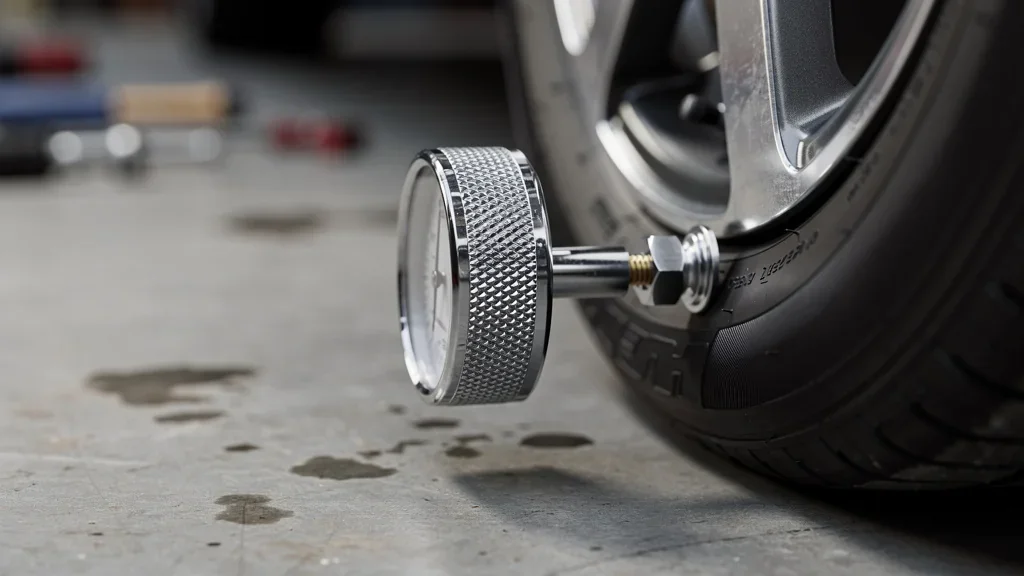
In a recent experiment, I meticulously tracked fuel consumption over a month, comparing the effects of properly inflated tires against those that were slightly under-inflated. The initial step took place in the parking lot of Feu Vert Chasseneuil, where I ensured my tire pressure was reset to the manufacturer’s recommended level just before embarking on a series of daily commutes.
To assess the impact of tire pressure, I allowed a drop of 0.3 bar in tire pressure, driving the same routes with my partner alongside, using my 2016 Toyota Corolla hybrid as the test vehicle. Every refueling was carefully documented.
Immediate Differences Noticed with Proper Tire Pressure
The following Saturday, I used the same gauge to check the tire pressure before heading out. As an automotive journalist for CarBling, I made sure to record the pressure accurately, aiming for consistency in my readings. I found that the rear right tire was 0.2 bar below the target, prompting me to inflate it before my journey. After loading the trunk with a backpack, a laptop, and some groceries, I set off with my partner as a witness.
Driving with properly inflated tires, I immediately felt a difference in handling. The steering was more responsive, with the wheel returning to center without the annoying float I usually experienced. During long curves, the car felt more stable, and I noticed this improvement within the first ten kilometers. In urban settings, the vehicle exhibited a livelier response in roundabouts without feeling overly sensitive.
On my first tank, I calculated a fuel consumption of 4.89 L/100 km over 618 km, while the onboard computer displayed 4.7 L/100 km. I scribbled down my figures on a supermarket receipt, ensuring accuracy in my tracking. I also noted that I had filled up with 58.92 liters, which became my reference for the month ahead.
Decline in Tire Pressure Observed After Three Weeks
Three weeks later, I allowed the tire pressure to drop without reinflating, simply to observe the real-world effects. Every Sunday, I checked the tires at cold temperatures, documenting the gradual loss, particularly in the rear right and front right tires. Ultimately, I found myself 0.3 bar below the initial pressure without any warning light on the dashboard.
As the days passed, the steering felt less precise, requiring more effort to maintain direction. On the highway, I found myself making constant small corrections, which became tiring over long distances. I also noticed a slight pull to the right when the roads were wet, indicating that the front tires were struggling for grip.
During this phase, I completed three full tanks with the same load and routes, comparing fuel consumption from fill-up to fill-up. Over 636 km, I recorded a consumption of 5.14 L/100 km, compared to 4.89 L/100 km previously. While the difference seemed minor on paper, it was significant enough to warrant attention, leading me to focus more on the receipts than the car's display.
After a 42-minute highway drive, I touched the sidewall of the rear right tire and found it warmer than the others. The tire's footprint appeared wider in the parking lot, indicating more deformation at the shoulders. This was not mere speculation; it was a tangible sign that under-inflation was affecting both fuel consumption and tire integrity.
Real-World Testing Limitations and Insights
Throughout this test, I realized that no two trips are identical, even when attempting to control variables. One Tuesday morning, I encountered heavy traffic for 18 kilometers, while two days later, I enjoyed a clear road with little congestion, leading to varied results. I also added a water bottle and a laptop to my load, which altered the weight in the trunk.
The most concerning observation came from the rear right tire. After highway driving, its sidewall felt noticeably warmer, and I detected slight asymmetrical wear on the outer shoulder. Initially attributing this to minor under-inflation, I later suspected a small leak, prompting a visit to the mechanic for a valve check. I was cautious not to make the common mistake of measuring pressure after 20 minutes of driving, as this could lead to inaccurate readings.
Final Assessment After a Month of Testing
At the end of the month, I summarized my findings after driving exactly 1,248 kilometers, completing three fuel fills along the same work route. The well-inflated phase yielded 4.89 L/100 km, while the under-inflated phase increased to 5.14 L/100 km. This resulted in an average difference of 0.25 L/100 km — not a drastic change, but significant nonetheless. This figure is meaningful as it was derived from actual fill-ups rather than estimates from the vehicle's display.
The comfort level of the ride changed more noticeably than fuel efficiency. With properly inflated tires, the car was quieter, exhibiting a softer rolling noise at 90 km/h. As the pressure dropped, the front end lost its sharpness, requiring more focus on long stretches of road. I could feel the difference in the tire shoulders, which became warmer and less uniform.
My experience as an automotive journalist has reinforced a simple yet crucial lesson: checking tire pressure at cold temperatures once a month can prevent unintentional under-inflation. Allowing a drop of 0.3 bar quickly impacts both fuel consumption and driving comfort. After my time at Feu Vert Chasseneuil, I stored my gauge with a new habit in mind: I won't neglect a tire simply because it appears to be rolling fine.