Waterlogged Carpets and Rusty Floors: A Personal Automotive Experience
An automotive writer shares a personal experience of discovering water damage and rust in his 2016 Toyota Corolla hybrid, highlighting the importance of thorough inspection and maintenance.
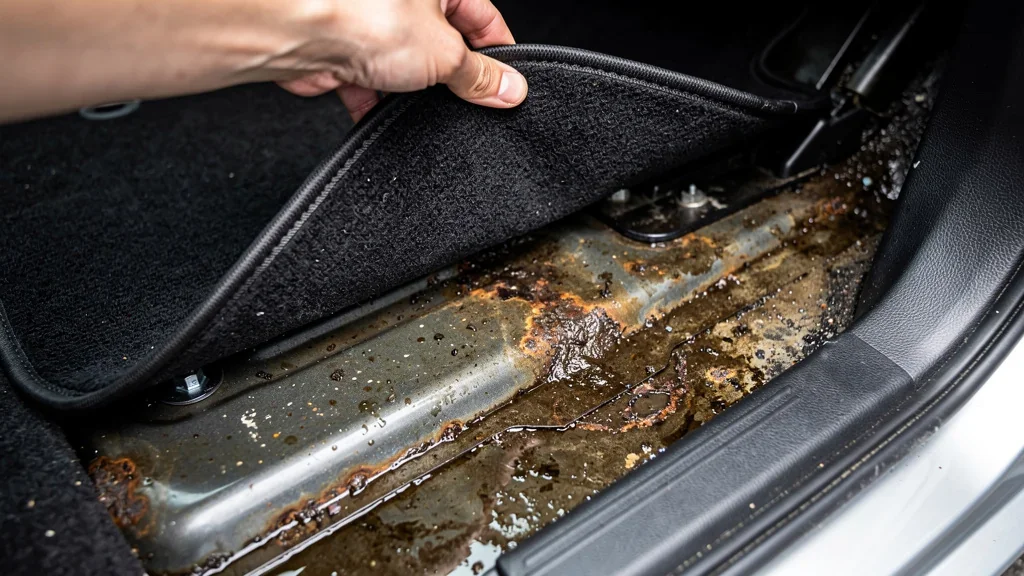
In the parking lot of Saint-Hilaire garage, the rain continued to patter on the hood of my car as I lifted the passenger-side carpet. What appeared to be just a damp mat revealed a much more concerning issue underneath: the foam was soaked and cold to the touch. The soundproofing foam, which I had never closely examined before, was now black, wet, and almost slimy. A musty odor hit me as I noticed a hint of rust forming at the edge of the floor. At that moment, I realized that I was facing more than just a wet carpet.
A Problem I Never Expected at Home
I drive a 2016 Toyota Corolla hybrid with 130,000 kilometers on the clock. I maintain it with a tight budget of around 50 euros a month, as I prefer to handle regular maintenance myself. My partner and I live without children, using the car mainly for work commutes and evening errands. My role as an automotive writer for CarBling has taught me to focus on the details that can lead to bigger issues, rather than getting caught up in grand narratives.
The first sign of trouble appeared after several rainy days and a high-pressure wash. As I opened the door, two droplets fell from the threshold onto my shoe. Inside, I detected a musty smell that returned every time the car heated up. The fog on the windshield also formed more quickly, especially after a 12-minute drive to the shopping area.
Initially, I suspected wet shoes or a poorly placed mat. I wiped the surface and continued driving as if everything was fine. However, after three weeks, the mat still felt heavy and cold to the touch. It was then that I realized the surface was deceiving, and the real problem lay hidden beneath.
The Day I Lifted the Carpet and Everything Changed
On a rainy Saturday morning, I finally decided to lift the passenger-side carpet. Kneeling down, my fingers felt icy as the damp smell surged up. I was struck by the scene before me: the soundproofing foam was black, soaked, and almost slimy. When I reached under the edge, it felt sticky, reminiscent of a forgotten sponge.
Surprisingly, the surface seemed relatively clean. The foam underneath acted like a sponge, retaining water much longer than the floor mat. While the top had dried, the bottom remained saturated. Pressing down with my palm, I heard a suction sound beneath my foot that I had never noticed before.
Near the inner edge of the floor, close to a metal plug, I spotted a small brown-red stain. Surface rust had already begun to form at the bend where the metal was less protected by paint. Tapping it lightly, I noticed a dull sound in that area. I felt foolish for not having noticed it sooner, as corrosion was already starting beneath an otherwise intact layer.
Bending down further, I understood why the passenger seat had an odd odor. Moisture was trapped beneath the underlay, seeping out when the car heated up. This was not good—definitely not good. With each press, my foot slid slightly, as if the floor was still breathing in the water it had absorbed.
My Mistakes and Unexpected Discoveries
My first mistake was stopping at just wiping the surface. I only cleaned the mat and then put everything back in place. The next day, the musty smell returned as soon as the car heated up. I had merely hidden the problem; the foam beneath continued to soak up water like an old rag.
I also blamed the situation on the rain and my shoes without investigating further. I assumed the door was not sealing properly, overlooking the possibility that water could be entering from above. In this vehicle, the water concentrated on the passenger side, and I hadn’t checked the windshield drainages. I eventually realized that the water’s path was more cunning than I had anticipated.
Another surprise awaited me after a heavy storm. Water droplets appeared at the bottom of the seal, and fog formed on the windows more quickly than usual. I thought the door seal was the sole culprit, but the leak was actually from a blocked drain under the windshield. Water was silently flowing down and ended up under the carpet, where I hadn’t been looking.
The worst part came when I attempted to seal a joint with silicone without identifying the real source of the problem. I had set out for a lazy fix, wasting a morning for nothing. The water emerged elsewhere, lower down, near the threshold. I found myself facing the same humidity, plus a layer of gray paste that I had to scrape off with a plastic knife.
What I Know Now and What I Would Do Differently
Looking back, I should have started by lifting the carpet instead of just inspecting the surface. I should have checked the windshield drainages right away. On another vehicle, I had previously seen water trickling down the A-pillar due to a blocked sunroof drain, with clear traces at the foot of the pillar. In such cases, the metal tells the truth more than the carpet does.
After this discovery, I changed my approach. I now remove the floor mats after every heavy rain and dry the foam beneath the carpet thoroughly. I leave the car doors open for a while, then check under the mat before closing it up. Since then, I’ve been vigilant for any musty odors and any fog that forms too quickly.
For the emerging rust, I treated the area with a simple product, without expecting miracles. If it had been more severe, I would have sought a mechanic without delay. I’ve seen repair bills range from a few dozen euros to 400 euros when corrosion has already taken hold. In this case, I prefer to pay for a proper fix rather than patching up a problem.
I’ve also explored other options, such as replacing the soundproofing foam or resealing the joints. Replacing the entire carpet was less appealing to me, as the clean part and labor can quickly escalate the costs. My work as an automotive writer for CarBling has taught me one simple truth: an interior that smells musty rarely hides a small detail without consequences.
For someone willing to spend a Saturday disassembling, drying, and inspecting beneath the carpet, it remains manageable. For someone who drives daily and doesn’t want to face the same humidity after one or two heavy rains, I understand why a garage would take over. I’ve kept this lesson in mind with my partner, as we have no children, because I don’t want to relive that surprise on a chilly morning. When I returned from the Saint-Hilaire garage that evening, the odor was still there, but at least I finally understood its origin.