When an Independent Vehicle Assessment is Worth It
Explore when an independent vehicle assessment is beneficial, including its importance after accidents, during used car purchases, and at the end of leasing agreements.
When an Independent Vehicle Assessment is Worth It
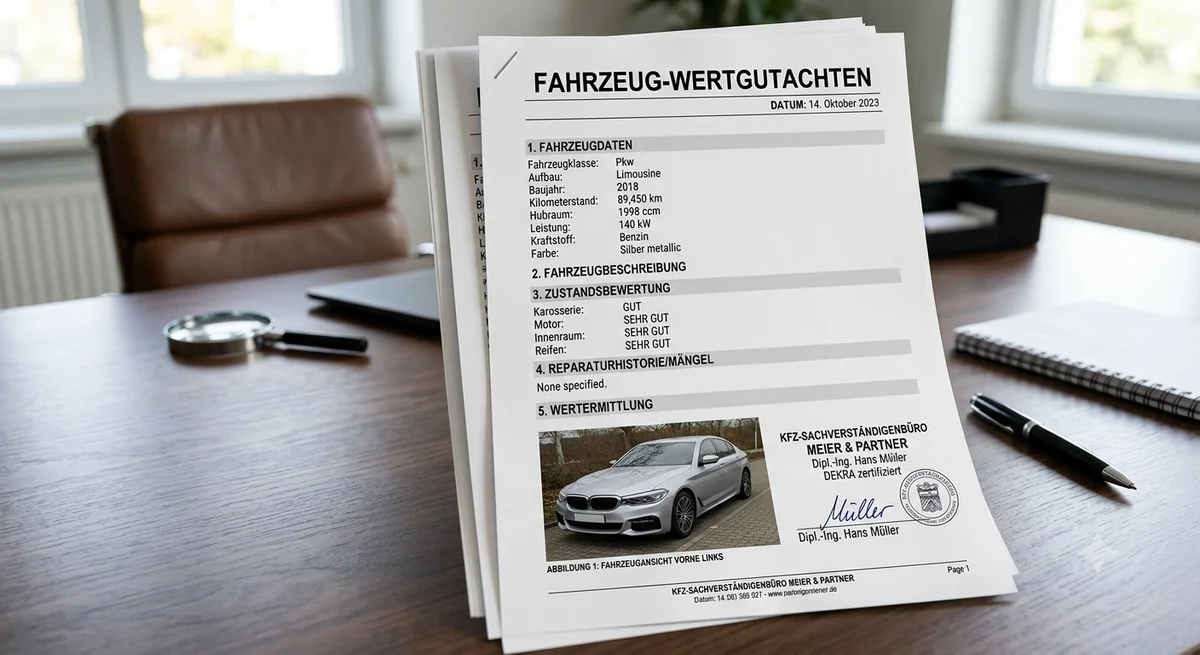
An independent vehicle assessment proves beneficial whenever there is a need to objectively determine the condition or value of a vehicle—be it following an accident, prior to purchasing a used car, or at the conclusion of a leasing agreement.
An independent expert provides a technically sound evaluation that can be relied upon by insurers, courts, buyers, and sellers alike. For vehicle owners, this means having a solid foundation to substantiate claims, purchase prices, or return conditions, rather than relying on assumptions.
Why Independence in Assessments is Crucial
In the aftermath of a traffic accident, conflicting interests often emerge: the opposing insurance company tends to minimize the damage payout, the repair shop has its own pricing standards, and the affected party frequently lacks knowledge about appropriate repair costs. An independent vehicle expert operates outside of these conflicts of interest.
They document the damage impartially, calculate realistic repair costs, and disclose any depreciation—regardless of who ultimately pays the bill. For those seeking assistance in the Munich, Augsburg, or Dachau areas after an accident, a competent vehicle expert in Dachau offers comprehensive accident, damage, and valuation assessments, working solely in the interest of the vehicle owner.
It’s important to note that in the case of an accident where the individual is not at fault, the opposing insurance typically covers the costs of the assessment. Thus, affected parties usually do not have to pay out of pocket for an independent evaluation—a right that many victims do not exercise due to uncertainty.
Conversely, if the vehicle owner is at fault or requests an assessment for personal reasons, such as determining value, they typically bear the costs, which vary based on effort and vehicle type.
Types of Assessments for Different Situations
Different types of assessments are applicable depending on the situation, varying in scope, cost, and purpose.
The following overview illustrates which assessment is appropriate for which scenario:
| Assessment Type | Typical Occasion | Core Content | |-------------------------|-------------------------------------------------|---------------------------------------------------| | Accident Assessment | Traffic accident with third-party liability | Damage circumstances, repair costs, depreciation | | Vehicle Damage Assessment| Damage without clear accident circumstances | Technical damage evaluation, repair path | | Vehicle Valuation | Sale, purchase, insurance queries | Market value, condition, equipment | | Short Assessment | Minor damages | Compact cost estimation | | Specialized Assessment | Classic cars, motorcycles, trucks, RVs | Expert evaluation based on vehicle type |
For most individuals, accident and valuation assessments are the most common reasons for seeking an evaluation. However, those dealing with motorcycles, RVs, or classic vehicles benefit from assessments that address the unique characteristics of these vehicle classes, such as evaluating collector value or special equipment.
The cost of an assessment depends on the effort required, vehicle type, and extent of damage; often, a minor damage case can be resolved with a short assessment or cost estimate, while a comprehensive accident or valuation assessment reflects the actual effort needed for larger damages or high-value vehicles.
When an Independent Vehicle Assessment is Worth It
How a Professional Assessment Works
The process of an assessment is typically straightforward. It begins with contacting the expert and briefly describing the issue—whether it’s for accident damage, value determination, or an upcoming leasing return. This helps clarify which type of assessment is needed and what documents are advisable, such as vehicle papers, service history, or photos of the damage.
Next, the vehicle inspection takes place. The expert documents the condition, photographs the damages, and inspects technical details. In the case of accident damage, they record the circumstances of the damage, affected components, and the anticipated repair path; for a valuation, factors such as equipment, mileage, prior damages, and maintenance condition are included in the assessment.
Depending on the scope and availability, the actual inspection is usually completed quickly; the written assessment follows shortly after, summarizing the results clearly and displaying—according to the occasion—repair costs, depreciation, or market value.
Leasing Returns and Used Car Purchases: Two Underestimated Use Cases
Particularly during the return of a leased vehicle, disputes often arise regarding what wear and tear is considered normal versus what qualifies as billable damage. An independent condition evaluation before return provides clarity: it documents the actual state and gives the lessee a reliable basis to contest excessive claims.
A neutral assessment is similarly valuable when purchasing a used car. Hidden prior damages, improper repairs, or inflated prices often go unnoticed by laypersons. A valuation assessment provides an objective basis for decision-making before signing a purchase contract—protecting against costly mistakes and strengthening negotiating power. For companies with larger fleets, fleet valuation is also significant, especially when vehicles are regularly exchanged or sold.
Regional Availability in Southern Bavaria
A significant advantage of an independent expert is their local accessibility. Especially following a recent accident or with an impending return deadline, a prompt, nearby assessment is crucial. The vehicle assessment office Scholler operates in Southern Bavaria, covering regions including Munich, Augsburg, Dachau, and Fürstenfeldbruck.
This regional proximity ensures that appointments can be arranged flexibly and promptly—often even on weekends and holidays. For vehicle owners, this means shorter travel distances and personal support from a contact familiar with local conditions. Those needing an assessment in their area should reach out early to schedule a suitable appointment and prepare the necessary documents in advance.
Frequently Asked Questions About Independent Vehicle Assessments
Who bears the costs for an accident assessment?
In the case of an accident where the individual is not at fault, the opposing liability insurance typically covers the costs. As a victim, you generally have the right to hire your own independent expert. Only for minor damages might a cost estimate or short assessment be sufficient instead of a full assessment.
How does a valuation assessment differ from a damage assessment?
A valuation assessment determines the market value of a vehicle considering its condition, equipment, mileage, and maintenance history. In contrast, a damage assessment documents a specific damage incident, outlines the repair path, and estimates the expected repair costs and potential depreciation.
Do I need a specialized assessment for a motorcycle, classic car, or RV?
Yes, special vehicles often require an expert evaluation. For classic cars, collector and enthusiast value is significant; for RVs, the equipment matters, and for motorcycles or trucks, other technical specifics come into play. A specialized expert evaluates value and condition much more accurately than a standardized blanket assessment.
What documents should I bring for the assessment?
Helpful documents include vehicle papers, service history or repair invoices if available, and—if applicable—photos of the damage and details about the incident in the case of an accident. For a leasing return, it is also wise to review the leasing contract, as it often specifies what wear and tear is considered normal. The necessary documents can be clarified in advance during the appointment scheduling.
Conclusion: The Value of an Objective Perspective
Whether following an accident, during a used car purchase, or at the end of a leasing contract, an independent vehicle assessment provides the clarity that vehicle owners need to avoid financial disadvantages. The key benefit lies in its neutrality: an independent expert does not represent the interests of the insurance company or a repair shop, but instead objectively documents the condition, damage, or value of a vehicle.
Choosing the appropriate type of assessment, understanding the process, and involving a knowledgeable contact in the region early on prepares individuals much better for disputes with insurers, leasing companies, or sellers, ultimately saving time, money, and unnecessary hassle.