Genesis GV60 Premium: A Bold Contender Against German Giants
The Genesis GV60 Premium challenges established German luxury brands with impressive features, design, and performance, but struggles with brand recognition in Europe.
Genesis may not be a household name for many, especially those who aren't automotive enthusiasts. This lack of recognition poses a challenge for the brand, yet it also adds an intriguing layer to the Genesis GV60.
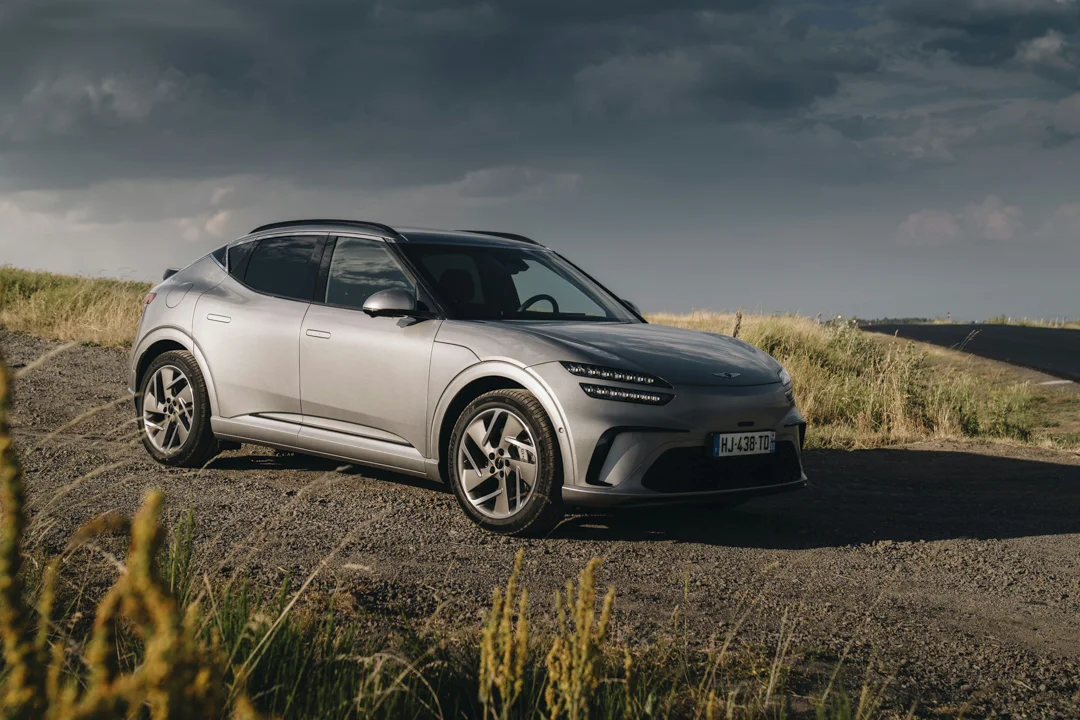
As Hyundai's luxury division, Genesis aims to carve out a niche in the European market, competing against established German manufacturers. The GV60 is a significant step in this direction. The model tested was the GV60 Premium 318 hp AWD, finished in Savile Silver, and equipped with several packages, including Comfort, Innovation, Bang & Olufsen, Panoramic Roof, and Nappa Leather. The total price for this configuration stands at €82,660.
Over the course of 1,500 kilometers, I had the opportunity to test this vehicle during a heatwave with temperatures soaring to 40 degrees. Here are my insights.
A Design That Stands Out
The GV60's appearance is unlike any other vehicle currently on the market, making it immediately noticeable. Its design is original and somewhat unconventional, yet it successfully conveys a sense of premium quality, distinctly Asian in flair.
Although the SUV-coupe format is not my personal favorite, the GV60 manages to strike a balance without excessive design elements. Measuring 4,545 mm in length, 1,890 mm in width, and 1,580 mm in height, it fits comfortably within segment norms while maintaining a coupe profile that does not compromise interior space too drastically.
One of the standout features is the dual-level lighting, which is both unique and playful at the front and rear. This stylistic choice adds character to the vehicle.
The Savile Silver color is somewhat understated, but Genesis also offers a striking Ceres Blue that enhances the vehicle's appeal. I highly recommend opting for this shade if you decide to purchase a GV60.
An Interior That Impresses
Upon entering the GV60, the first notable aspect is the impressive quality of materials. The stitching, leather, and overall finish rival those of the best in the German luxury segment, which is quite an achievement for a relatively new brand in Europe.
At the center of the console is the Crystal Sphere, a translucent feature that rotates upon startup to reveal the gear selector for P/R/N/D. While it may be seen as a gimmick, it adds a memorable touch to the vehicle's identity.
The 27-inch panoramic OLED display is visually stunning, offering excellent image quality. However, I found its width somewhat excessive; a little more height would have been beneficial.
Interior space is generous, easily accommodating my height of 1.83 meters both in the front and rear seats. The 2,900 mm wheelbase contributes to this comfort, and the 680-liter trunk is practical for everyday use.
The ventilated and massaging seats included in the tested configuration were particularly appreciated during the sweltering heat.
Advanced Technology with a Caveat
Genesis's multimedia system surpasses those found in Hyundai or Kia models, featuring a dedicated entertainment app that includes YouTube and offers a more refined user experience. This is a noticeable improvement.
Standard paddle shifters for regenerative braking are a welcome addition. The Hyundai-Kia-Genesis group has popularized this system, which operates effectively with four levels of regeneration, from maximum braking to complete coasting. I found it particularly useful on highways and city roads.
However, a drawback is the inability to adjust the regeneration intensity while the cruise control is active; it requires deactivation first. This limitation stands in contrast to Mercedes's GLC, where such adjustments can be made on the fly.
The Bang & Olufsen package (€1,590) features 17 speakers and Dolby Atmos, delivering impressive sound quality with clear highs and robust lows. While it may not yet reach the level of Bowers & Wilkins in Volvo models, it is certainly a strong contender.
Charging Performance Exceeds Expectations
Perhaps the most surprising aspect of the GV60 is its charging capabilities. With an 800V architecture, it promises a maximum DC charge of 240 kW and a time of 18 minutes to go from 10% to 80%. In practice, it exceeded these expectations.
I recorded a peak of 258.4 kW at 55% charge, surpassing the advertised rate. Notably, after 1,500 kilometers in extreme conditions, including 40-degree heat, there were no thermal management issues or charging slowdowns. The battery management system performed exceptionally well.
A Comfortable and Versatile Drive
With 318 hp and all-wheel drive, the GV60 offers sufficient power for its class. It is not designed as a sports vehicle, with a more performance-oriented version, the Magma, expected later this year.
What the GV60 excels at is balance. The optional intelligent predictive suspension (€1,170) is well-tuned, providing comfort during regular driving while maintaining body control at higher speeds. This versatility is commendable.
Long journeys are comfortable, and the vehicle is enjoyable to drive. Its efficiency is also noteworthy, with real-world consumption figures of 22.5 kWh/100 km on highways, 19 kWh/100 km on secondary roads, and 17 kWh/100 km in urban settings, aligning closely with the WLTP figure of 18.4 kWh/100 km combined.
The Drift mode is standard across all versions, but it is not the primary focus of this vehicle. The Magma version will likely provide a better opportunity to explore this feature.
Pricing: Competing with German Rivals
The tested version is priced at €82,660, positioning it against German competitors, not just against its Korean siblings like the Hyundai Ioniq 5 or Kia EV6. This price bracket puts it in direct competition with models such as the Audi Q4 e-tron, BMW iX3, and entry-level Mercedes GLC electric.
In this segment, the GV60 holds its ground with impressive rapid charging capabilities, high-quality manufacturing, and a robust service network backed by Hyundai. Moreover, it is priced lower than its German counterparts.
The primary challenge for Genesis lies in brand perception. Spending €80,000 on a brand unfamiliar to the general French public presents a psychological barrier. Genesis is aware of this and is actively participating in the World Endurance Championship (WEC) to enhance its visibility.
The risk remains that Genesis could end up like Infiniti, the luxury arm of Nissan that exited Europe due to lack of recognition. Given the quality of its products, Genesis deserves a better fate.
Conclusion: A Top Contender Lacking Recognition
The GV60 stands out as an excellent vehicle, arguably one of the best in its category from a technical standpoint. Its charging capabilities are impressive, even if Mercedes and BMW currently offer superior options. The finish is competitive with German brands, and the comfort is genuine, all at a price that challenges premium rivals.
However, it does have its drawbacks: an unconventional design that may not appeal to everyone, a less-than-ideal regenerative braking management while using cruise control, and a brand image that still needs to be established in Europe.
I would recommend the GV60 to anyone considering a German electric SUV, a Volvo XC60 electric, or a high-end Chinese vehicle. Among these options, the GV60 is a serious contender, provided you are willing to take the leap.