Reliability of Renault-Mercedes Engine Tested Over 100,000 km
A detailed six-month test of the Renault 1.5 dCi engine under the Mercedes badge reveals insights into its real-world reliability, fuel consumption, and maintenance considerations.
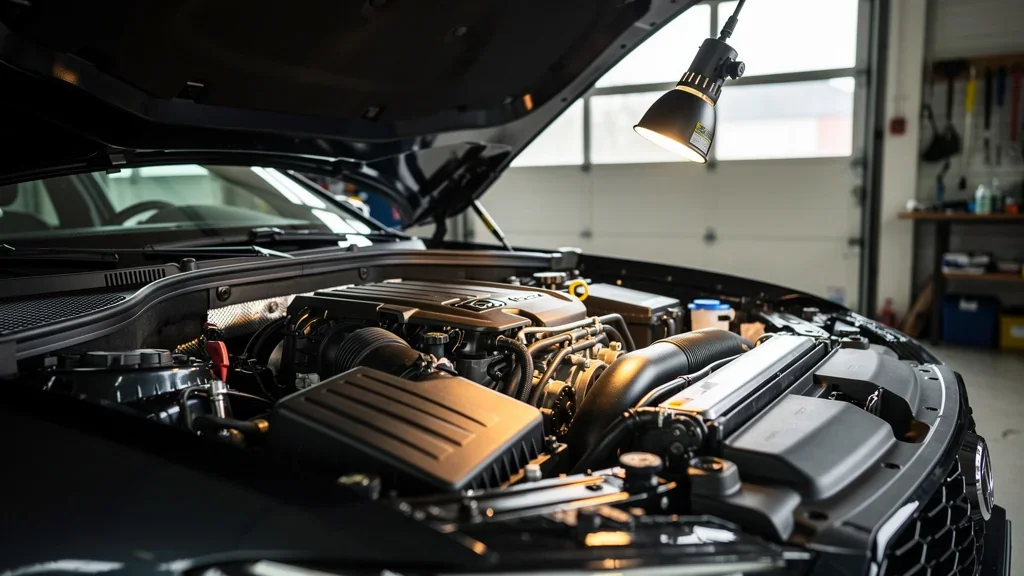
The Renault 1.5 dCi engine, branded under Mercedes, exhibited a noticeable clatter at startup, and fuel consumption ranged between 4.5 and 5.5 L/100 km on the highway. This served as the foundation for a comprehensive six-month test covering 15,000 km, aimed at moving beyond casual discussions about engine performance. As an automotive journalist for CarBling magazine, I focused on the data while also paying attention to the sounds coming from the engine.
Context of My Experience and Real-World Usage
Living in the Poitiers region, my driving includes a mix of city roads, ring roads, and the A10 highway. My partner and I, without children, maintained a tight maintenance budget of around 50 euros per month. I approached this test as a genuine cost analysis.
With my background as an automotive journalist, I understand how a badge can instill confidence quickly, but real-world usage often tells a different story. I considered the Mercedes A-Class, as it is the model where the 1.5 dCi engine is most commonly found. Initially confident, I was taken aback by the clattering noise on the second morning.
My Profile and Expectations from This Shared Engine
Having learned maintenance on my first car, a 2003 Peugeot 206, I retained a habit of simple checks. My intention was not to judge Mercedes based on the badge, but to evaluate the reliability of the Renault-Mercedes engine in a premium compact. I believed that the comparison between Renault and Mercedes engines would hinge less on technical specifications and more on maintenance practices.
Real-World Conditions and Daily Constraints
My routine involved three weekly city trips, two suburban round trips, and a longer highway journey on weekends. I often returned late, starting with a cold engine, and meticulously noted every noise and acceleration. My goal was to assess real-world usage rather than a pristine test drive.
How I Tested the Reliability of the Renault Engine in a Mercedes
Over six months and 15,000 km, I conducted weekly checks of oil levels, cold start sounds, and warning lights. I recorded fuel consumption with each fill-up and noted short trips that interrupted the DPF regeneration process. The objective was straightforward: to see if the Renault-Mercedes engine's reliability holds up in everyday conditions, rather than on a sales sheet.
Six-Month Protocol and 15,000 km Driven
I maintained a consistent testing rhythm typical of a long-term evaluation: three days in the city, two days on the road, and longer outings when possible. I monitored restart frequency and idling, as EGR/DPF clogging often manifests before warning lights activate.
- I always filled up at the same pump for clarity in measurements.
- I started the cold engine with the hood open once a week to listen to the injector.
- I connected a simple OBD reader every two weeks.
- I noted DPF regenerations when the fan activated after short trips.
Technical Observations and Measurement Tools Used
I relied on my dashboard, a basic OBD reader, and my hearing rather than professional diagnostic tools. I tracked fuel consumption, the injector's cold clatter, vibrations at idle, and any onboard diagnostic alerts. Beyond that, I left deeper mechanical diagnostics aside, as that was not within my expertise.
- I recorded fuel consumption in L/100 km at each fill-up.
- I monitored idle and minor shakes during starts.
- I listened for the turbo around 2,000 rpm.
- I kept count of warning lights and pollution alerts.
Concrete Results on Reliability and Observations on the Ground
After several weeks, it became clear that the engine did not mislead me on the road. Feedback from other users of Renault engines highlighted fuel efficiency, which I confirmed with the 1.5 dCi engine. However, the scenario shifted in urban settings, where I noticed the DPF's impact on reliability as short trips increased.
| Context | My Measurement | What I Understood | |---------|----------------|-------------------| | Highway | 4.5 to 5.5 L/100 | I find it very economical | | City | 6 to 7 L/100 | I sense the EGR and DPF | | Highway | Around 5 L/100 | I benefit from engine torque | | Short Trips | Fan activated, alert | I see incomplete regeneration |
Fuel Consumption and Engine Behavior in Varied Conditions
During long journeys, I observed expected fuel consumption around 4.5 to 5.5 L/100 km. In city driving, consumption rose to 6 to 7 L/100 km, with sluggish acceleration and more noticeable noise. The engine's torque became enjoyable around 1,800 rpm, but below 1,500 rpm, it felt a bit lacking, especially under load. Overall, the performance of the Renault engine was satisfactory, though not remarkable.
Wear, Breakdowns, and Maintenance Over 15,000 km
I detected a slight clatter at cold startup, leading me to suspect an injector issue. After parking, I also noticed a warm diesel smell, indicating a potential return issue with the injector. The fan activation after short trips occurred three times, each time suggesting incomplete DPF regeneration.
- I noted a clatter at cold startup.
- I sensed a warm diesel smell after two parking instances.
- I saw the fan activate after trips of 8 km.
- I heard an unusual whistling around 2,000 rpm.
I did not damage the turbo, but I recognized the potential costs of a problem: an injector or turbo could quickly range from 800 to 1,500 euros. I eventually gave up on very short trips, as they became frustrating. This engine requires discipline, not panic.
Technical Results Table and Maintenance Costs
I adhered to my usual ceiling of 50 euros per month, totaling around 300 euros over six months, excluding major issues. This helped me realize that the real concern is not just fuel costs but how maintenance keeps the engine running smoothly. When oil changes are frequent, I monitor not only the belt but also the cooling system and EGR.
| Point Monitored | My Measurement | What I Do | Impact | |------------------|----------------|-----------|--------| | Highway Fuel Consumption | 4.5 to 5.5 L/100 | I remain calm | Wise fuel budget | | City Fuel Consumption | 6 to 7 L/100 | I monitor more | Short trips penalizing | | Warning Lights | 1 pollution alert | I note the signal | Attention to EGR/DPF | | Maintenance | Approximately 300 € | I stay within budget | Frequent oil changes and checks | | Major Breakdown | 0 over 15,000 km | I maintain confidence | Reasonable durability of the Renault engine |
Insights Gained Before and After the Test
Before the test, I was confident that a Mercedes badge would provide a quieter diesel than a pure Renault. After the first check, I found the OM607 label and realized that the Renault-Mercedes partnership alters the perception under the hood. I was convinced not by the logo but by how the car responded when maintenance was properly followed.
I no longer view the badge the same way, as the perception of quality and mechanical reliability do not tell the same story. The reputation of Mercedes may take a hit among purists, but I focused on real costs, noise, and stoppages. In this regard, the shared engines between Renault and Mercedes taught me to evaluate history before the logo.
Notable Differences in Feel and Perceived Reliability
I find the reliability of the Renault diesel engine acceptable but more dependent on usage. Compared to the in-house Mercedes diesel, I perceive a more cohesive package in terms of image, even if the costs are not always light. The Renault engine fitted in Mercedes seems simpler to maintain, yet it demands closer attention to the EGR, DPF, and oil changes.
Comparative Table Before/After Maintenance and Usage
I expected a quieter Mercedes, but I discovered a compact diesel better contained than I imagined, though not transformed. I also learned that the impact of maintenance on durability becomes apparent when trips are short. The maintenance log spoke louder than the badge.
| Subject | Before the Test | After 6 Months | My Opinion | |---------|----------------|----------------|------------| | Highway Fuel Consumption | I expected 5.5 to 6 L/100 | I saw 4.5 to 5.5 L/100 | I started with a misunderstanding | | Cold Noise | I imagined it quieter | I heard a dryer diesel | The badge doesn’t change everything | | Warning Lights | I expected none | I received a pollution alert | Urban usage matters | | Maintenance | I feared a hefty bill | I stayed around 300 € | Monitoring changes the outcome | | Perceived Reliability | I doubted the shared block | I became more cautious | I read the log before the logo |
Errors, Limits, and Surprises Encountered During the Test
I turned off the engine too quickly after two short trips, and the fan reminded me that the DPF regeneration was incomplete. I also pushed the engine cold one January morning and heard more noise, less smoothness, with a hint of regret. The third mistake was delaying an oil change based on a long interval. Finally, I learned that buying without checking the engine code and history risks overlooking the real issue.
- I turned off the engine too quickly after a short trip.
- I pushed the engine cold at startup.
- I delayed an oil change.
- I forgot to check the engine code.
I did not experience any breakdowns, but I learned to be wary of clogging and the turbo. The engine can forgive a mistake but not three weeks of short trips. Ultimately, I realized that the durability of the Renault engine relies on simple practices.
Alternatives to Consider for Reliable Engines in Mercedes
If I were seeking a more coherent compact Mercedes with a premium image, I would first consider the in-house Mercedes diesels. I think of the A-Class and Citan, two Mercedes models with Renault engines, as the badge does not tell the whole story. The technology sharing between Renault and Mercedes reflects a broader trend in the automotive industry. In the end, I focus primarily on usage costs and the types of trips I undertake.
In-House Mercedes Diesel vs Shared Renault Engines
In practical terms, the Renault engine under the Mercedes hood doesn’t intimidate me; it simply requires diligence: regular oil changes, monitoring the EGR and DPF, and ensuring long enough trips to allow regenerations to complete. It is this discipline, more than the badge, that determines its performance.
Other Gasoline and Hybrid Options in the Mercedes Range
The 1.3 TCe engine appeals to me more for short trips to avoid the DPF issues. In the Mercedes lineup, a hybrid seems more relaxing for city driving, minimizing clogging concerns. I just need to keep in mind that purchase costs increase, and my usage must align.
Summary of Alternatives with Pros and Cons
My selection criteria are straightforward: in-house diesels for image, shared Renault for cost, and gasoline or hybrid for city driving. I am not seeking the perfect solution; I want a vehicle that fits my driving habits. The key takeaway is to avoid purchasing a badge at the expense of practical usage.
Personalized Recommendations Based on User Profile
If You Are Urban and Driving Short Distances
If I primarily drove in the city, I would be cautious of the Renault diesel engine under Mercedes. I noticed the EGR and DPF quickly reminded me of their presence during 5 to 8 km trips. For this profile, I would prefer a gasoline or hybrid vehicle to avoid interrupting regeneration at every corner.
If You Drive a Lot on Highways and Long Distances
On the highway, I found this engine much more coherent. When I drive over 80 km, fuel consumption stabilizes, the fan remains quiet, and the engine torque becomes more pleasant. This is where I understand why some people keep this engine.