The First Electric Ferrari is More Divisive Than Impressive
This marks a major shift in Ferrari's history as it enters the electric vehicle market with the Luce, a model that combines performance, technology, and a new family-friendly design.
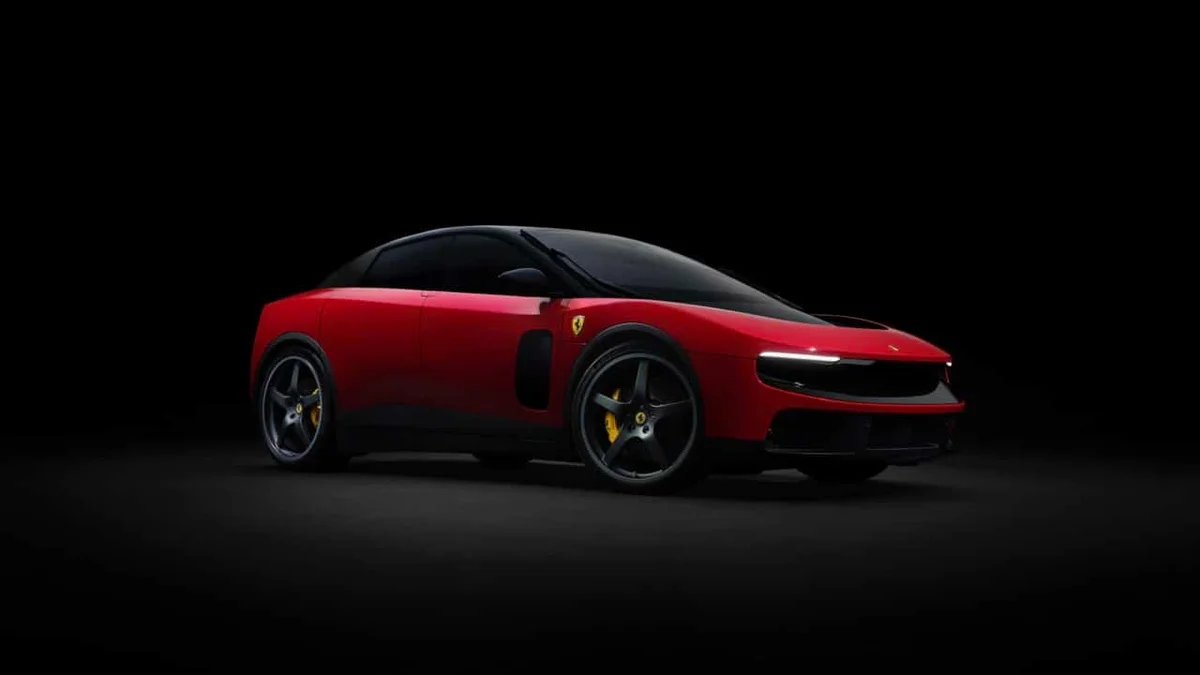
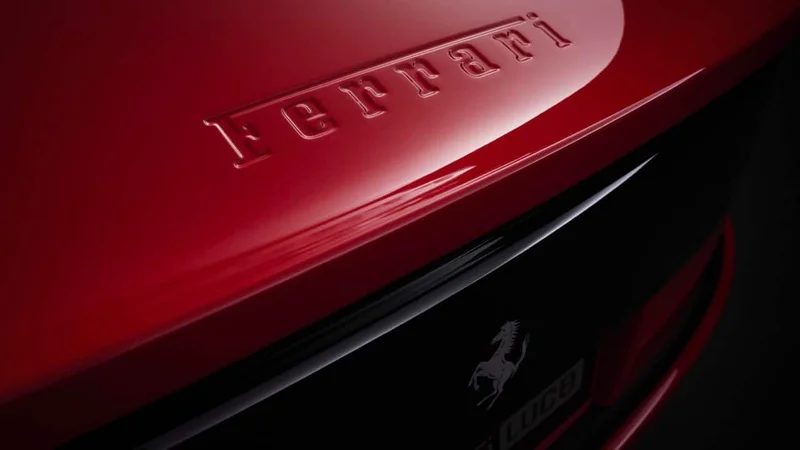
This marks a major shift in the history of the Italian manufacturer. After long defending its thermal engines and iconic mechanics, Ferrari has finally taken the plunge into electric with a new model: the Ferrari Luce. More than just a new car in the lineup, this innovation represents a true strategic turning point for the prancing horse brand. Between technologies, stylistic bets, and the risk of dividing purists, here’s what to remember about this Ferrari like no other.
An Electric Ferrari with Over 1,000 Horsepower
The element that will immediately catch attention is, of course, its mechanics. For its first fully electric model, Ferrari has not cut corners.
The Luce is based on an architecture composed of four independent electric motors, installed directly at each wheel. This configuration, derived from the work done on the Ferrari F80, allows for a combined power output of 1,040 horsepower.
On paper, the announced performance meets the standards expected for a modern Ferrari: the 0 to 100 km/h sprint is said to be completed in just 2.5 seconds, while the top speed would reach 310 km/h.
However, the interest of a four-motor system goes beyond just numbers. This technology allows for extremely precise management of torque sent to each wheel. Ferrari thus announces a more responsive behavior and better agility despite a significant weight of 2,260 kg.
The manufacturer also claims to have worked on the driving sensations thanks to a controlled suspension capable of limiting the weight effect felt by the driver. According to Ferrari, the feeling behind the wheel would be equivalent to driving a car that is about 400 kg lighter.
An Impressive Battery but Contained Weight
Electrification necessarily involves a large-capacity battery, and Ferrari has not skimped on this.
The Luce features a 122 kWh battery pack integrated directly into the vehicle's structure. The Italian manufacturer explains that the battery, chassis, and bodywork function as a single unit to improve overall rigidity and energy efficiency.
To limit weight gain, Ferrari has extensively used aluminum in its design. The goal is twofold: to preserve dynamic performance while also reducing the environmental impact related to manufacturing.
The car also adopts an 800-volt electrical architecture allowing for fast charging. Ferrari announces a maximum power of 350 kW with the possibility of recovering 70 kWh in twenty minutes. A charge from 10 to 80% would take about twenty-five minutes.
Despite these figures, current competition shows that Ferrari does not necessarily arrive in a dominant position across all technical criteria. Some recent models already offer similar or even superior charging times, while certain electric sports cars also boast comparable performance.
Nonetheless, Ferrari is banking on another aspect: emotion. The brand mentions an artificial sound system specially developed to reproduce a unique sound identity for the car, with behavior varying according to the selected driving mode.
A Family-Friendly Ferrari in an Unprecedented Format
Electrification also offers new freedom in vehicle architecture. Unlike traditional Ferraris, the Luce opts for a more versatile approach.
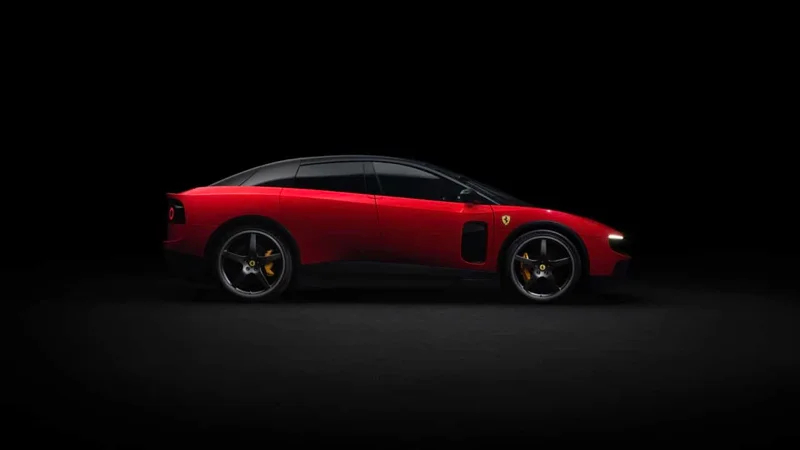
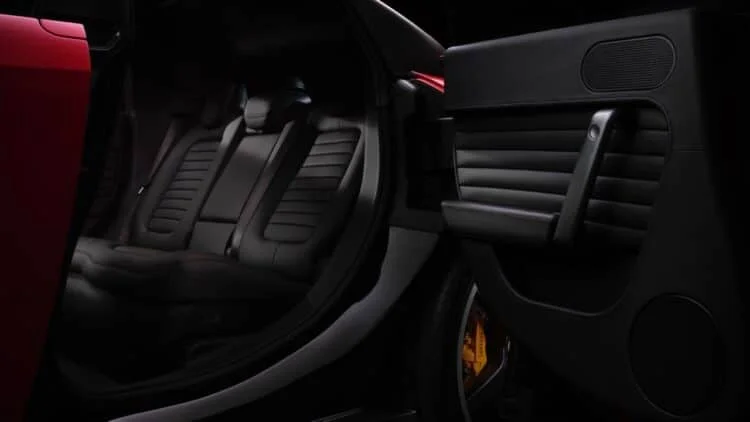
The car adopts a four-door, five-seat configuration. It is only the second Ferrari of this type after the Purosangue, but more importantly, it is the first capable of accommodating five occupants without the constraints imposed by a central driveshaft.
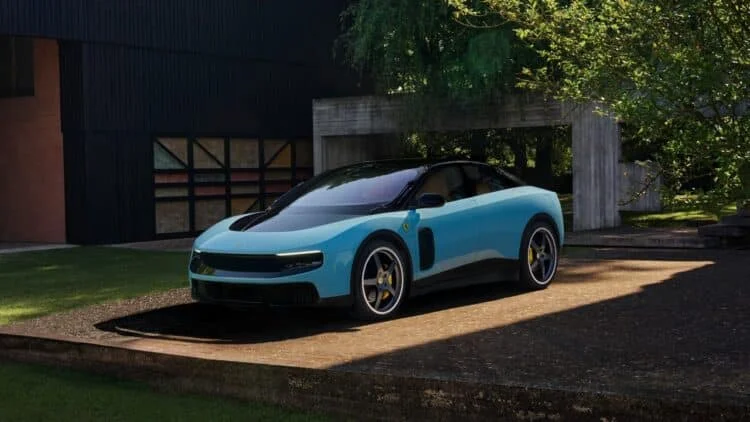
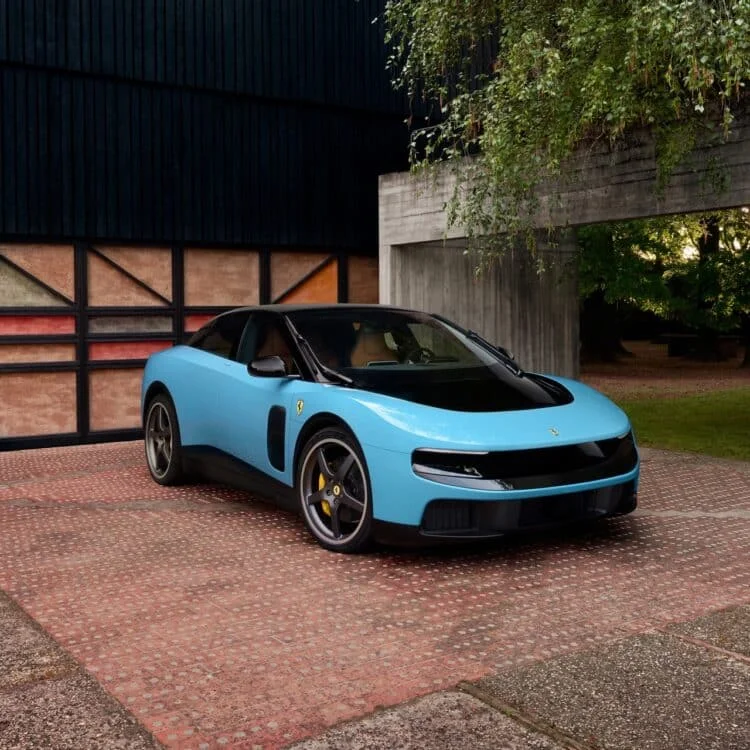
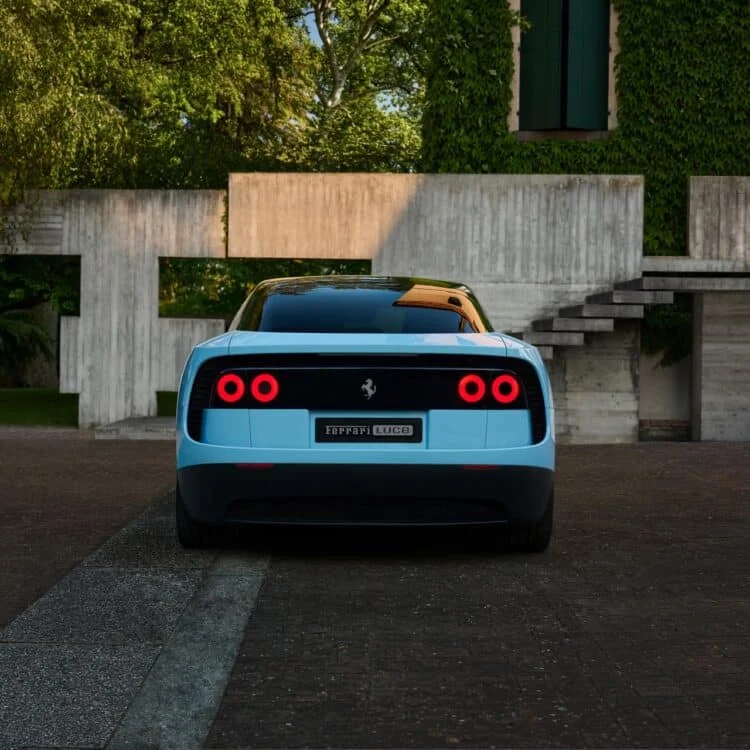
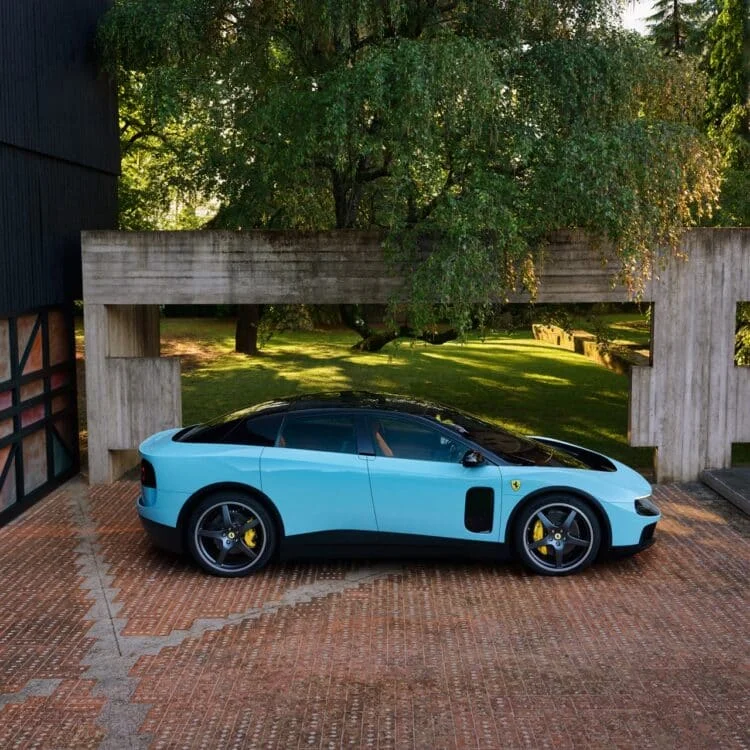
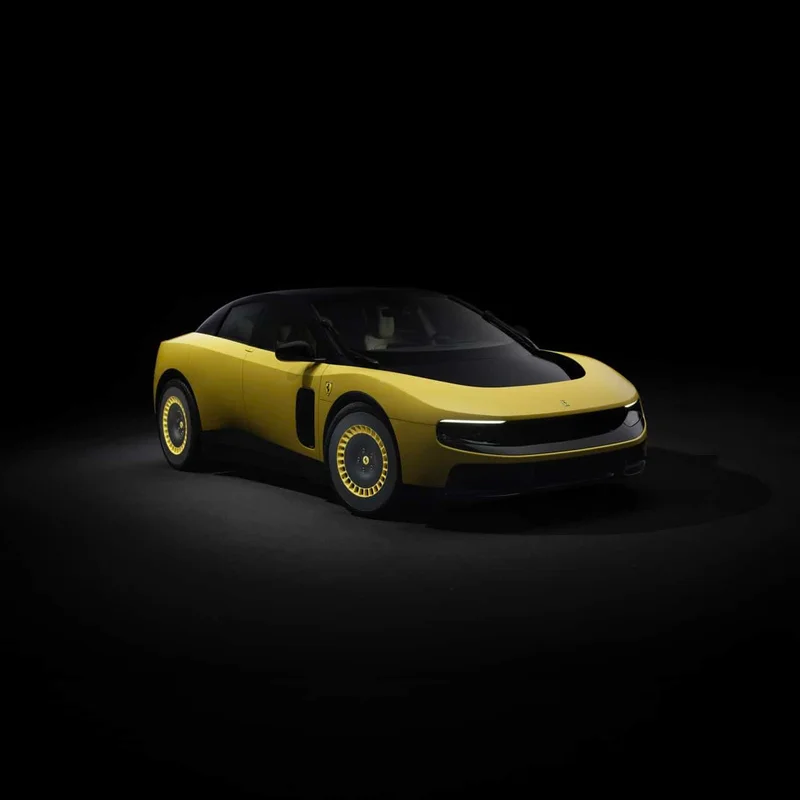
Its design still retains several references to the brand's iconic models. Some elements of the rear lights notably recall the Ferrari 360 Modena and 458 Italia. We won’t delve further into the stylistic considerations of the Ferrari Luce; it’s best to form your own opinion on the style given by LoveForm, led by former Apple designer Jony Ive, through the photos.
The dimensions also reflect a change in scale:
- Length: 5.02 m
- Width: 1.99 m
- Height: 1.54 m
With such dimensions, the Luce is closer to a large sporty crossover than a traditional coupe.
Ferrari also equips this model with the largest wheels ever fitted on a production car from the brand, with sizes reaching up to 24 inches. They feature specific tires designed to reduce energy losses and improve range.
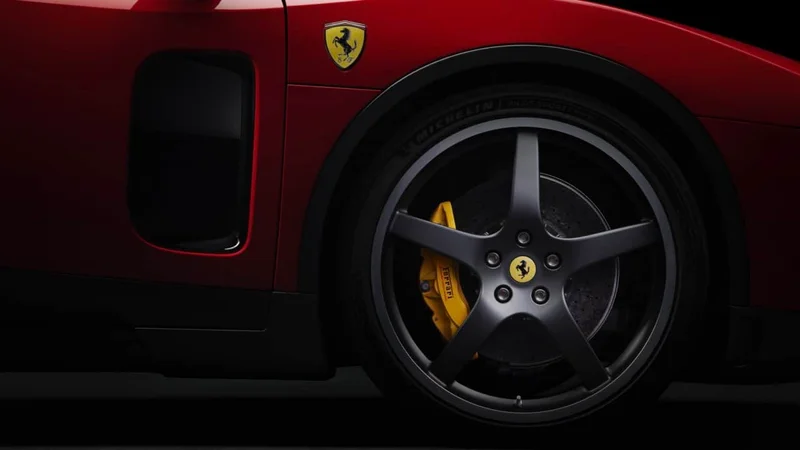
Behind these wheels sit significant carbon composite brakes. Even though their size is impressive, they should be less stressed thanks to the extensive use of regenerative braking.
An Interior Dominated by Technology
The cabin also brings Ferrari into a new dimension.
Four screens have been specially developed for this model. The driver has a 12.9-inch digital display complemented by a 12-inch central tilting screen. The front passenger enjoys their own 10.1-inch interface, while a fourth 6.3-inch screen is positioned at the rear.
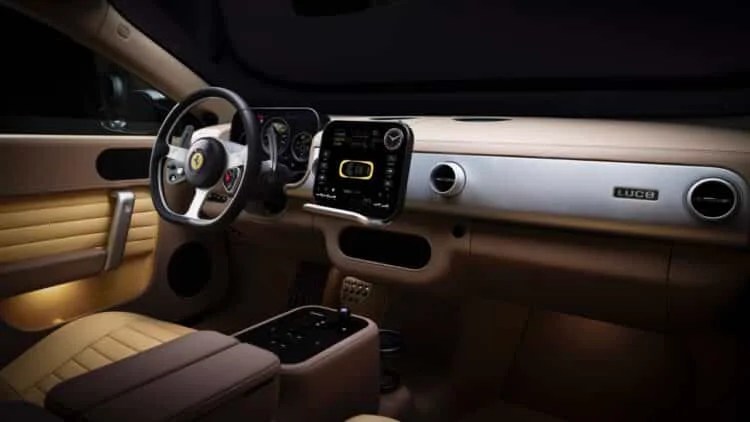
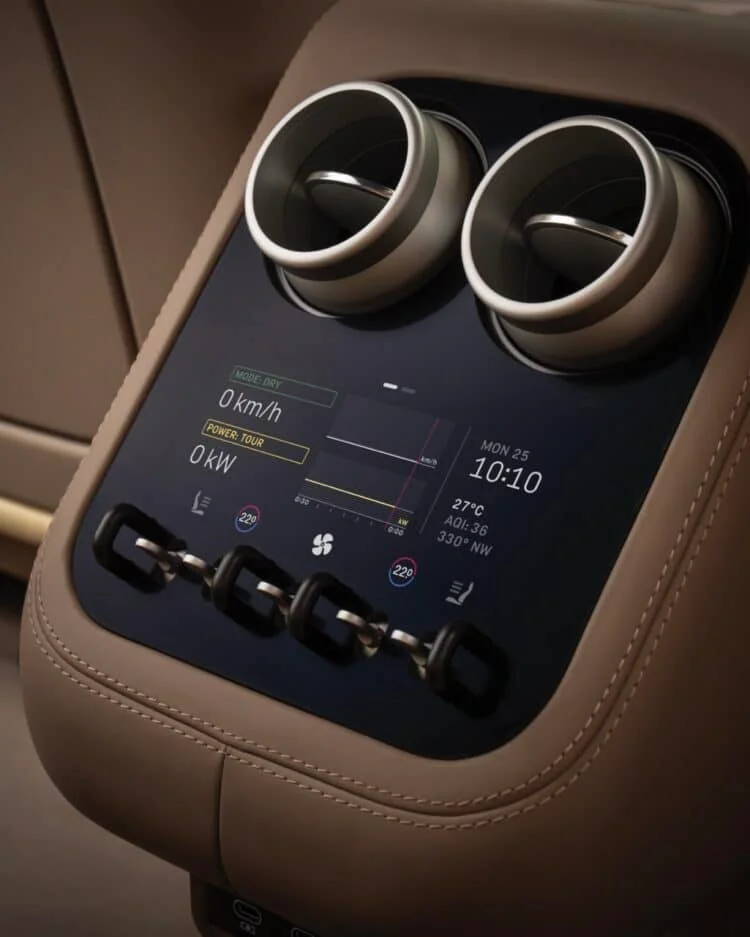
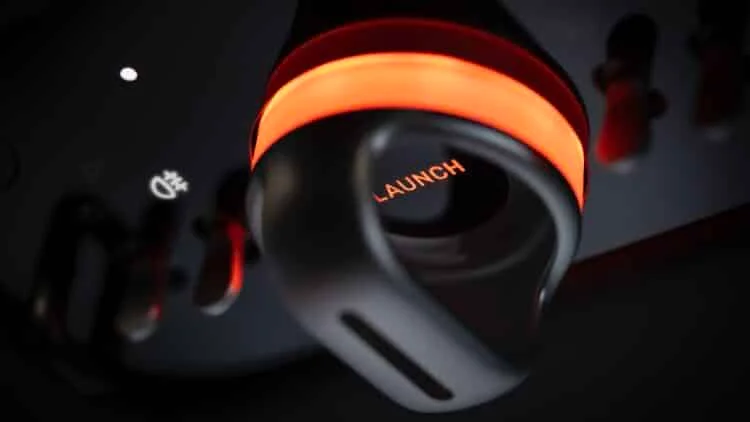
Ferrari also focuses on a high-end sound experience thanks to a system composed of 21 speakers developing a total power of 3,000 watts.
A Price Tag Without Surprises for a Ferrari
As is often the case with Ferrari, exclusivity comes at a price. Access to this new Luce will start at 550,000 euros. This is a particularly high amount considering a technical sheet that does not systematically outperform its rivals in certain specific areas.
But Ferrari does not rely solely on raw performance. With this first electric car, the brand aims to preserve its DNA while adapting to a rapidly transforming automotive industry. The first deliveries are expected in the fourth quarter.