The Lesson of Winter Tires in February: A Personal Experience with Aquaplaning
In February, I learned the hard way about the dangers of using summer tires in wet conditions, leading to a costly bill and valuable lessons on tire safety.
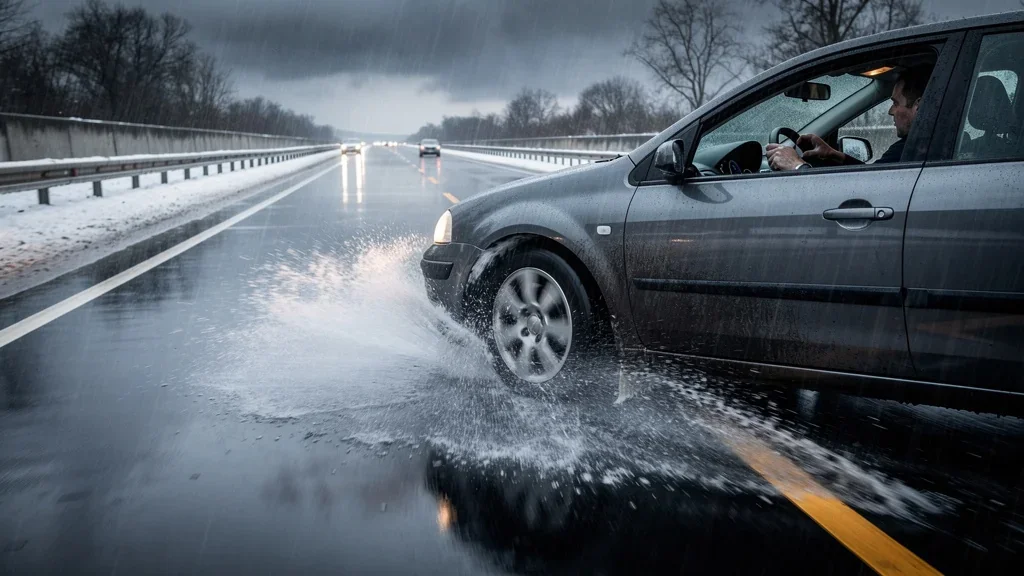
On a Tuesday in February, with temperatures hovering around 8 °C, my summer tires let me down in front of a bakery on Boulevard de Charonne. While driving back to Midas République, I felt my car start to lose focus as I crossed a large puddle. The incident was less dramatic than the resulting bill: 540 euros. I remember the time on the garage receipt — 9:14 AM — as that was the moment I realized I had been fooling myself.
Misjudging the Road Conditions
For two weeks, I had been taking the same route at the same hour. My windows were still foggy at the start of my journey, and the wipers left slow arcs across the windshield. Everything seemed fine on dry roads. I convinced myself that a relatively new summer tire was adequate as long as there was no visible snow or ice, which led me to overlook a thorough inspection. This was a mistake.
The first sign of trouble was subtle. The steering felt slightly lighter when navigating through large puddles, and the front wheels experienced a brief sensation of sliding. Initially, I attributed this to the slick pavement and debris in the gutters. In hindsight, this was the beginning of my problems. I didn’t recognize it at first because nothing seemed overly alarming.
The Incident at Porte de Bagnolet
The turning point occurred at Porte de Bagnolet, where water had pooled in a dip in the road. I was traveling at 72 km/h. As the front wheel hit the puddle, the steering suddenly lightened. The ESP indicator flashed as I exited the roundabout. I instinctively lifted my foot off the accelerator before I could even think. The car regained grip after a few meters, but I had already felt the unsettling floatiness during a quick technical check.
The sound of the incident struck me just as much as the sensation. There was a brief hissing followed by a sharp thud as the tire reconnected with the wet asphalt. It wasn’t cinematic; just a clear moment that made me grip the steering wheel tighter. This kind of detail is unmistakable once experienced.
Afterward, I understood the mechanics behind it. The rubber of a summer tire begins to harden at temperatures below 7 °C, losing flexibility further when the road remains cold and damp. I revisited the road safety guidelines regarding grip in wet conditions. One morning at 10 °C, I felt that same vague steering sensation. It wasn’t just a theoretical warning; it was part of my daily commute.
The Costly Reminder
The real shock came at the garage. I eventually opted for a set of four all-season tires, specifically Michelin CrossClimate 2, including installation. The total came to 540 euros. I stared at the bill as if examining a detail I could have avoided with a bit more awareness during my last service. The right front tire was already down to 2.9 mm. The legal threshold is 1.6 mm. While I still had some tread left, I was far from comfortable driving in cold rain.
What frustrated me most was that the tires looked clean. The sidewalls showed no alarming signs, and the grooves appeared adequate to the naked eye. This is exactly what misled me. I focused on the tire's appearance rather than its performance in cold conditions. I wasted time at every stoplight, roundabout, and light rain, compensating without admitting it.
Recognizing the Signs Too Late
Looking back, the signs had been evident for two weeks. The steering was less precise, corner entries felt softer, and braking took longer from the very first wet conditions. Nothing was particularly dramatic, which is what ensnared me. I had also noticed the ESP light flicker near Rue d’Avron, but I dismissed it. This habit of ignoring subtle signals without rechecking is another lesson I’ve taken from my experience with quick technical checks.
I can’t say if everyone experiences it the same way, but for me, the combination of cold roads, light rain, and summer tires was enough to make the front end feel vague. I waited too long to admit that the issue was not the road conditions but my choice of tires. The worst part is that I wasn’t driving fast; I was just going about my usual routine.
Today, I’ve learned a simple lesson: the absence of snow does not equate to the absence of risk. If you primarily drive in the city, with morning temperatures dropping to 7 °C and water pooling in ruts, it’s essential to assess the actual condition of your tires, not just their appearance. Yes, this is crucial for someone who frequently navigates urban roads in cold rain. No, it’s not enough to reassure oneself with the argument that “it’s not snowing.” At Midas République, the bill served as a harsh reminder. The next time I check my tires, it will be before I encounter another puddle.