
What I Learned About Daily Battery Maintenance
My experience with battery maintenance revealed the importance of understanding self-discharge, proper charging techniques, and the limitations of battery maintainers.
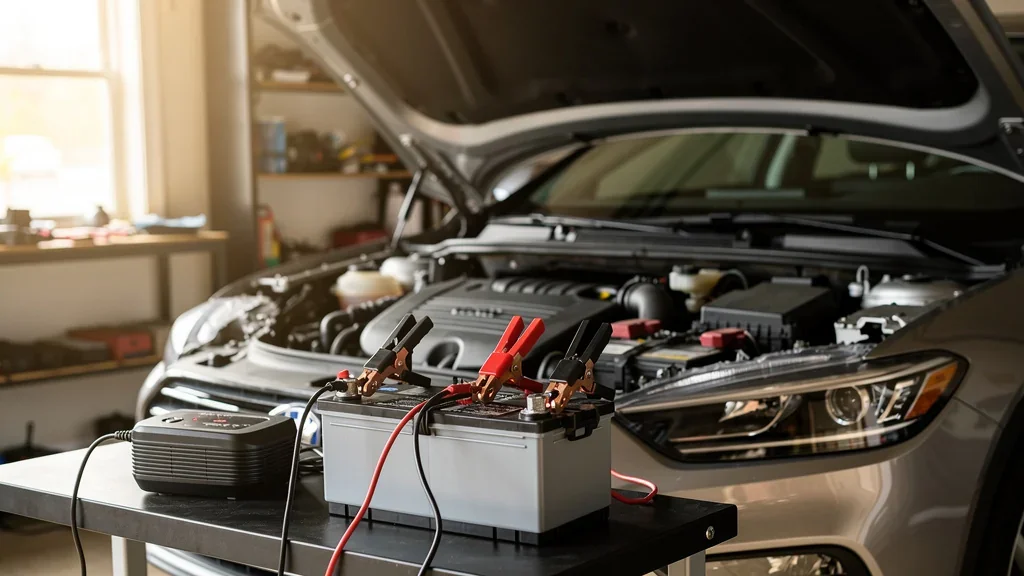
Maintaining a car battery became a pressing concern for me after hearing the distinct click of the relay and detecting a faint smell of warm plastic in the garage. After my vehicle sat idle for two to three weeks, the starter struggled to turn over. As an automotive writer for CarBling, I decided to delve deeper into this issue, especially since my partner and I often find our car parked more than in use. For six months, I used a battery charger to see how much of a difference it would make.
The Decision to Test Battery Maintenance
My journey into battery maintenance began when my 2016 Toyota Corolla hybrid had already clocked 130,000 kilometers. Living with my partner, we primarily used the car for short trips, leaving it stationary for extended periods. My goal was straightforward: prevent the frustrating scenario of a sluggish Monday morning start and a dead battery at inconvenient times. Having experienced such breakdowns in the past, I knew they could disrupt an entire week.
The realization hit me one cold morning when I turned the key and only heard a click. The multimeter read below 12 volts after a typical immobilization. The interior light appeared dim, and the headlights were lackluster. I was not ready to shell out 400 euros for repairs, especially after a previous mishap involving a poorly installed oil filter. It became clear that I needed to understand battery maintenance rather than suffer through another failure.
Understanding the Need for Battery Maintenance
Since my car isn't driven daily, I quickly recognized the impact of battery self-discharge. After just two weeks of inactivity, the voltage would start to drop, and the starter would turn more sluggishly in the morning. In a hybrid vehicle, the small 12V battery is crucial for starting the engine, and I had previously underestimated its significance. I wanted to extend the battery's lifespan, not just ensure I could start the car when needed.
Choosing My Charger
I began my search for an intelligent battery charger on Amazon, comparing product pages, ratings, delivery options, and prices. I looked into models from Ctek, Noco, Bosch, Varta, Yuasa, and Motopower out of curiosity rather than brand loyalty. I wasn't interested in rapid charging; instead, I sought a slow recharge with battery maintenance functions, a seven-step charging curve, IP65 rating, overload protection, reverse polarity protection, ultra-low current, and short-circuit protection. Ultimately, I chose a charger that was universal, multi-voltage, portable for various uses, and had modes for cars, motorcycles, and trucks, even though I only needed the car mode. The amperage remained low, suitable for maintenance charging.
- Basic charger at €35
- More advanced model at €90, AGM compatible
- Lithium battery option (too expensive)
- Manual disconnection solution (not practical)
Daily Experience with Battery Maintenance
Initially, I was impressed by the simplicity of the setup. I connected the red clamp, then the black to the ground, and the LED indicator changed from red to green without making a sound. The charger remained in floating mode, monitoring the charge without needing my constant attention. After a night of inactivity, I measured 12.6 volts at rest. The engine started more readily, and it seemed to run smoother in cold weather. I felt almost too assured, as the car started without hesitation. With a low charging current and slow charge, I felt like I was preserving the battery without stressing it.
The Simplicity That Surprised Me
I began to view the LED charge indicators as a simple reference rather than an absolute truth. The intelligent charger would switch to floating charge as the voltage increased, then revert to ultra-low current. I followed this process like a little ritual, with the hood open and my hand resting on the cold engine grille. After three weeks without driving, I no longer experienced that cringe before turning the key. I wasn't concerned about charge time as long as the stability of the charge remained intact.
Frustrations Encountered
However, some frustrations quickly arose. The cable didn't reach far enough in my deep garage, forcing me to leave the hood open longer than expected. The outlet was poorly positioned, making it feel like I was trying to create a solution that didn't consider real-life scenarios. The green indicator gave me a false sense of security, even when the battery might be sulfating.
The most concerning issue was the deceptive calm after the charge was displayed. The next morning, the starter could still turn sluggishly, accompanied by the relay clicking as a reminder of the underlying problem. Not ideal. I also realized that connecting without confirming the ground could lead to a false sense of progress. Eventually, I abandoned reliance on the simple indicator.
- Cable too short for my deep garage
- Poorly positioned outlet, requiring frequent hood openings
- Green light even when the battery was weakening
- Occasional slow starts despite displayed charge
Technical Surprises
The technical surprises proved more telling than the green light. With the battery at 12.5 volts at rest, it appeared fine. However, once I turned on the lights or ventilation, everything became sluggish. I learned that voltage alone doesn't tell the whole story. This decline made me think about plate sulfation.
After two weeks, I occasionally saw 12.3 volts, and morning starts became more sluggish. Conversely, when the engine was running, I aimed for 13.8 to 14.4 volts to ensure the charge management system and voltage regulator were functioning correctly. When I saw lower readings, I became wary of a failing alternator. I didn’t diagnose it myself, but the signs were clear. A battery could show 12.6 volts at rest and still fail to start.
| Situation | Measured Voltage (V) | Starting Behavior | Interpretation | |-----------|----------------------|------------------|----------------| | Battery at rest, after charge | 12.6 | Strong start | Battery in good health | | Battery at rest, after 2 weeks | 12.3 | Slightly slow start | Beginning of discharge / sulfation | | Battery at rest, correct voltage but drops on start | 12.5 | Difficult start, relay clicks | Weak battery, insufficient charge |
This table served as my safeguard. The leakage current and failing alternator don’t announce themselves loudly; they reveal themselves through small discrepancies, leading to a morning where the key doesn’t respond as it once did.
Lessons Learned
Now I know that I allowed a battery to drop too low for too long. The charger took ages to restart, and at one point, it didn’t even recognize it. I also chose the wrong mode between standard and AGM batteries, not taking the time to read the label. I failed to check the ground connection, so the indicator said all was well when the battery was barely taking any charge.
The real trap is confusing maintenance charging with emergency charging. A battery that’s already worn out might last a few days, but the issue will return. I eventually understood that the battery repair function doesn’t replace the need for a replacement when the amp-hour capacity has significantly dropped. My partner and I, without other mouths to feed, decided it was better to stop pushing our luck rather than stretch the battery's limits.
Unrecognized Mistakes
I initially let a battery go completely flat for too long before recharging it. Then, the charger took a long time to restart, and eventually, it no longer recognized it. I had also selected an inappropriate mode between AGM and standard batteries. At the time, I thought I was saving time, but I only gained doubts. Slow charging doesn’t tolerate improvisations, and a poor ground can ruin the entire process.
Transformative Lessons
Since then, I measure the voltage with a multimeter after a night without charging. The green indicator on the charger no longer earns my trust. I now observe the starting behavior, not just the LED. A voltage of 12.6 volts reassures me, but 12.3 volts raises immediate concerns. I’ve also learned not to confuse preventive maintenance with makeshift repairs.
- Always measure voltage with a multimeter, not just rely on the indicator
- Select the correct mode depending on the battery type (lead, AGM, EFB)
- Don’t let a battery drop completely flat for too long
- Accept that maintenance cannot replace a worn-out battery
Why Battery Maintenance Isn’t a Miracle Solution
One winter, I thought I had resolved my issues, but the car refused to start despite the maintainer being connected. On a cold morning, I turned the key, and the starter only produced a lazy growl. I was struck by the contrast between the green indicator and the reality. I was confident, only to be brought back to earth by my car.
At the garage, I was informed of a leakage current due to a poorly installed accessory. The maintenance charger had merely kept the battery afloat between uses. The problem returned as soon as I disconnected it. With an involuntarily deeply discharged battery, plate sulfation inevitably takes hold.
I also learned that the running voltage remained too low or unstable when a failing alternator was no longer doing its job. In such cases, the charger’s slow charge wouldn’t make a difference. I returned home with the understanding that while an intelligent charger is helpful, it doesn’t fix mechanical failures. I no longer confuse it with a converter or the vehicle's voltage regulator.
Adapting My Usage to Meet My Needs
Eventually, I categorized my usage. For a car that isn’t driven often, maintenance charging helps limit deep discharge and self-discharge. For a vehicle used daily, I leave it off unless the battery is new or if the start-stop feature requires assistance. I then focus on the battery's capacity, AGM or EFB chemistry, and the health of the alternator.
The charger I considered also claimed broader compatibility. The instructions indicated it managed lead-acid batteries, gel batteries, LiFePO4 batteries, and deep discharge batteries, sometimes with temperature compensation. I haven’t tested all these types, but I’ve seen enough to understand the different charger types and their limitations. A portable charger and a maintenance charger serve different purposes.
When it comes to budget, I keep it simple. A model priced at €35 or €60 would have sufficed for basic use. The €60 to €150 range makes sense only if the device offers genuine charge optimization, stability, and battery preservation. Otherwise, it’s better to keep an eye on the voltage. This is battery maintenance, not a gamble.
My Advice for Infrequently Used Cars
For my situation, this approach works well. When the car sits idle for two to three weeks, I connect the maintenance charger without hesitation. I keep a multimeter handy because an LED indicator won’t reveal sulfation. Maintenance charging reassures me, but I don’t let it replace basic checks. This is the simplest way to limit wear and preserve battery life.
Advice for Daily Drivers
For a car that is driven every day, I wouldn’t recommend a maintenance charger unless the battery is relatively new or the start-stop system needs a boost. Instead, focus on monitoring battery health and ensuring the alternator is functioning properly.