
Comparing Synthetic Oils: Supermarket Choices vs. Garage Expertise
A detailed comparison of synthetic oils from supermarkets versus garages, focusing on specifications, approvals, and personal experiences with oil changes.
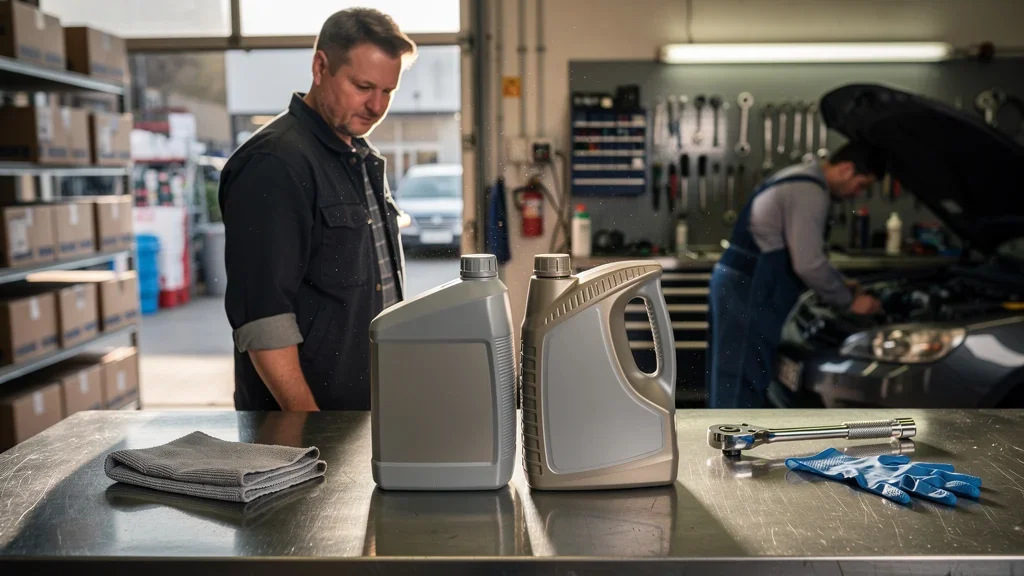
On a Saturday morning at Norauto, I found myself contemplating two nearly identical containers of oil under bright fluorescent lights, each priced differently—one at €29.90 and the other at €47. With 186,000 kilometers on the odometer and needing to replace 0.8 liters, I had my maintenance booklet in hand as I considered my home oil change kit. The aisle had a faint scent of warm plastic. This moment of indecision about a routine maintenance package reflects a broader concern I’ve discussed in my article on maintenance packages. I realized then that the issue at hand was not solely about the price.
The Source of My Hesitation
I was looking at a 5W-30 oil, but that alone wasn’t enough. I reviewed the ACEA specifications and the approval markings closely. The difference between TotalEnergies Quartz Ineo ECS 5W-30 and Castrol EDGE 5W-30 LL was nearly imperceptible on the label. This scenario echoed my previous experience testing three different 5W-30 oils over 10,000 kilometers each. The real challenge lay in identifying the correct specifications. I recalled seeing various approvals like PSA B71 2290, Renault RN0710, BMW Longlife-04, and VW 504 00 that excluded products that appeared similar.
The uncertainty intensified when I revisited the maintenance page at home, late at night. I realized that the term "compatible" did not offer the same assurance as a clear approval. While the black cap on one container seemed sturdier, that detail held little significance. What truly mattered was the small print.
Ultimately, I opted for the garage oil the following morning. I spent €16 and have not regretted my decision. My car's engine had already shown a preference for precision. On a chilly November morning at 7:45, it still made a slight noise upon starting. Since then, I’ve made it a habit to check the specifications before considering the color of the container.
When Supermarket Oils Are Sufficient
I do not dismiss the supermarket option entirely. For a 2018 Peugeot 308 with a clear maintenance record and stable oil consumption, I would confidently choose the supermarket aisle. I had previously made this choice for a quick top-up with just 12 minutes to spare before leaving. When the specifications are known, the supermarket is perfectly adequate.
The downside of the supermarket, however, arises when I must choose between two almost identical products without anyone to confirm the correct specification. If I already know what I need, I can make my choice swiftly. If I’m uncertain, I lean towards the garage.
My Conclusion
In my view, the supermarket is a valid option for a newer car with a straightforward manual and no surprises for top-ups. However, I would steer clear when the manufacturer's tolerances are precise or when the engine is sensitive. In such cases, I prefer to visit Feu Vert, Norauto, or an authorized dealership. I’d rather pay a little extra and leave with the correct specification than take home a product shrouded in doubt.
My final verdict is straightforward: if I know the right standard, I’ll buy from the supermarket. If I have to guess between several tiny lines of text, I’ll head to the garage. This is where the difference between €29.90 and €47 truly becomes meaningful.