
Essential Maintenance Tips for Diesel Vehicles
Explore our essential tips for maintaining your diesel vehicle: oil changes, filter replacements, and energy-saving practices to enhance your engine's lifespan.
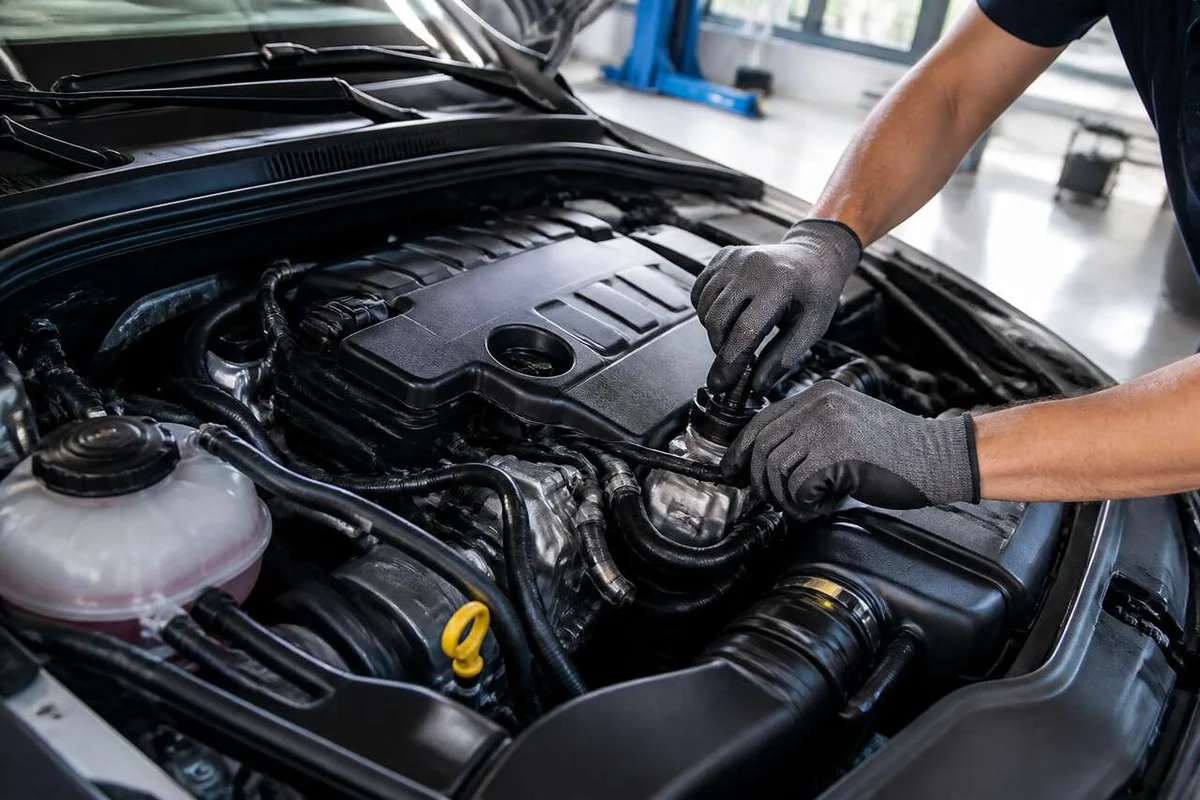
A diesel engine does not fail without reason; it gradually becomes clogged due to short trips, insufficient heating, and infrequent maintenance. Understanding these wear mechanisms allows for the implementation of simple routines—monitoring fluid levels, adhering to oil change intervals, and being mindful of the diesel fuel used—that can prevent costly repairs and significantly extend the engine's lifespan.
Key Takeaways
- Oil changes should occur every 15,000 to 30,000 km or at least once a year, with the oil filter being replaced each time.
- Short urban trips prevent the engine from reaching its optimal operating temperature, leading to clogging of the particulate filter (FAP) and exhaust gas recirculation (EGR) valve.
- Using premium or additive-enriched diesel significantly reduces particulate emissions and minimizes pollution control component clogging.
- Keeping at least a quarter of the fuel tank full prevents overheating of the injection pump and the intake of impurities.
- Regular long highway trips at 2,500 to 3,000 RPM for about 20 minutes promote the natural regeneration of the FAP.
Understanding Diesel Maintenance
The diesel engine operates differently than its gasoline counterpart, relying on high compression, high-temperature combustion, and turbocharging, which places significant stress on mechanical components. This architecture, combined with modern pollution control systems, makes diesel engines particularly sensitive to inadequate maintenance.
Vulnerable Pollution Control Components
Modern diesel engines are equipped with an EGR valve and a particulate filter (FAP) designed to reduce emissions. These components can become clogged quickly if the engine frequently runs cold or at low RPMs. Additionally, injectors, the combustion chamber, the intake manifold, and even some sensors can be affected by carbon deposits, which are difficult to remove once formed.
The Importance of Engine Oil
Engine oil serves not only to lubricate mechanical parts but also to cool the turbocharger. Degraded oil, filled with metallic microparticles from wear and carbon residues, can contribute to clogging the FAP and EGR valve. Oil vapors may migrate to the intake through the crankcase vent, located downstream of the air filter, or backtrack due to imperfect sealing.
To maintain a diesel engine, it is crucial to address multiple fronts simultaneously: fuel quality, adherence to oil change intervals, filter monitoring, and adjusting driving habits based on the type of trips taken. Daily use of the vehicle, especially in urban settings, is among the most critical factors in this maintenance equation.
Daily Use: Should You Drive Every Day and How to Avoid Clogging Trips

Contrary to popular belief, a diesel engine does not need to be driven daily to function properly. What matters is the engine's ability to reach its optimal operating temperature regularly, which is essential for limiting deposit formation.
The Short Trip Trap
Frequent short urban trips, often just a few kilometers, prevent the engine from warming up sufficiently. Fuel and oil do not burn completely, leading to the generation of sticky residues that gradually harden into carbon deposits. This situation is particularly common among drivers who use their diesel vehicles solely for short commutes or city driving.
Adjusting Your Driving Habits
At startup, it is advisable to wait for the preheating light to turn off before starting the engine, a process that typically takes between 30 seconds to a minute, and can extend to two minutes in very cold weather. After starting, gentle acceleration is recommended to allow the oil to circulate properly throughout the engine.
Driving Routines Based on Trip Type
- In the city: Favor smooth driving without prolonged over-revving or under-revving.
- On the road: Aim for a steady and gradual speed to allow the engine to heat up properly.
- On the highway: Use cruise control to minimize unnecessary RPM fluctuations.
- After prolonged inactivity: Plan a longer trip upon resuming use to compensate for accumulated clogging.
These simple habits significantly reduce the risk of clogging, but they must be complemented by regular maintenance, structured around a precise checklist and deadlines.
Maintenance Schedule: The Essential Checklist (Oil Change, Filters, Timing Belt, Fluids)
Diesel maintenance relies on clear frequency benchmarks that should be strictly followed to avoid premature wear of mechanical and pollution control components.
Oil Changes and Filters
Oil changes should occur at a maximum interval of 20,000 km, with some manufacturers allowing a range of 15,000 to 30,000 km or once a year, depending on which threshold is reached first. Each oil change should include a new oil filter. For many commercial vehicles, it is also recommended to change the air filter and fuel filter simultaneously to ensure clean combustion and a fuel supply free of impurities.
-
BOSCH Filtre à huile F026407022
ATTENTION - Veuillez vérifier sur la base des données de votre véhicule si cette pièce de rechange est compatible avec votre véhicule et tenez compte, le cas échéant, des restrictions/critères existants. INFORMATION TECHNIQUE: Filtre à huile, Ø: 78, D1: 76, D2: 71, Filetage de raccordem.: M 20 x 1,5, hauteur: 63, Pression d'ouverture clapet-dévia: 2,5 REMARQUE: Oil Filter, Ø: 78, Height: 63, Port Thread: M 20 x 1,5 COMPATIBLE AVEC: DACIA DUSTER, DUSTER, DUSTER Kasten/SUV, LODGY, LOGAN, LOGAN EXPRESS, LOGAN II, LOGAN MCV, LOGAN MCV II, LOGAN Pick-up, SANDERO, SANDERO II, SANDERO III, HONDA CIVIC IX, CIVIC IX Tourer, CIVIC X Schrägheck, CIVIC X Stufenheck, CR-V IV, HR-V, NISSAN CUBE, INTERSTAR Bus, INTERSTAR Kasten, JUKE, KUBISTAR Kasten, MICRA III, MICRA V, NOTE, NV200 / EVALIA Bus, NV200 Kasten, PRIMASTAR Bus, PRIMASTAR Kasten, PRIMASTAR Pritsche/Fahrgestell, PRIMERA, PRIMERA Hatchback, PRIMERA Kombi,
-
BOSCH Filtre à huile 1457429192
ATTENTION - Veuillez vérifier sur la base des données de votre véhicule si cette pièce de rechange est compatible avec votre véhicule et tenez compte, le cas échéant, des restrictions/critères existants. CONTENU DE LA LIVRAISON: 1x filtre à huile BOSCH INFORMATION TECHNIQUE: Filtre à huile, Ø: 70, hauteur: 141, Type de filtre: Cartouche filtrante REMARQUE: Oil Filter Ø: 70 Height: 141 COMPATIBLE AVEC: AUDI A2, A3, A3 Cabriolet, A3 Sportback, A4 Allroad B8, A4 B7, A4 B7 Avant, A4 B8, A4 B8 Avant, A5, A5 Cabriolet, A5 Sportback, A6 C6, A6 C6 Avant, Q5, Q5 Van, TT, TT, TT Roadster, TT Roadster, CHRYSLER SEBRING, SEBRING Cabriolet, DODGE AVENGER, CALIBER, JOURNEY, JOURNEY VAN, FORD GALAXY I, GALAXY MK I VAN, JEEP COMPASS, PATRIOT, MITSUBISHI GRANDIS, LANCER VIII, LANCER VIII Sportback, OUTLANDER II, OUTLANDER II Van, SEAT ALHAMBRA, ALHAMBRA VAN, ALTEA, ALTEA XL, AROSA, CORDOBA,
-
BOSCH Filtre à huile F026407157
ATTENTION - Veuillez vérifier sur la base des données de votre véhicule si cette pièce de rechange est compatible avec votre véhicule et tenez compte, le cas échéant, des restrictions/critères existants. INFORMATION TECHNIQUE: Filtre à huile, Ø: 65, D1: 34, D2: 21, hauteur: 103, hauteur 1 mm: 95, Type de filtre: Cartouche filtrante REMARQUE: Oil Filter, Ø: 65, Filter Type: Filter Insert, Height: 103 COMPATIBLE AVEC: AUDI A1, A1 Sportback, A3, A3 Cabriolet, A3 Limousine, A3 Sportback, A4 Allroad B8, A4 Allroad B9, A4 B8, A4 B8 Avant, A4 B9, A4 B9 Avant, A5, A5, A5 Cabriolet, A5 Cabriolet, A5 Sportback, A5 Sportback, A6 C7, A6 C7 Avant, Q2, Q3, Q3, Q3 Sportback, Q5, Q5, TT, TT Roadster, SEAT ALHAMBRA, ARONA, ATECA, IBIZA V, LEON, LEON SC, LEON ST, TARRACO, TOLEDO IV, SKODA KAMIQ, KAROQ, KODIAQ, OCTAVIA III, OCTAVIA III Combi, RAPID, RAPID Spaceback, SCALA, SUPERB III, SUPERB III Kombi,
Timing Belt and Fluids
The timing belt is a crucial maintenance item, typically replaced between 100,000 and 160,000 km, depending on manufacturer recommendations. The coolant level should be checked at every service and replaced according to guidelines, as should the AdBlue level on models equipped with SCR systems.
Warning Signs Not to Ignore
- Engine warning light: requires prompt OBD diagnosis by a professional.
- Black smoke or unusual odor from the exhaust: possible sign of FAP clogging.
- Power loss during acceleration: may indicate a failing turbo or injectors.
- Unusual oil consumption: should be checked before the next manufacturer service.
Adhering to this checklist significantly reduces avoidable breakdowns. However, beyond pure mechanics, preventing the clogging of pollution control components is what ultimately determines the diesel's long-term reliability.
Preventing Clogging: EGR, FAP, and Regeneration Without Mistakes
The EGR valve and FAP are among the parts most susceptible to clogging, precisely because they are designed to trap particles from combustion.
Understanding the Clogging Mechanism
When the engine frequently runs cold or at low RPMs, unburned fuel and oil particles accumulate, forming sticky residues. These residues gradually harden into carbon deposits, which obstruct pathways and reduce the efficiency of the pollution control system.
The FAP Regeneration Process
When the FAP reaches a certain level of clogging, the vehicle automatically triggers a regeneration cycle: the temperature rises sharply to burn off accumulated carbon particles, metallic residues, and oil ash. This process typically requires stable driving at a consistent speed for several minutes; turning off the engine during regeneration interrupts the process and worsens clogging.
Common Mistakes to Avoid
- Turning off the ignition while the regeneration light is on.
- Driving exclusively in the city, preventing any natural regeneration.
- Ignoring warning signals related to the FAP, potentially leading to complete clogging that necessitates costly replacement.
Available Cleaning Methods
Several solutions can help limit or treat clogging: using specific diesel additives poured into the tank, hydrogen decarbonization performed in workshops—injecting a hydrogen-oxygen mixture into the intake to clean carbon deposits without harsh chemicals—or a natural "cleaning" via a long highway trip maintained between 2,500 and 3,000 RPM for about 20 minutes.
-
Wynn's Additif Nettoyant FAP & Catalyseur - Additif Diesel - 325 ml
✅ NETTOIE ET RÉGÉNÈRE : L'additif FAP diesel nettoie et régénère le filtre à particules et le catalyseur, réduisant ainsi les émissions de particules.