Hispano Suiza Carmen Sagrera: The Invisible Technology Behind Performance
Discover the Hispano Suiza Carmen Sagrera, an electric hypercar that prioritizes seamless technology and driving pleasure without distractions.
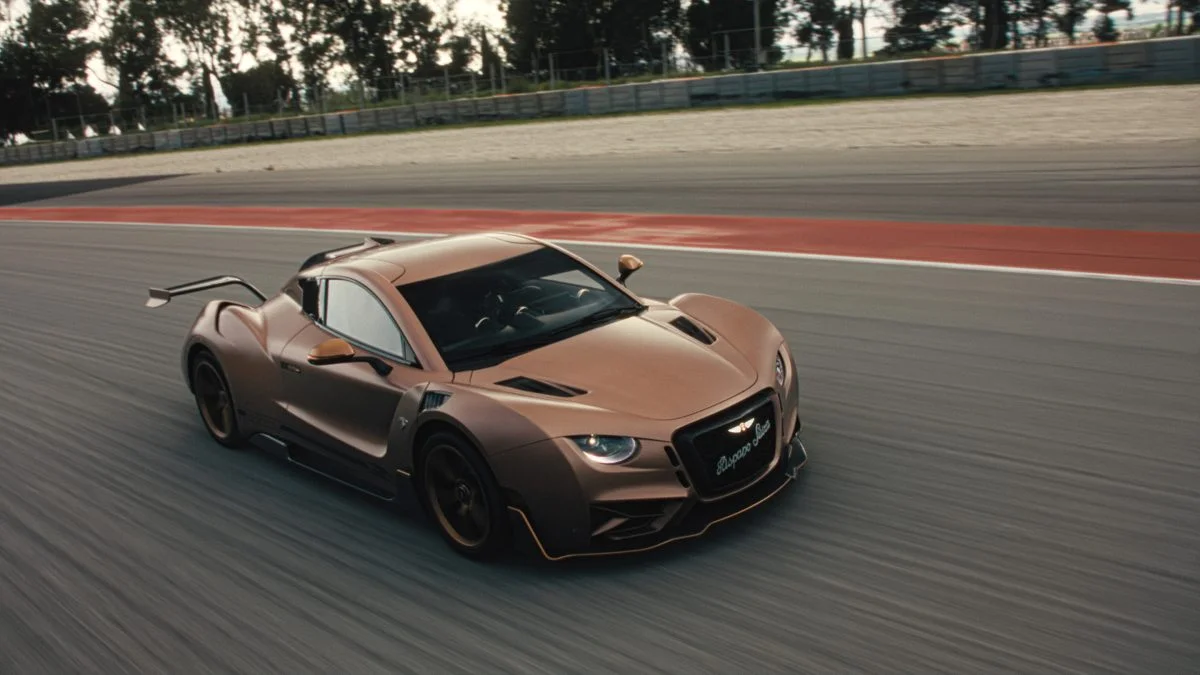
In an age where automotive design often prioritizes screens and interfaces, Hispano Suiza takes a distinctly different approach with its Carmen Sagrera hypercar. The company emphasizes that technology should not be a distraction; instead, it operates in the background to seamlessly manage power, torque, traction, stability, and energy recovery.
:format(webp)/www.autoblog.it/app/uploads/2026/08/unnamed-scaled.jpg "Hispano Suiza Carmen Sagrera, quando l’elettronica non si sente")
The Carmen Sagrera marks the third addition to the Carmen hypercar family and showcases the pinnacle of modern Hispano Suiza engineering. This fully electric vehicle boasts an impressive output of 820 kW, translating to 1,115 horsepower and a torque of 1,160 Nm. These figures highlight the critical challenge of power management, as the car accelerates from 0 to 100 km/h in just 2.6 seconds. However, the instantaneous torque delivery of an electric vehicle does not have to result in a harsh or difficult driving experience.
To address this, Hispano Suiza has focused on energy management with a clear goal: ensuring that performance is always accessible without allowing electronics to act as a barrier between the driver and the car.
Understanding Hispano Suiza Driver Dynamics
At the heart of this technology is the Hispano Suiza Driver Dynamics (HSDD) system, which serves as the brain coordinating the dynamic behavior of the Carmen Sagrera. It integrates various systems responsible for managing traction, stability, torque, power, and braking. These systems continuously analyze the vehicle's status, with key features including the Grip Enhancement System for traction and Active Yaw Modulation for yaw control.
Additionally, the Electronic Torque Stabiliser stands out as it allows for independent management of negative torque on the rear wheels during regeneration. This system can utilize electric deceleration not only for energy recovery but also to enhance vehicle stability. This exemplifies the HSDD philosophy: sophisticated technical functions that translate into a more predictable and precise driving experience from the driver's seat.
The software governing the Carmen Sagrera processes over 200 million instructions per second, leveraging data from an extensive network of more than 100 sensors located throughout the chassis, battery, and propulsion systems. These sensors provide information on steering position, individual wheel speeds, brake and accelerator pedal pressure, as well as tracking yaw angle, shock absorber travel, three-axis acceleration, battery status, current and voltage, temperature, atmospheric pressure, altitude, and the selected driving mode.
This vast array of data is continuously converted into real-time decisions regarding power, traction, regeneration, and stability.
The Art of Anticipation
One of the most intriguing aspects of Hispano Suiza's technology is that effective dynamic control should not manifest through abrupt power reductions or noticeable electronic interventions. The HSDD is calibrated to act progressively and naturally, anticipating situations that could jeopardize stability rather than reacting once issues arise. While this may seem subtle, it is crucial for a vehicle boasting over a thousand horsepower. Drivers should feel the Carmen Sagrera's behavior without sensing that a computer is perpetually making decisions on their behalf.
Track Development and Fine-Tuning
To achieve this balance, Hispano Suiza employed a combination of virtual simulations, road testing, and circuit sessions. The tuning process was overseen by Luis Pérez-Sala, a former Formula 1 driver and test pilot, focusing on finding a harmony between safety, precision, and driving freedom. This step is vital, as raw numbers alone do not convey the performance characteristics of a hypercar.
In essence, Hispano Suiza's philosophy can be encapsulated in the idea of "invisible technology," allowing drivers to manage the vehicle safely while preserving the natural joy of driving.