Smart #2: The Electric Microcar from Geely and Mercedes-Benz Approaches Launch
The Smart #2, an electric microcar from a Geely and Mercedes-Benz joint venture, nears production. Recent documents reveal its specifications, emphasizing urban mobility.
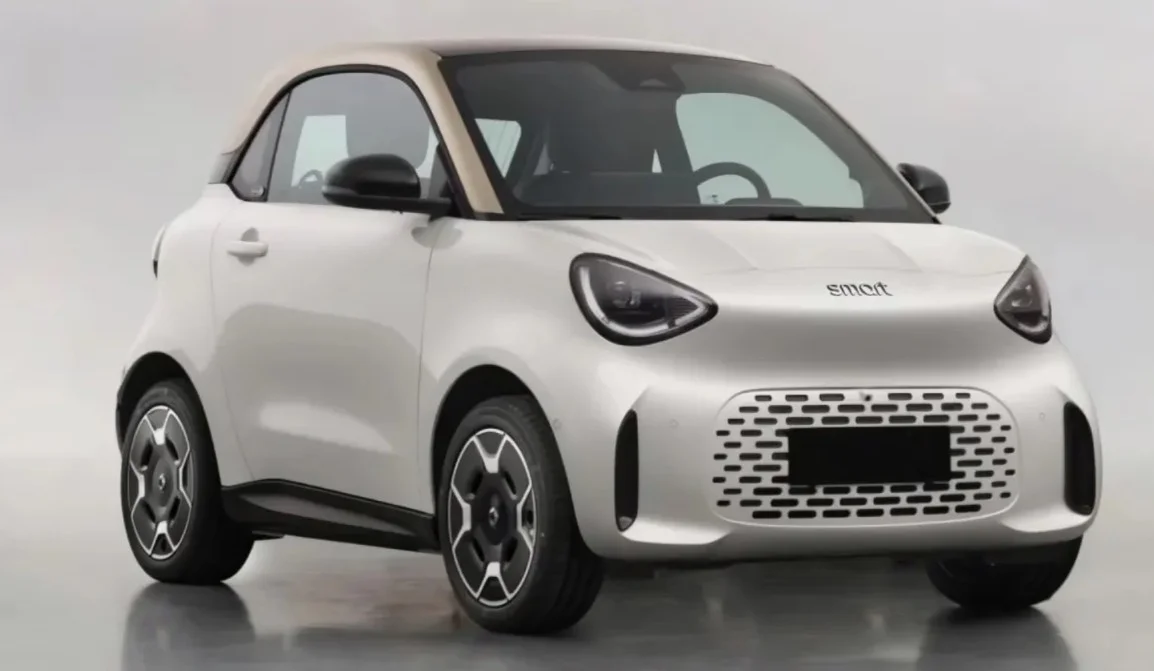
The Smart #2 is on the verge of production, marking a significant step for the electric microcar developed through the collaboration between Geely and Mercedes-Benz. Recently, the vehicle's details surfaced in documents from China’s Ministry of Industry and Information Technology (MIIT), offering a clearer picture of its technical specifications.
Presented at the Beijing Auto Show, the Smart #2 aims to reestablish the brand’s presence in the compact vehicle segment, particularly in urban mobility, an area that has historically shaped its identity.
Compact Dimensions
Designed as a true city car, the Smart #2 features a two-seat layout and will be available in two length variants: 2.751 meters or 2.764 meters. It measures 1.669 meters in width and stands 1.555 meters tall, with a wheelbase of 1.875 meters.
Despite its compact size, the vehicle has a curb weight of 1,130 kg and a total mass that can reach 1,315 kg. The maximum speed is reported to be 140 km/h. These dimensions and configurations underscore its primary focus on urban driving, providing an agile and manageable electric solution for city environments.
Electric Motor and Battery Specifications
Powering the Smart #2 is an electric motor, the TZ160XS00A, produced by Infimotion, delivering 60 kW, equivalent to about 80 horsepower.
The energy source is a lithium-ion battery with LFP (lithium iron phosphate) chemistry. CATL supplies the cells, while Geely oversees the assembly of the battery pack. Preliminary information suggests a capacity of 35.7 kWh, with a claimed WLTP range of approximately 300 km, tailored for daily use and urban commuting.
Customization Options
Despite its small footprint, Smart appears to emphasize customization for the #2. Chinese documents indicate various combinations for wheels and tires, alongside numerous optional aesthetic features.
Customization possibilities include a black or body-colored roof, hardtop configurations, different lighting setups, radar options, side decorative panels, rear-specific elements, and various finishes for wheels and mirrors. Some configurations may also forgo certain radars and cameras, allowing for further differentiation among trims.
In terms of safety, the vehicle will include ABS and an Event Data Recorder (EDR), with an optional Electronic Toll Collection (ETC) system for seamless toll payments.
A Return to Roots?
The Smart #2 is a pivotal project for the brand. Over recent years, Smart has expanded its ambitions, introducing larger models that diverge from the original philosophy of the fortwo. In contrast, the #2 returns to smaller dimensions, a two-seat layout, and electric propulsion, closely aligning with the brand’s foundational concept.
This shift is particularly noteworthy, especially given that the larger models in Smart's lineup have not achieved remarkable commercial success in China. The new microcar could signify a return to the brand's origins, while also attempting to rekindle its connection with the small urban vehicles that initially garnered its fame.